Batu Caves Visitor Guide – Everything You Need to Know Before You Go


Batu Caves is one of the most iconic places to visit near Kuala Lumpur, known for its colourful staircase, the towering golden statue of Lord Murugan, and a series of limestone temple caves that remain active places of worship. Located around 20–30 minutes from the city centre, Batu Caves is an essential stop for travellers interested in Malaysia’s cultural, religious, and historical heritage.
This visitor guide is designed to help you plan your visit with confidence. Here, you’ll find practical information on what to expect when climbing the 272 rainbow-coloured steps, how to prepare for Malaysia’s tropical climate, and tips for families, seniors, and first-time visitors. The guide also introduces the cultural significance of Batu Caves, the temples inside the cave complex, and key details that make the experience smoother and more enjoyable.
Whether you plan to visit independently or prefer the convenience of a guided experience with transport included, this page gives you a clear overview so you can choose what suits your travel style best. To understand how Batu Caves fits into a broader sightseeing plan, you may also want to explore our overview of the main Destinations in Kuala Lumpur.
What Is Batu Caves? (History, Culture & Thaipusam Festival)
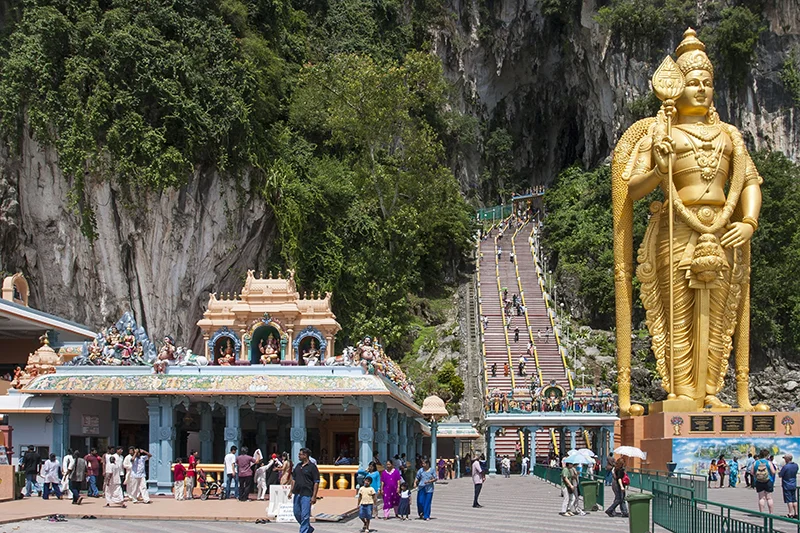
Batu Caves is a limestone hill that contains a series of Hindu temples and cave shrines dedicated to Lord Murugan. It is one of the most important Hindu religious sites in Malaysia and has served as a centre of worship for the Tamil Hindu community for more than a century. The combination of dramatic limestone formations, temple architecture, and ongoing religious practices gives Batu Caves both cultural depth and everyday spiritual significance.
The limestone itself is estimated to be over 400 million years old, while the main temple cave was established in 1891. Today, visitors come to see the towering golden statue of Lord Murugan, climb the staircase to the main cave temple, and observe a site that remains actively used for prayer and religious ceremonies. Batu Caves is also one of the most recognisable landmarks near Kuala Lumpur, making it a frequent first stop for travellers exploring the city.
Cultural and Religious Significance
Batu Caves is not simply a sightseeing location. It is an active place of Hindu worship, with temples located both inside and around the limestone caves. Daily prayers, rituals, and offerings continue throughout the year, and visitors may see devotees presenting flowers, incense, coconuts, and food at various shrines.
Because of this, respectful behaviour is an important part of the visit. Moving calmly, dressing appropriately, and avoiding interference with religious activities helps maintain the atmosphere of the site and ensures a positive experience for both worshippers and visitors.
Thaipusam Festival at Batu Caves
Thaipusam is the most significant religious event held at Batu Caves and one of the largest Hindu festivals in Malaysia. It usually takes place in January or early February and attracts hundreds of thousands of devotees who come to honour Lord Murugan through prayer, processions, and acts of devotion, including the carrying of kavadi.
For visitors, Thaipusam offers a rare chance to witness the scale and intensity of a major religious festival. At the same time, the crowds, road closures, and limited access to certain areas can make sightseeing more challenging. Many first-time travellers therefore choose to visit Batu Caves outside the festival period for a calmer and more flexible experience.
Batu Caves Attractions
Batu Caves is made up of several key areas, each contributing to its religious, cultural, and visual identity. Together, these landmarks shape the experience visitors have when exploring the site, from the moment they arrive at the base of the hill to the temple caves above.
Rather than being a single attraction, Batu Caves functions as a complex that combines sacred spaces, natural limestone formations, and symbolic architecture.
Lord Murugan Statue and Staircase
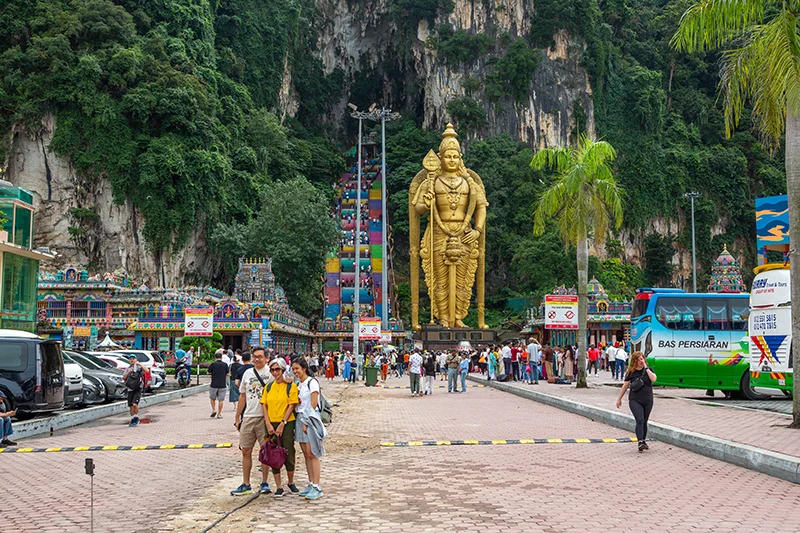
At the base of the hill stands the towering golden statue of Lord Murugan, one of the most recognisable religious landmarks near Kuala Lumpur. From here, the famous 272-step rainbow-coloured staircase leads up to the main temple cave.
This climb is a central part of the Batu Caves experience. Visitors should expect a steady ascent, tropical heat during the day, and occasional monkeys along the stairs. The staircase also acts as a visual transition from the everyday world into a sacred space above.
Detailed guidance on the climb is covered in our Batu Caves Staircase guide.
Temple Cave (Main Cave)

At the top of the staircase lies the Temple Cave, the heart of Batu Caves. This vast cavern houses several Hindu shrines set within a dramatic natural limestone chamber. Openings in the ceiling allow sunlight to illuminate parts of the cave, creating a striking contrast between natural rock and colourful religious structures.
Daily prayers and ceremonies take place here, reinforcing that Batu Caves remains an active place of worship rather than a static monument.
Additional Caves and Ground-Level Temples

Beyond the main cave, the Batu Caves complex includes several other areas that visitors may choose to explore depending on time and interest. These include the Ramayana Cave, which uses statues and murals to tell stories from Hindu epics, as well as smaller ground-level temples near the entrance that serve local worshippers.
Some attractions, such as the Dark Cave, are currently closed to visitors due to conservation efforts.
A Living Religious Site

Throughout the complex, visitors will encounter ongoing religious activity — from quiet individual prayers to organised ceremonies. This living aspect of Batu Caves is what sets it apart from many other attractions and is central to understanding its significance.
Visitors are encouraged to move respectfully, observe quietly, and be mindful that many areas are used primarily for worship.
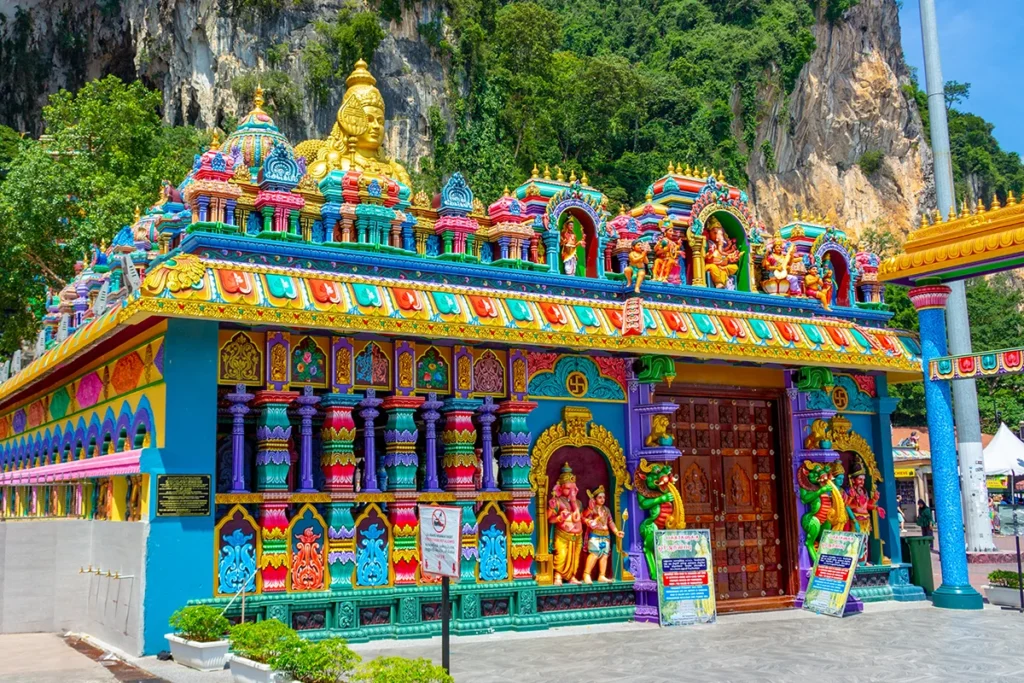
Next, as you move toward the foot of the stairs, you’ll encounter a beautifully ornate gopuram, or temple tower. This colorful structure is intricately decorated with statues of Hindu deities and mythological figures. The gopuram not only serves as an entry point to the sacred site but also reflects the vibrant artistry of South Indian temple architecture. It sets the spiritual tone for what lies ahead and offers another excellent photo opportunity.
Next, as you move toward the foot of the stairs, you’ll encounter a beautifully ornate gopuram, or temple tower. This colorful structure is intricately decorated with statues of Hindu deities and mythological figures. The gopuram not only serves as an entry point to the sacred site but also reflects the vibrant artistry of South Indian temple architecture. It sets the spiritual tone for what lies ahead and offers another excellent photo opportunity.
Before or after your climb, take a few moments to visit the Sri Venkatachalapathi & Alamelu Temple, located on the ground level near the main entrance. This is a separate temple from the cave itself and is often less crowded. Devoted to another form of Vishnu and his consort, it’s an active place of prayer for many local Hindus. The temple features a gopuram and vibrant carvings that reflect traditional Dravidian temple design. It’s a peaceful stop that many tourists overlook, but it offers a more grounded and accessible look into the religious life of the local community.
Climbing the Batu Caves Staircase

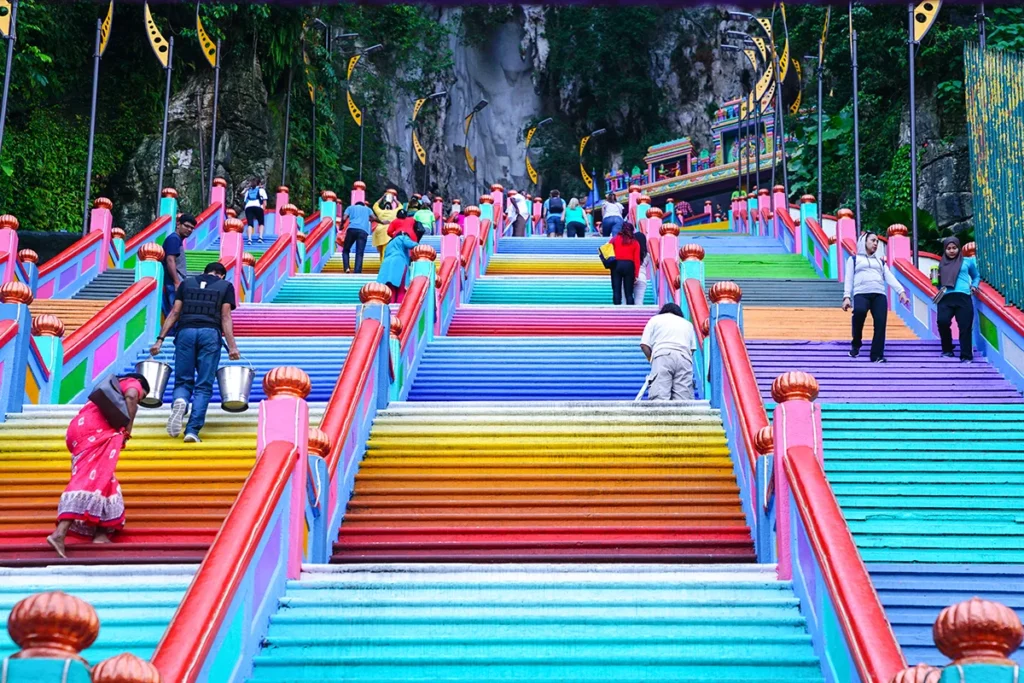
Climbing the staircase is a central part of visiting Batu Caves. The 272 rainbow-coloured steps lead from the base of the hill up to the main Temple Cave and form the physical and symbolic approach to the temple complex.
While the climb is relatively short and manageable for most visitors, Malaysia’s heat and humidity can make it feel more demanding, particularly later in the day. The staircase is shared by visitors and Hindu devotees, and during major religious events such as Thaipusam, it becomes an important site of prayer and devotion.
For visitors who want to understand the meaning behind the colours, layout, and cultural role of the staircase, we cover the subject in more detail in our dedicated guide to the Batu Caves Staircase.
Accessibility and Physical Considerations
While Batu Caves is open to the public and free to enter, it’s important to understand that reaching the main Temple Cave requires climbing the full staircase. There are no lifts, ramps, or alternative routes to the upper cave.
Visitors with knee problems, mobility limitations, heart conditions, or sensitivity to heat may find the climb challenging. In these cases, it’s perfectly reasonable to enjoy Batu Caves from ground level instead. The area around the base of the hill — including the Lord Murugan statue, ground-level temples, and open courtyard — still offers meaningful cultural context and photo opportunities without climbing the steps.
Families visiting with young children or seniors often choose to take the visit slowly, rest at shaded areas, or limit the experience to the lower sections of the complex. Benches and open spaces near the entrance allow visitors to pause comfortably before deciding whether to continue upward.
Batu Caves rewards visitors at every level of the site. Whether you complete the full climb or remain at the base, understanding the physical demands in advance helps ensure the visit is enjoyable, safe, and suited to your personal comfort level.
Who Batu Caves Is Best Suited For
Batu Caves tends to appeal most to travellers who are curious about culture and religion and want to understand an important part of Malaysia’s Hindu heritage. It’s also a strong fit for first-time visitors who want to see a well-known landmark close to Kuala Lumpur without committing a full day.
Because the site can be explored in a relatively short time, Batu Caves works particularly well for travellers on short stays, cruise passengers, or those fitting several highlights into a limited itinerary. Visitors who enjoy distinctive architecture, natural scenery, and meaningful cultural settings often find the experience rewarding.
At the same time, Batu Caves may be less suitable for travellers who prefer attractions without stairs, avoid crowds, or are looking for a completely relaxed, low-effort visit. The climb to the main Temple Cave is unavoidable, and the site can feel busy at certain times of day or during religious events.
Understanding who Batu Caves suits best helps travellers decide whether it fits their interests and comfort level — and how to plan the visit in a way that feels right for them.
Practical Tips for Visiting Batu Caves (First-Time Visitors)
Visiting Batu Caves is generally straightforward, but understanding a few practical considerations can make the experience more comfortable, especially for first-time visitors. As both a major landmark and an active place of worship, Batu Caves combines sightseeing with cultural awareness.
Entrance and Access Overview
Access to the main Batu Caves complex and the Temple Cave is free of charge, including the climb up the iconic staircase. Some optional attractions within the complex, such as the Ramayana Cave and Cave Villa, require a small entrance fee, but they are not essential for a first visit.
Opening times can vary slightly depending on the area and time of year. For exact hours and the best times to plan your visit, it’s best to refer to our detailed Batu Caves opening hours guide.
Dress Code and Respectful Behaviour

Because Batu Caves remains an active Hindu temple, visitors are expected to dress modestly and behave respectfully. Clothing that covers the shoulders and knees is required when entering temple areas, and shoes must be removed at shrine spaces.
These expectations are part of everyday worship at Batu Caves and are not specific to tourists. If you want clear clothing examples and practical preparation tips, our Batu Caves dress code guide explains this in detail.
Comfort, Safety, and Wildlife
Malaysia’s tropical climate means heat and humidity can affect how the visit feels, particularly during midday. Moving at a comfortable pace, staying hydrated, and taking short breaks are usually enough to manage the climb.
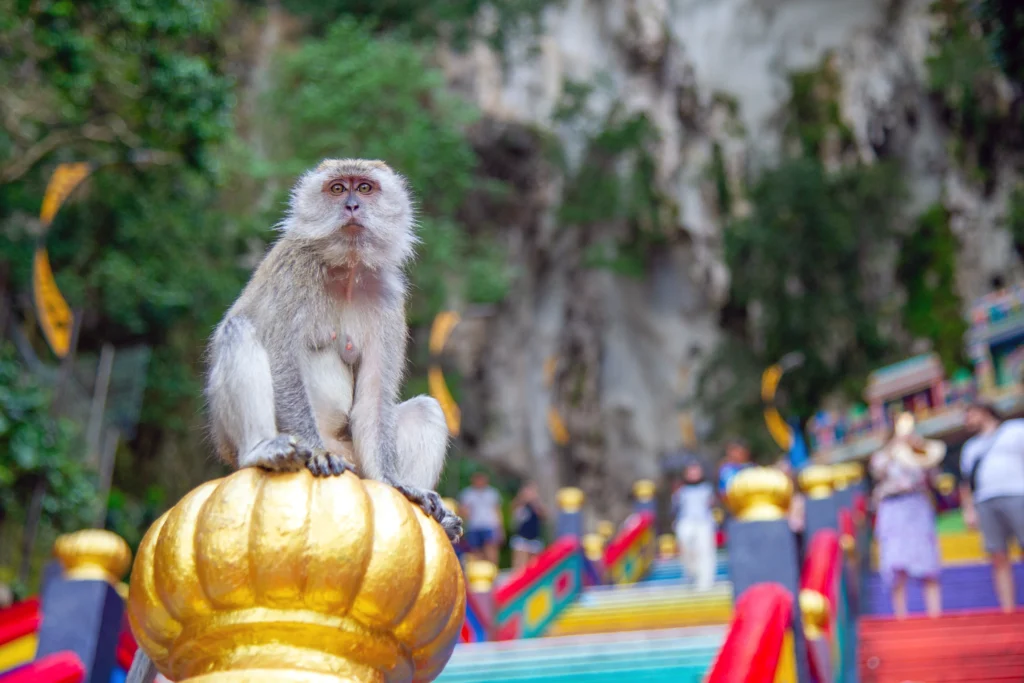
Visitors will also encounter monkeys and birds around the staircase and cave areas. Keeping personal belongings secure and avoiding food in open bags helps prevent unwanted attention. Overall, Batu Caves is safe to visit, especially when approached calmly and with awareness of the surroundings.
Respectful Visiting Practices
Beyond clothing, visiting Batu Caves also involves being mindful of how the space is used by worshippers. Many visitors pass through the Temple Cave while prayers or rituals are taking place, and these moments are part of everyday religious life rather than scheduled performances.
Photography is generally allowed, but it’s considered respectful to avoid photographing individuals who are praying or performing rituals unless permission is clearly given. During ceremonies, visitors often pause briefly, move quietly, and wait for a natural break before continuing through the space. Keeping voices low, avoiding sudden movements, and observing from a short distance helps maintain the calm atmosphere of the cave.
Taking a moment to watch and understand what’s happening before moving on is often appreciated. This approach allows visitors to experience Batu Caves not just as a landmark, but as a living place of worship that continues to hold meaning for the local Hindu community.
Best Time to Visit Batu Caves

Timing plays a big role in how comfortable and enjoyable a visit to Batu Caves feels. In general, mornings and later afternoons tend to offer cooler temperatures, lighter crowds, and a more relaxed climb up the staircase. Midday is usually the busiest and hottest period, especially when tour groups arrive from the city.
Because Batu Caves closes in the evening, visiting during daylight hours makes it easier to appreciate the limestone formations, temple interiors, and overall setting. Exact access times can vary slightly, so it’s best to check the current Batu Caves opening hours before planning your visit.
Thanks to the tropical climate in Kuala Lumpur, Batu Caves can be visited throughout the year. Drier months generally see more sunshine, while the wetter season brings occasional rain showers that are usually short-lived rather than continuous.
Some travellers plan their visit around Thaipusam, the most important religious event held at Batu Caves. While this period offers a rare chance to witness a major Hindu festival, it also brings very large crowds and limited access. Many first-time visitors therefore choose to visit outside festival dates for a calmer and more flexible experience.
Weather and Rain Considerations
Malaysia’s tropical weather means short rain showers are common, even on otherwise sunny days, and Batu Caves is no exception. Rain usually comes in brief bursts rather than lasting all day, but the staircase can become slippery when wet, especially near the top where stone steps are more worn. The Temple Cave itself remains accessible during light rain, as much of the interior is sheltered, though visitors may notice damp surfaces and slower movement around the stairs. On rainy days, Batu Caves is still visitable, but the experience tends to feel calmer and requires a little more awareness when moving around the site.
Wildlife Around Batu Caves
Wildlife is a normal part of the environment at Batu Caves, particularly the macaque monkeys that live around the limestone hill. These monkeys are accustomed to visitors and are most commonly seen near the staircase and open areas where people pass through. They tend to pay attention to visible food, plastic bags, or sudden movements, rather than to people themselves. When visitors move calmly and keep personal items secure, encounters are usually brief and uneventful. For many travellers, the presence of wildlife is simply part of the Batu Caves experience rather than a disruption.
What to Bring (and Avoid) When Visiting Batu Caves
Packing sensibly will make your visit to Batu Caves more comfortable, especially with the staircase climb, tropical heat, and temple setting. The checklist below covers what most first-time visitors find useful.
What to bring:
- Comfortable shoes: You’ll be climbing 272 steps, so wear sneakers or sturdy walking sandals. Avoid slippery footwear.
- Modest clothing: As Batu Caves is an active Hindu temple, cover your knees and shoulders or bring a light wrap or scarf. Breathable fabrics work best in the heat.
- Water: Staying hydrated is important. Bottled water and fresh coconuts are widely sold around the complex, so you don’t need to carry much. Keep bottles tucked away when not in use to avoid attracting monkeys.
- Sun protection: Sunscreen, sunglasses, and a hat are useful, especially late morning. Secure loose items, as monkeys are curious.
- Camera or smartphone: The golden Lord Murugan statue, rainbow staircase, and cave interiors are highly photogenic. Use a strap or hold devices firmly.
- Small cash (Malaysian ringgit): Handy for drinks, public toilets, souvenirs, or entry to optional attractions such as Ramayana Cave or Cave Villa.
What to avoid:
- Open food or plastic bags: Monkeys associate these with snacks and may approach quickly.
- Overpacking: Carrying too much makes the climb more tiring. Shops and stalls are plentiful around the site, so travel light.
With a little preparation, visiting Batu Caves is straightforward and enjoyable, allowing you to focus on the cultural atmosphere and striking scenery rather than practical concerns.
Getting to Batu Caves from Kuala Lumpur
One of the reasons Batu Caves is so popular with visitors is its convenient location just north of Kuala Lumpur. The site is easy to reach using a range of transport options, making it suitable for both independent travellers and those who prefer a more structured visit.
Visitors can travel by public transport, taxi or ride-hailing services, or as part of a guided tour. Public transport offers a budget-friendly way to reach Batu Caves, while taxis and ride-hailing provide door-to-door convenience. Guided tours are often chosen by travellers who want transport included along with background explanation and a fixed schedule.
Each option suits a different travel style, depending on budget, time available, and comfort preferences. For step-by-step directions, travel times, and options from both Kuala Lumpur and the airport, see our full guide on how to get to Batu Caves
How to Include Batu Caves in Your Travel Itinerary
Because of its location just outside Kuala Lumpur, Batu Caves is easy to include in many travel plans without needing a full day. A typical visit takes 1 to 2 hours, making it a convenient stop before or after other activities.
Travellers heading toward destinations such as Taman Negara Pahang or Club Med Cherating often include Batu Caves as a short stop along the way. This allows time to see the main temple, climb the staircase, and take photos without adding an extra day to the itinerary.
If you are staying in Kuala Lumpur, Batu Caves fits easily into a half-day plan. Many visitors choose to go in the morning, return to the city by early afternoon, and continue with other Kuala Lumpur attractions later the same day. If you have extra time, Batu Caves also works well as a starting point before exploring other nearby day trips from Kuala Lumpur to nature spots, heritage towns, and cultural sites. Whether you visit independently or as part of a guided experience, Batu Caves remains a flexible and efficient addition to most Malaysia itineraries.
Nearby Attractions and Food Options
Nearby Places to Combine with Batu Caves
Because a visit to Batu Caves usually takes only a few hours, many travellers choose to combine it with other nearby experiences. This works particularly well for visitors based in Kuala Lumpur or those continuing their journey elsewhere.
Cultural and nature-based stops such as the Royal Selangor Pewter Factory or Templer Park are often paired with Batu Caves during the day. Some travellers also include Batu Caves as a short stop before heading toward larger destinations like Genting Highlands, Kuala Gandah Elephant Sanctuary, or Kuala Selangor, depending on their itinerary and interests.
For visitors returning to the city, Batu Caves fits easily into a broader Kuala Lumpur sightseeing plan alongside well-known landmarks such as the Petronas Twin Towers, KL Tower, the National Mosque, or Thean Hou Temple.
For visitors returning to the city, Batu Caves fits easily into a broader Kuala Lumpur sightseeing plan alongside well-known landmarks such as the Petronas Twin Towers, KL Tower, the National Mosque, or Thean Hou Temple.
Some visitors prefer to combine Batu Caves with an evening nature experience along the Selangor coast. One common option is a Kuala Selangor fireflies tour, which is often paired with Batu Caves earlier in the day as part of a single itinerary.
Food Options Around Batu Caves
Food choices within the Batu Caves complex are simple and reflect the temple environment. Small Indian eateries near the entrance mainly serve vegetarian meals such as rice dishes, curries, and thosai (dosa), which many visitors find convenient after completing the climb.
Those looking for a wider range of dining options usually head back into Kuala Lumpur, where neighbourhoods like Brickfields (Little India) or central food streets offer a broader mix of local Malaysian cuisine and international choices.
Batu Caves Tour Photo Gallery
Want a visual taste of what it’s like to visit Batu Caves? Browse through our photo gallery showcasing the beauty, spirituality, and adventure that awaits you.



Frequently Asked Questions About Batu Caves
Conclusion
Visiting Batu Caves is one of the most distinctive experiences in Kuala Lumpur, combining religious tradition, cultural history, and dramatic natural scenery in a single setting. From the towering golden statue at the base to the climb up the colourful staircase, the journey itself forms an important part of the visit.
At the top, the Temple Cave offers a quieter, more reflective atmosphere where limestone formations, active shrines, and daily rituals come together. More than just a landmark or photo stop, Batu Caves provides insight into Malaysia’s Hindu heritage and the role this site continues to play as a living place of worship.
Because of its close proximity to Kuala Lumpur and flexible visiting options, Batu Caves fits easily into most travel plans, whether as a short morning visit or as part of a wider day of sightseeing. If you are continuing your journey beyond the city, you can explore how Batu Caves fits into a broader itinerary through our Destinations in Malaysia guide, which highlights heritage cities, nature areas, and key places to visit across the country.