Taman Negara National Park — Complete Visitor Guide


If you’re putting together a Malaysia itinerary and wondering whether Taman Negara National Park deserves a spot on it — the short answer is yes, but it helps to know what you’re getting into before you go. This isn’t a theme park or a manicured nature reserve. It’s a proper ancient rainforest, and visiting it feels completely different from anything else on the Malaysia tourist trail.
This guide covers everything you need to plan your visit — how to get there from Kuala Lumpur, what to do once you’re inside, what it costs to enter, and honestly whether one day is enough. You may have seen it listed as Taman Negara, Taman Negara Pahang, Taman Negara Kuala Tahan, or Taman Negara National Park — they all refer to the same ancient rainforest in Pahang, and this guide covers all of it. Taman Negara is one of several protected rainforests covered in the Malaysia national parks guide. If you’re still deciding where it fits alongside other destinations, the best places to visit in Malaysia gives you the full picture.
What is Taman Negara National Park?
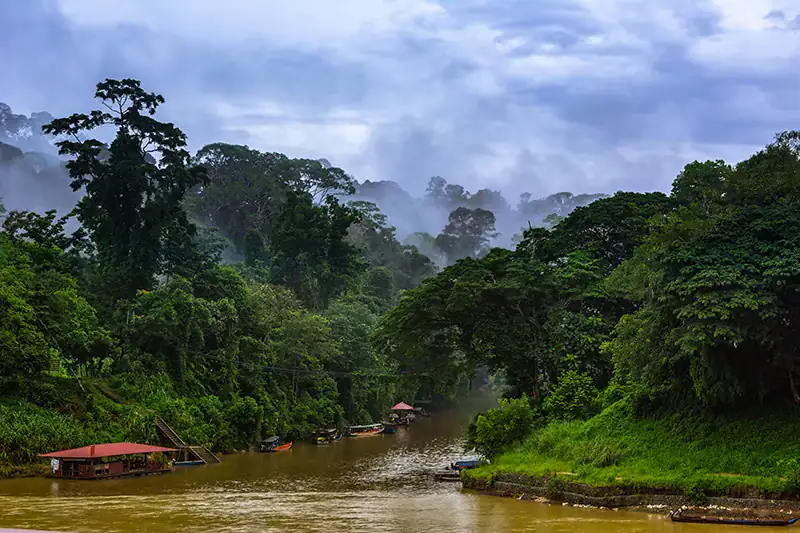
Taman Negara National Park in Malaysia is a rainforest in Pahang, in the interior of Peninsular Malaysia. It covers roughly 4,343 square kilometres and is one of the oldest rainforests on earth — estimates put it at around 130 million years old, which means it predates the Amazon by a significant margin. That number sounds abstract until you’re standing inside it and realise that nothing around you is young.
The base for almost all visitors is Kuala Tahan, a small riverside town on the edge of the park. Across the Tembeling River from Kuala Tahan is the park entrance itself — you cross by small boat, which takes about two minutes and sets the tone immediately. The forest starts the moment you step off.
A quick note on naming: “Taman Negara” is Malay for “national park,” which means Malaysia technically has several taman negaras at the state level. When travellers say Taman Negara, they mean this one — Taman Negara Pahang, the original and largest gazetted national park in Peninsular Malaysia. Google Maps lists it officially as Taman Negara National Park, and that’s the name that has stuck internationally.
The park’s history stretches back to 1925, when the area around Gunung Tahan was first gazetted as a game reserve. Full national park status came in 1938 and 1939, when the British colonial administration — largely through the efforts of wildlife conservationist Theodore Hubback — persuaded the sultans of Pahang, Kelantan, and Terengganu to set aside land spanning all three states. It was named King George V National Park at establishment. After Malaysia’s independence in 1957, it was renamed Taman Negara — the name it carries today.
How to Get to Taman Negara from Kuala Lumpur
Taman Negara sits roughly 250 kilometres northeast of Kuala Lumpur, and getting there takes some planning. There are three realistic routes for international tourists — public transport via bus and boat, a private transfer by road, or a private transfer combined with the river boat journey. All three work, but they suit different types of travellers.
By public bus and river boat
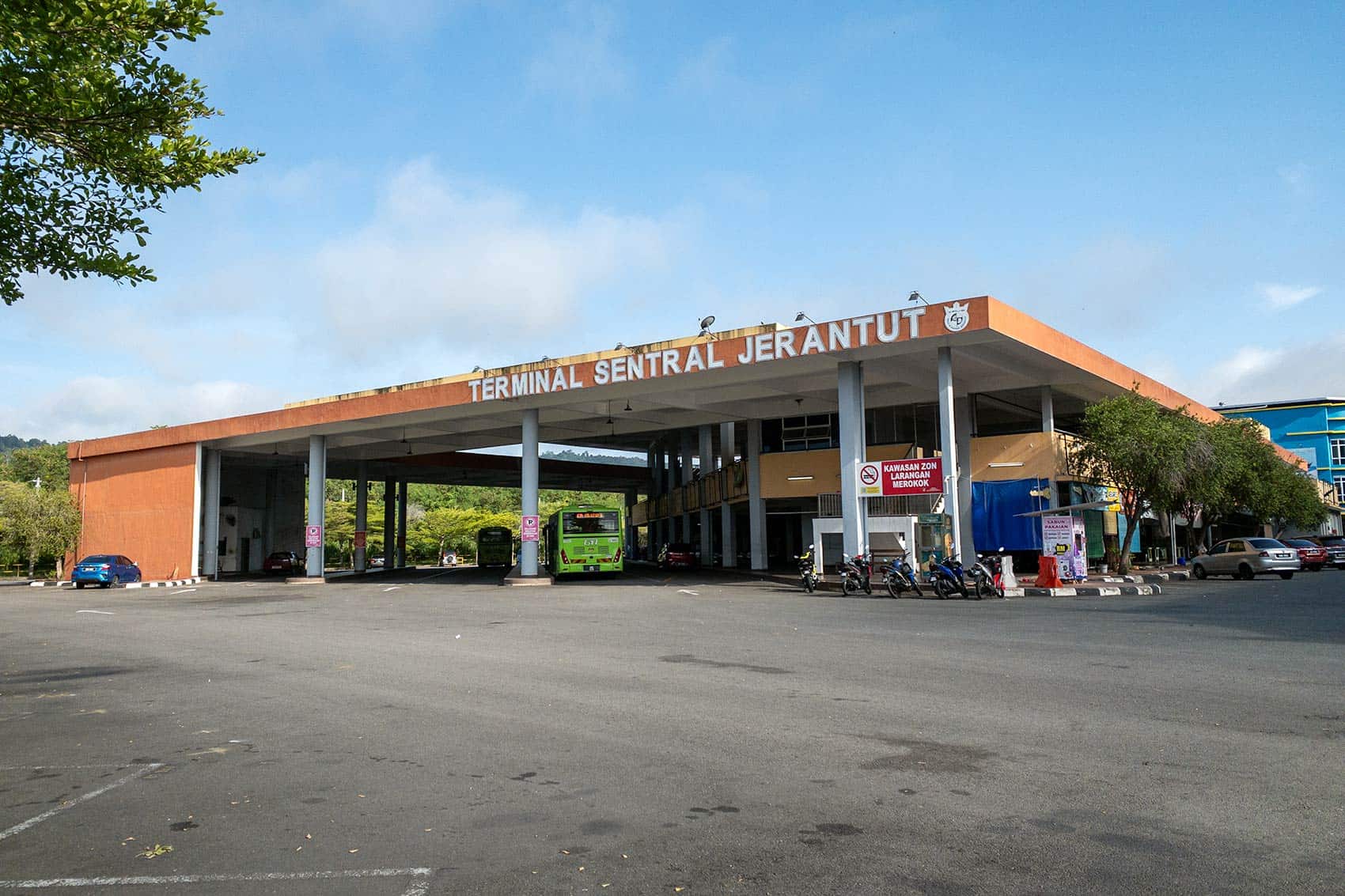
The public route goes like this: take a bus from Kuala Lumpur to Jerantut (around 3.5 to 4 hours), then a connecting minibus or taxi to Kuala Tembeling jetty, then a river boat up the Tembeling River to Kuala Tahan (another 3 hours depending on water levels). Total journey time from KL is typically 7 to 9 hours one way. The scenery on the river leg is genuinely beautiful — longhouses, fishing nets, jungle closing in on both sides — but the connections between stages require patience and delays are common. If you have flexibility in your schedule and enjoy figuring things out as you go, this route has real character.
By private transfer — road only
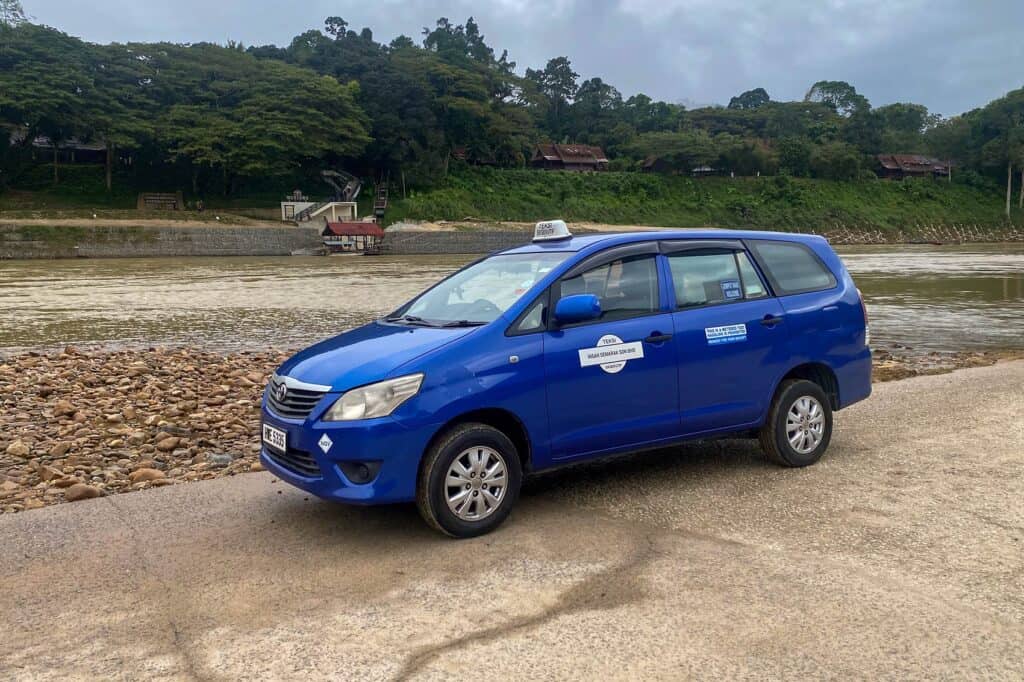
A private transfer from Kuala Lumpur takes you directly to Kuala Tahan by road in around 3.5 to 4 hours, depending on traffic leaving the city. No connections, no waiting at jetties. For travellers on a fixed itinerary or doing Taman Negara as a day trip, this is the practical choice — you arrive fresh with maximum time inside the park.
By private transfer with river boat — the best of both
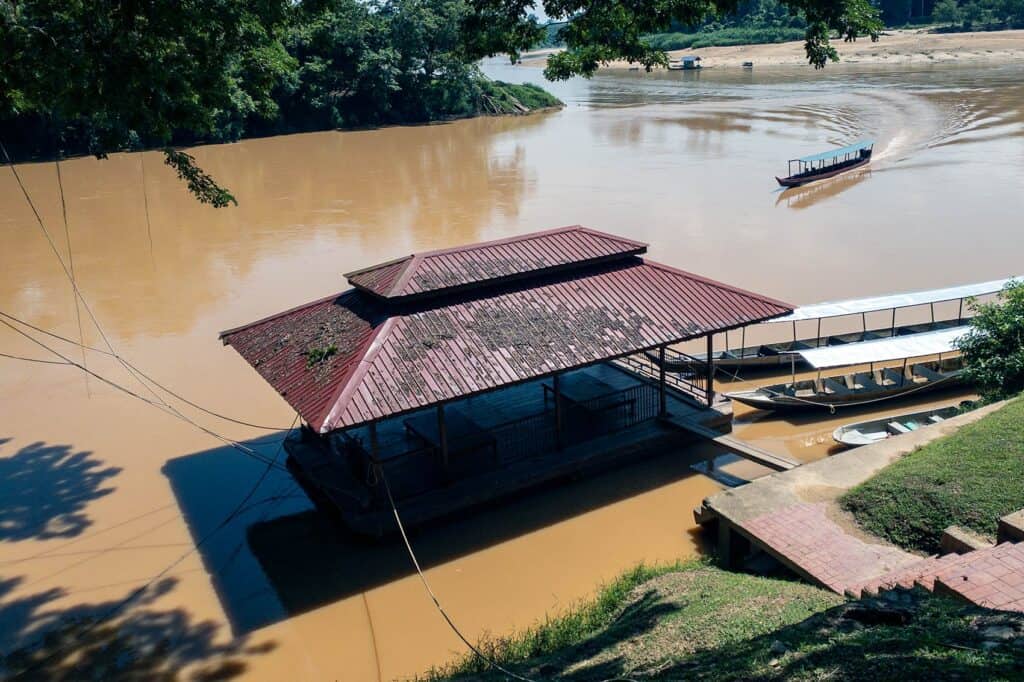
The third option combines the efficiency of a private transfer with the experience of arriving by river. Your driver takes you directly to Kuala Tembeling jetty, cutting out the public bus stage entirely, then you board the river boat for the scenic 3-hour journey up the Tembeling River into Kuala Tahan. You get the jungle riverscape and the atmosphere of arriving the traditional way, without the uncertainty of navigating public connections from KL. This is the option worth considering if the journey is part of the experience for you.
If you are travelling from Kuala Lumpur, the Kuala Lumpur to Taman Negara transport guide covers every option in detail — bus schedules, Jerantut taxi fares, and the 12.30pm boat deadline at Kuala Tembeling. If you are arriving from elsewhere in Malaysia — Cameron Highlands, Penang, or the east coast — the how to get to Taman Negara Pahang guide covers all routes and starting points.
Private Transfer
Kuala Lumpur to Taman Negara — Door to Door
The public bus and boat route takes around 7 hours. A private transfer gets you there in under 4 — with your own schedule, stops wherever you want, and the freedom to grab a proper coffee before you lose access to one for the next two days.
- Optional stop at Batu Caves or Kuala Gandah Elephant Sanctuary en route
- Choose your drop-off — Kuala Tahan or Kuala Tembeling jetty
- Multiple payment options — Cash, PayPal or Credit Card
- Book direct — no platform charges or booking fees
- Flexible cancellation — plans change, and that’s fine
Quick response guaranteed — usually within the hour
Entry Permit and Fees — What You Need to Know Before You Arrive
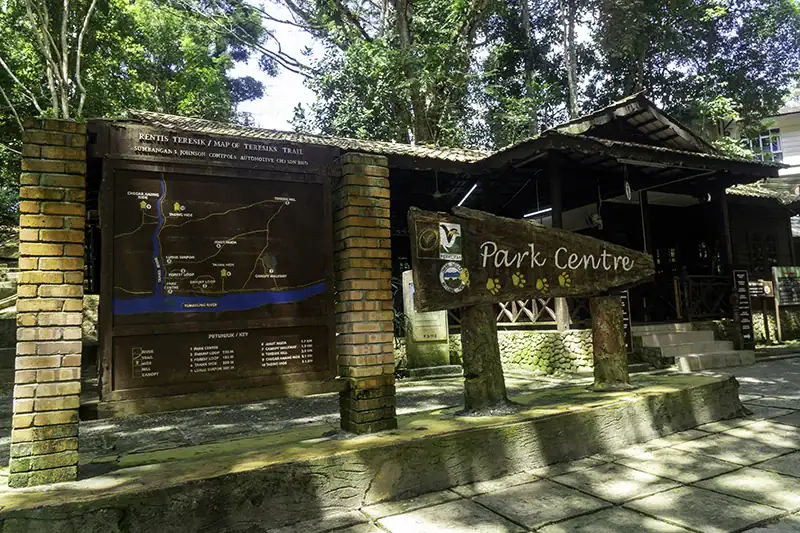
Entering the National Park requires a permit, and this is something many travel guides gloss over or get wrong. Here’s how it actually works on the ground.
The permit is issued by the Department of Wildlife and National Parks (PERHILITAN) and is purchased at the Taman Negara Kuala Tahan office inside the park — not online, not at the Kuala Tahan jetty, and not in advance from Kuala Lumpur. You cross the river first, then get the permit once you’re on the park side. The office is straightforward to find on arrival and the process is quick, but it’s worth knowing this before you go so you’re not caught off guard looking for an online booking system that doesn’t exist.
Current fees for international visitors are as follows:
- Park entry permit — RM1 per person per day
- Camera fee — RM5 for a standard camera, RM10 for a video camera
- Fishing licence — RM10 per person if you plan to fish inside the park
The entry permit fee is genuinely low — almost symbolic. The real cost of visiting Taman Negara is in getting there and in any guided activities you book. If you’re visiting on an organised tour, your guide will typically handle the permit process on your behalf, which is one less thing to think about on arrival.
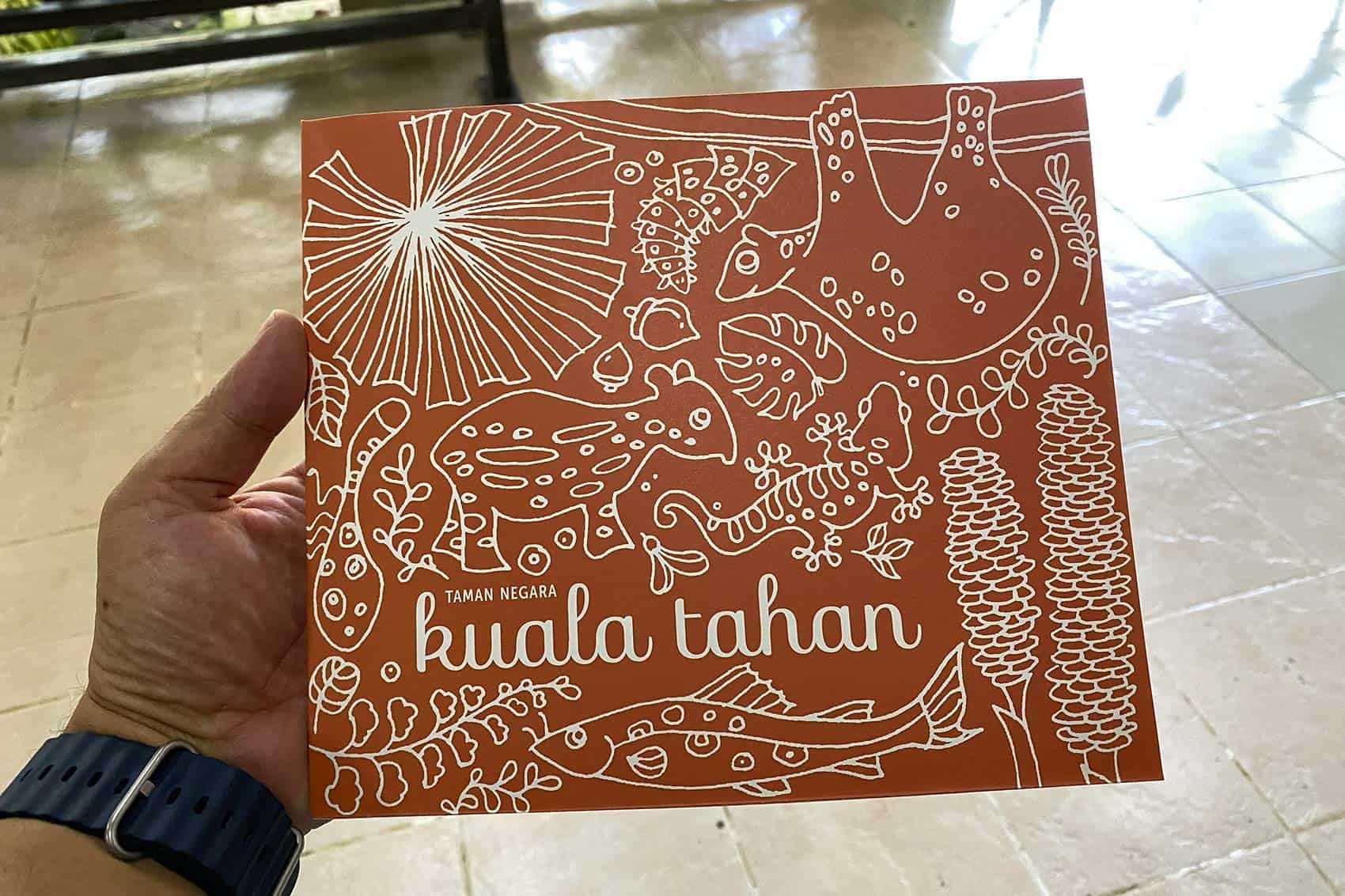
One practical note: bring cash in Malaysian Ringgit. The Taman Negara Kuala Tahan PERHILITAN office does not accept cards. While you’re there collecting your permit, you can also purchase an official Kuala Tahan visitor map — a useful orientation tool that shows trails, jetties, and key activity points around the park. Worth picking up before you head out on the trails.
Facilities at Taman Negara — What’s Available on the Ground
Most travel guides skip this entirely, which leaves visitors either over-packing things they don’t need or arriving without things they do. Here’s what’s actually available in and around Kuala Tahan.
Car park
There is a dedicated secure car park for visitors arriving by private vehicle. Open bay parking costs RM10 per day and covered rooftop parking costs RM15 per day. If you’re driving to Taman Negara and leaving your vehicle while you spend time in the park, the covered option is worth the extra cost — particularly during the wet season when afternoon downpours are common.
ATM
ATMs are available at Mutiara cafe and at several locations around Kuala Tahan town. However, because Kuala Tahan is a small isolated jungle town, the machines can run out of cash or go out of service — and when that happens, a refill or repair can take several days. Do not rely on the Kuala Tahan ATMs as your primary source of cash. Withdraw everything you need in Kuala Lumpur before departure. You’ll need cash from the moment you arrive — the park permit, activity operators, food stalls, and most services in the area are cash only.
Laundry
A standalone laundry service operates in Kuala Tahan town. For overnight and multi-day visitors this is genuinely useful — jungle trekking in tropical humidity means clothes need washing daily, and the service removes the need to hand-wash in your accommodation.
Clinic
There is a government clinic in Kuala Tahan operating during standard weekday working hours. The clinic accepts emergency cases outside of normal hours, so basic medical attention is available if needed. For anything serious, the nearest hospital is in Jerantut, roughly 60 kilometres away — another reason to carry a basic first aid kit and any personal medication you might need.
Food and restaurants
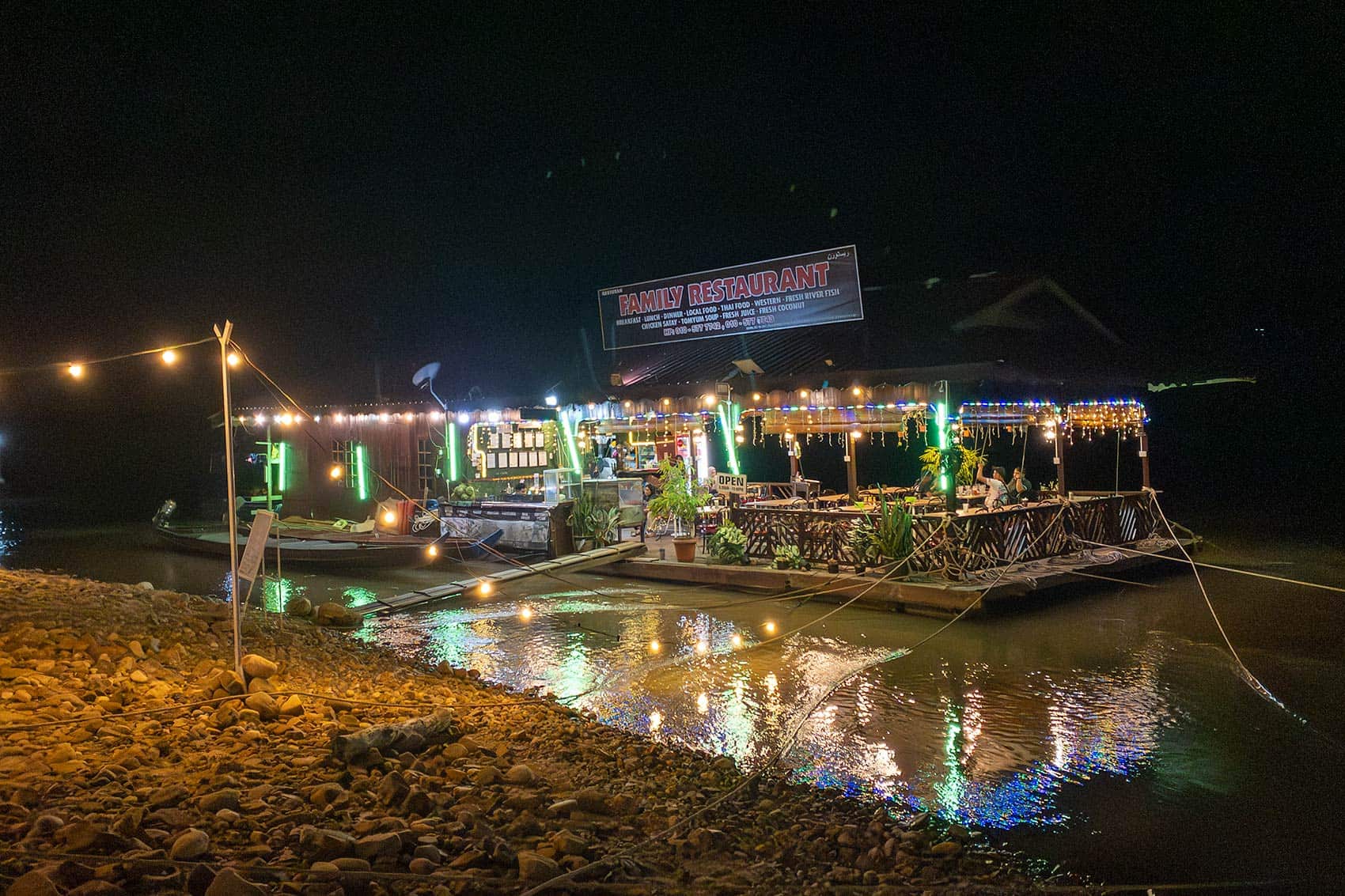
Kuala Tahan has a range of eating options along the riverbank. Small cafes and hawker stalls serve simple Malaysian food at local prices — nasi goreng, mee goreng, and local favourites are reliable staples. The standout dining experience is the floating restaurant on the river, where you eat directly over the water with the jungle on the opposite bank.
It’s basic food but the setting makes it worth going once, particularly at dusk. One note for coffee drinkers: there are no espresso machines or specialty coffee in Kuala Tahan. All restaurants and cafes use instant coffee. If a proper brew is part of your morning routine, bring a small travel kit or prepare to embrace Nescafé for the duration of your stay.
Things to Do in Taman Negara Pahang
Taman Negara Pahang has enough to fill several days, but even on a single visit you can cover the highlights comfortably if you plan the order well. Here’s what’s worth your time.
Canopy walk

The canopy walkway at Taman Negara is one of the longest in the world — suspended between giant trees at roughly 40 metres above the forest floor. Walking it in the early morning gives you the best chance of spotting birds and the forest is quieter before the midday heat sets in. The walk takes around 45 minutes at an easy pace. Slots are limited and fill up quickly, so book as early as possible on arrival at Kuala Tahan. For everything you need to know before you go, the Taman Negara canopy walk guide covers it in full detail.
Bukit Teresek trek
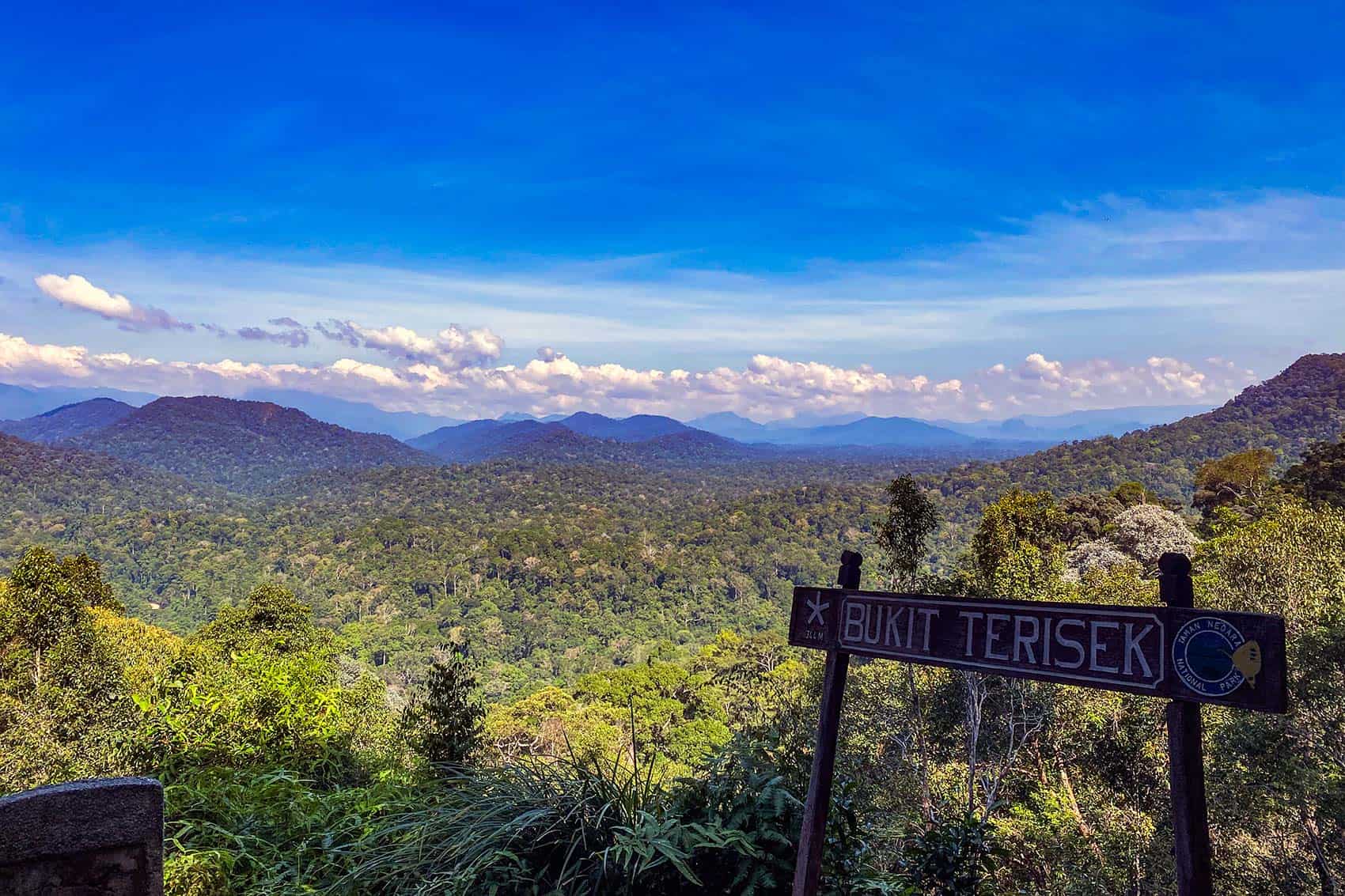
This is the most accessible jungle trek inside the park and the one most suited to day visitors. The trail climbs to a viewpoint above the rainforest canopy with clear views across the Tembeling River valley on a good day. The return hike takes around 1.5 to 2 hours and is moderately steep in sections — good grip shoes are essential. It’s a genuine jungle trail, not a paved path, so expect roots, humidity, and the occasional leech.
Night walk

One of the most memorable experiences at Taman Negara is the guided night walk along the forest edge. The forest completely changes after dark — different sounds, different animals, and a different atmosphere altogether. Scorpions, civets, and various insects become visible with a torch that would be invisible in daylight. This activity is only available to overnight visitors, which is one of the strongest arguments for staying at least one night.
Orang Asli village visit
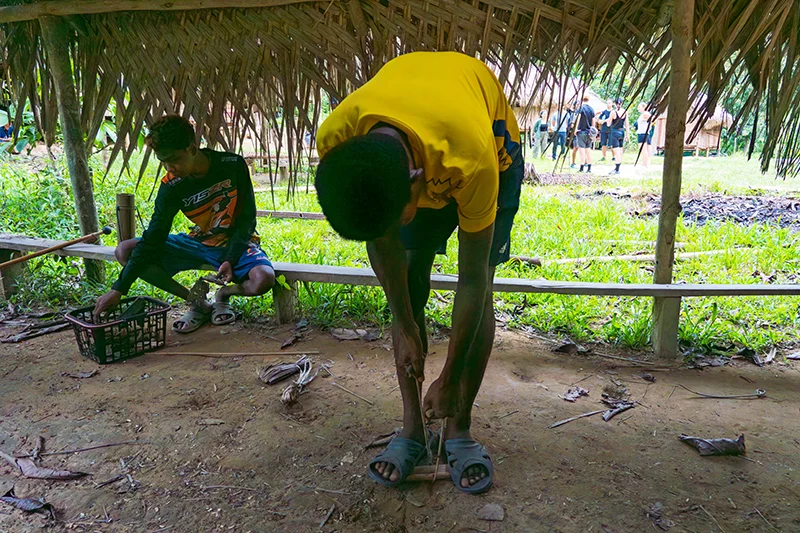
The Batek are the indigenous people of this part of the rainforest and have lived inside what is now the park for thousands of years. A guided visit to an Orang Asli village includes a demonstration of traditional blowpipe hunting, fire-making, and forest foraging. It’s worth approaching with genuine curiosity rather than a camera-first mindset — the guides who lead these visits take the cultural element seriously.
River cruise and bat cave

A short river cruise along the Tembeling takes you to the bat cave — a limestone cave on the riverbank that houses a large colony of bats. The cave itself is atmospheric and the river journey is a good way to see the park from a different angle. The cruise typically takes 1.5 to 2 hours return and can be arranged through the activity operators in Kuala Tahan.
Lata Berkoh waterfall

Lata Berkoh is a series of rapids and natural pools about 9 kilometres upriver from Kuala Tahan. Getting there requires a boat and some easy walking — it’s a half-day activity in itself. The pools are clear and swimming is possible when water levels allow. This one is better suited to overnight visitors who have a full day to give to it.
For the full breakdown of every activity including current prices and how to book each one, the things to do in Taman Negara guide covers everything in detail.
Wildlife in Taman Negara Pahang
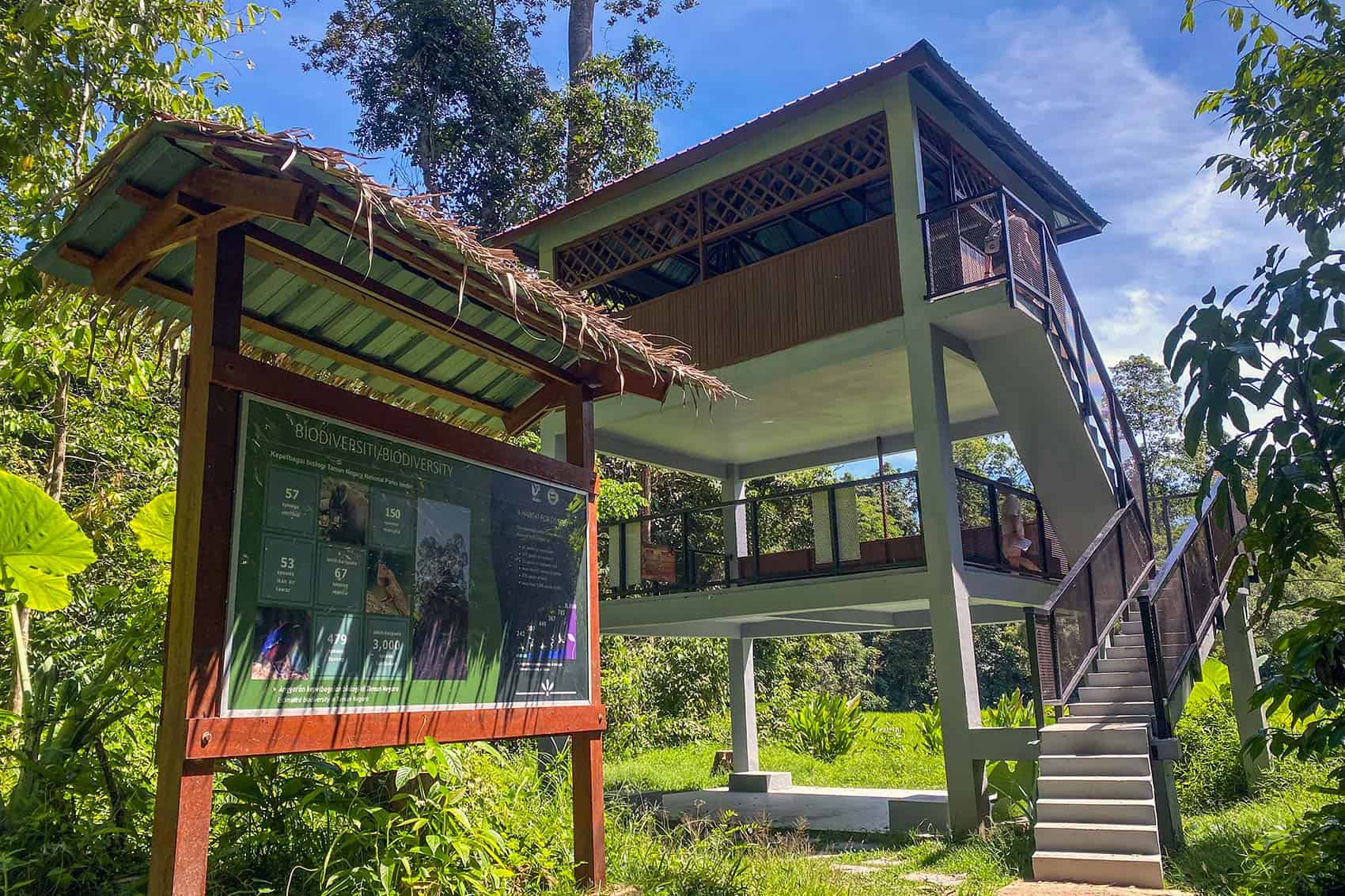
Taman Negara Pahang is home to a remarkable range of wildlife. The ancient rainforest shelters everything from long-tailed macaques, hornbills, and monitor lizards to more elusive animals like Malayan tapirs, wild boars, Asian elephants, and Malayan tigers. It’s also exceptional for birdwatching, with over 300 species recorded within the park, alongside diverse amphibians, reptiles, and insects that thrive across the dense jungle and along the riverbanks.
That said, you shouldn’t expect to see large animals near the main trails during the day. Most of the park’s iconic wildlife — including tigers, leopards, and sun bears — are nocturnal and highly elusive. They tend to avoid areas with human activity and are rarely spotted unless you’re deep in the jungle or very fortunate.
For visitors serious about wildlife observation, one of the best options is to spend a night in a bumbun — a basic wildlife observation hide, typically perched on stilts or set into the treeline. From these quiet structures, you watch in silence for animals visiting nearby salt licks or moving through the forest after dark. It’s a patient, immersive experience that rewards those willing to sit still and wait. If wildlife is the main reason you’re visiting Taman Negara, an overnight stay with a bumbun session is the experience to plan around.
Day Trip or Overnight Stay — Which Is Right for You?
This is the question most visitors ask before booking, and the honest answer depends on what kind of traveller you are rather than what makes the best travel blog story.
A day trip from Kuala Lumpur is genuinely worth it if your time in Malaysia is limited and you want to experience the rainforest without committing to a full overnight journey. On a well-planned day trip you can cover the guided jungle walk, the Bukit Teresek trek, an Orang Asli village visit, and river rapids on the return — that’s a full and satisfying day inside one of the oldest rainforests on earth. You leave having actually been inside Taman Negara, not just having looked at it from the edge. Taman Negara is one of the most rewarding day trips from Kuala Lumpur and sits alongside other popular options if you are planning multiple day excursions from the city.
An overnight stay opens up a different experience entirely. The night walk is only available to those staying inside the park, Lata Berkoh waterfall requires a half-day to do properly, and the deeper jungle treks need an early start that isn’t realistic on a same-day return from KL. If the rainforest is a centrepiece of your Malaysia trip rather than a day excursion, one or two nights transforms what’s possible.
The practical question is where Taman Negara sits in your itinerary. If you’re spending most of your time in Kuala Lumpur and fitting Taman Negara in as one of several day trips, a guided day trip with a private transfer makes the most sense — you get the experience without losing two days to travel. If you’re moving through Malaysia at a slower pace and Pahang is a destination in itself, build in the overnight. The Malaysia itinerary guide covers how to structure the full trip by region and travel pace if you’re still working out the bigger picture.
If you’d prefer to leave the planning to a local, I run private day trips from Kuala Lumpur that cover the canopy walk, Bukit Teresek trek, and river cruise — door to door in one day with no connections to figure out. The Taman Negara day trip from Kuala Lumpur covers what’s included and how to book. If you want to experience both Taman Negara and Cameron Highlands without returning to Kuala Lumpur in between, the Taman Negara and Cameron Highlands 2-day tour is worth considering.
Day one covers the full Taman Negara experience — canopy walk, jungle trek, river cruise — then a direct transfer to Cameron Highlands for an overnight stay. Day two is a full Cameron Highlands tour covering the tea plantations, strawberry farms, and highland trails, with a drop-off at either Kuala Lumpur or Penang at the end. No backtracking, no wasted travel days.
If you’re planning other Pahang day trips from KL, the Kuala Gandah Elephant Sanctuary is worth pairing with a Taman Negara visit on a longer itinerary.
Private Day Trip from Kuala Lumpur
Private Taman Negara Day Trip — Fully Guided & All Inclusive from Kuala Lumpur
One full day inside the 130-million-year-old rainforest — a guided 7 to 8 kilometre jungle walk, Bukit Teresek viewpoint trek, Orang Asli village visit, and river rapids shooting on the return. Breakfast, lunch, and all entrance fees included. And if you’re heading north, skip the return to KL and continue directly to Cherating or Cameron Highlands.
- Fully inclusive — breakfast, lunch and all entrance fees covered
- Optional drop-off in Cherating or Cameron Highlands — no return to KL required
- Short cancellation notice accepted without penalty
- Comfortable private vehicle — no shared buses or public connections
Quick response guaranteed — usually within the hour
Best Time to Visit Taman Negara National Park
Taman Negara National Park is open year-round, but the timing of your visit makes a real difference to what you can do once you’re there.
February to September is the most reliable window. Rainfall is lower, river levels are manageable, and the main trails including Bukit Teresek and the canopy walk are consistently accessible. The forest is never truly dry — this is a rainforest — but the difference between visiting in March and visiting in December is significant. Mornings tend to be clearer, which matters for the Bukit Teresek viewpoint and for wildlife spotting on the canopy walk.
October and November are shoulder months. Rain increases noticeably and some days bring heavy afternoon downpours, but visits are still very much doable. River levels begin to rise in November, which can affect boat journey times and occasionally access to Lata Berkoh. If you’re visiting in this window, build some flexibility into your itinerary and accept that the forest will be wetter and muddier underfoot.
December to January is the northeast monsoon season. Flooding is a real possibility during this period — the Tembeling River can rise quickly after sustained rain, and some trails and river activities close temporarily as a result. This doesn’t mean Taman Negara is off-limits entirely, but it does mean you’re taking on more uncertainty. If the monsoon season is your only option, check conditions closer to your visit date and have a backup plan.
On leeches — they’re present year-round, not just in the wet season. They’re more active after rain, which means the shoulder and wet months bring more encounters, but even in the dry season you’ll want leech socks on the jungle trails. They’re not dangerous, but they’re persistent. A good pair of leech socks and DEET-based insect repellent on exposed skin handles the problem effectively. Most day trip operators in Kuala Tahan can sell or lend you leech socks on arrival if you don’t have your own.
Eid Fitri and Eid Adha — avoid these dates entirely. Around 90% of Taman Negara’s local population is Muslim, which means both major Islamic festivals have a significant impact on the visitor experience. In the days surrounding Eid Fitri and Eid Adha, most shops and restaurants in Kuala Tahan close, the number of available nature guides drops considerably, journey times from Kuala Lumpur increase due to heavy domestic traffic on the highways, and activities inside the park are severely limited or unavailable. Visiting during these periods means arriving to find a largely shut-down town with few services operating.
For 2027, the dates to avoid are:
- Eid Fitri (Hari Raya Aidilfitri): 9–11 March 2027 — avoid 7–15 March 2027
- Eid Adha (Hari Raya Aidiladha): 16–17 May 2027 — avoid 14–19 May 2027
Islamic calendar dates are based on moon sighting and can shift by one day. Allow a buffer of at least two to three days either side of each festival. These dates shift earlier by approximately ten days each year — check current dates before booking if you are planning more than a year ahead.
What to Pack for Your Taman Negara Visit
Taman Negara is a working rainforest, not a resort. What you bring directly affects how comfortable and how safe your visit is. These are the items that actually matter.
Leech socks
Non-negotiable on the jungle trails. Leech socks are worn over your regular socks and tucked under your trouser legs — they prevent leeches from finding their way into your shoes and up your legs while you’re walking. You can buy them in Kuala Tahan on arrival if you don’t have them, but it’s worth bringing your own so you’re not spending time shopping when you could be inside the park.
Long lightweight trousers
Shorts are fine in Kuala Tahan town, but on the trails you want your legs covered. Lightweight hiking trousers in a quick-dry fabric are the right call — they keep leeches and insects off your skin without overheating you in the humidity.
Good grip trail shoes
The Bukit Teresek trail and most jungle paths involve roots, mud, and uneven ground. Sandals and flat-soled shoes are genuinely hazardous on wet sections. Trail running shoes or lightweight hiking boots with grip are the right footwear. If your shoes are not waterproof, accept that they will get wet and pack a dry pair for the journey back.
Insect repellent with DEET
Apply it to all exposed skin before entering the trails. Reapply after sweating heavily or crossing water. The concentration matters — look for at least 20% DEET for effective protection in a tropical rainforest environment.
Waterproof bag or dry bag
If you’re arriving by river boat, your belongings will be exposed to spray and occasional rain. A lightweight dry bag or a waterproof cover for your daypack keeps your phone, camera, and documents protected on the river journey.
Cash in Malaysian Ringgit
As covered in the entry fees section — the Taman Negara Kuala Tahan PERHILITAN office does not accept cards, and most activity operators and food stalls in Kuala Tahan are cash only. While ATMs exist in Kuala Tahan, the machines can run out of cash or go out of service for several days at a time due to the town’s isolated location. Withdraw everything you need in Kuala Lumpur before departure and do not rely on finding a working ATM when you arrive.
Power bank
Phone signal exists in parts of Kuala Tahan town on Digi and Celcom networks, but disappears entirely once you’re on the trails. Your phone will be searching for signal constantly, which drains the battery faster than usual. A fully charged power bank covers you for a full day visit without worry.
Where to Stay in Taman Negara
Accommodation options at Taman Negara split into two categories — inside the park, and in Kuala Tahan town on the opposite bank.
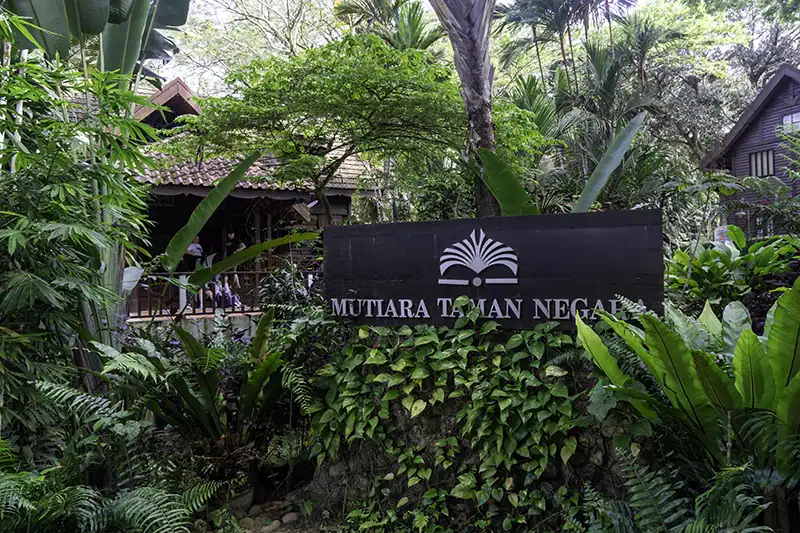
Inside the park, Mutiara Taman Negara Resort is the only full resort operating within the park boundary. It sits directly on the riverbank with forest views, offers guided activities, and is the most comfortable base for those wanting to be fully immersed without roughing it. It books up during school holidays and peak travel months, so reservations in advance are worth making if this is your preference.
In Kuala Tahan village, the options range from budget hostels and simple chalets to mid-range guesthouses. The town is small and everything is within walking distance of the jetty. Staying in Kuala Tahan rather than inside the park makes no meaningful difference to your access — the river crossing takes two minutes — and gives you more flexibility on price and meal options.
For day trip visitors arriving from Kuala Lumpur, no accommodation is needed. The Taman Negara day trip from Kuala Lumpur is designed around a full return journey in one day, leaving early enough to maximise time inside the park.
The Overland Route — Pairing Taman Negara with Malaysia’s Best
Taman Negara National Park sits at the heart of one of the most rewarding overland routes in Peninsular Malaysia. If you have a week or more, the journey from Kuala Lumpur north to Penang — with Taman Negara as the jungle centrepiece — covers everything Malaysia does well: city culture, ancient rainforest, wildlife, cool highlands, colonial heritage, and some of the best food in Southeast Asia.
Here is how the route fits together from south to north.
Kuala Lumpur and Batu Caves
Most overland journeys begin in Kuala Lumpur. The city deserves at least two days of its own before you head into the interior — the full Kuala Lumpur destinations guide covers the city’s neighbourhoods, attractions, and day trip options in detail. Before heading north, Batu Caves is a natural first stop — just 30 minutes north of the city centre and directly en route toward Taman Negara. The limestone cave temple complex, the 272-step staircase, and the 43-metre golden statue of Lord Murugan take a few hours to explore properly. If you’re travelling by private transfer toward Taman Negara, your driver can stop here on the way without adding significant time to the journey.
Kuala Gandah Elephant Sanctuary
About two hours from Kuala Lumpur and sitting roughly along the road toward Taman Negara, Kuala Gandah Elephant Sanctuary is home to rescued Asian elephants. You can watch the elephants bathe, learn about the conservation programme, and feed them under the supervision of the sanctuary’s mahouts. As a half-day stop between KL and Taman Negara, it adds a wildlife dimension to the journey before you even reach the park — making it a logical pairing for anyone interested in both elephants and the broader Pahang wilderness.
Taman Negara National Park
The anchor of the route. After the urban buzz of KL and the gentle introduction of Batu Caves and Kuala Gandah, stepping into Taman Negara National Park is a genuine shift of pace and atmosphere. The canopy walk, jungle treks, river cruise, and Orang Asli cultural encounter give you the full depth of the Peninsular Malaysia rainforest experience. Whether you spend one day or three, Taman Negara is the part of this route that most travellers remember longest.
Cameron Highlands
After the heat and humidity of the jungle, Cameron Highlands offers a complete contrast. The drive from Taman Negara takes around 4 to 5 hours and the temperature drops noticeably as you climb. Tea plantations, strawberry farms, mossy forest trails, and cool misty mornings make Cameron Highlands feel like a different country from the rainforest you were in the day before.
If you’d rather not return to Kuala Lumpur between the two destinations, the Taman Negara and Cameron Highlands 2-day tour connects both back to back. After a full day of activities in Taman Negara, you transfer directly to Cameron Highlands for an overnight stay. The following day covers the Cameron Highlands highlights — BOH tea plantation, strawberry farms, highland trails — and ends with a drop-off at either Penang or Kuala Lumpur depending on where your itinerary goes next. For travellers heading north along the overland corridor, the Penang drop-off means the entire route from Taman Negara to Penang is covered in two days without retracing a single kilometre.
Allow at least two nights in Cameron Highlands if you’re staying independently — one full day is not enough to do it properly.
Ipoh
An hour’s drive north from Cameron Highlands, Ipoh is one of Malaysia’s most underrated cities. Limestone cave temples, a beautifully preserved Old Town with colonial-era streets, and a food scene that locals across the country travel for — white coffee, chicken rice, dim sum, and curry noodles that have made Ipoh quietly famous. It works as a half-day stopover or a full overnight stay before the final stretch north.
Penang — Where the Route Ends
Penang is the natural conclusion to the overland corridor — a UNESCO World Heritage island city and Malaysia’s undisputed food capital. George Town’s heritage streets, street art, clan jetties, and hawker centres give you culture and cuisine in equal measure. The island setting, with beaches on the north coast and the heritage core in the south, means Penang covers the “city to island” arc that completes the journey. Allow at least two to three nights to experience it fully.
The full route — Kuala Lumpur → Batu Caves → Kuala Gandah → Taman Negara → Cameron Highlands → Ipoh → Penang — takes seven to ten days at a comfortable pace and requires no backtracking. Every leg can be covered by private transfer, which removes the complexity of connecting buses and lets you stop at points of interest along the way. For more on planning the full journey, the places to visit in Peninsular Malaysia guide covers the broader route in detail.
Final Thoughts on Taman Negara National Park
Taman Negara National Park is one of those places that is genuinely difficult to put into context until you’re standing inside it. A 130-million-year-old rainforest doesn’t look dramatically different from any other jungle at first glance — but the weight of it settles in slowly. The sounds, the scale, the density of life around you. It’s the kind of place that earns its reputation quietly rather than loudly.
It also rewards honest planning. Know what a day trip can and can’t give you, bring the right footwear, carry cash, and don’t expect phone signal past the town boundary. The visitors who leave disappointed are almost always the ones who arrived underprepared or with the wrong expectations. The ones who leave wanting to come back are usually the ones who read a guide like this one first.
If you have questions about getting there, what to book in advance, or how Taman Negara fits into a broader Malaysia itinerary, feel free to get in touch — planning trips into the interior is something I do regularly, and the logistics are simpler than they look once you know the route.