Things to Do in Kuala Lumpur – A First-Time Visitor’s Practical Guide

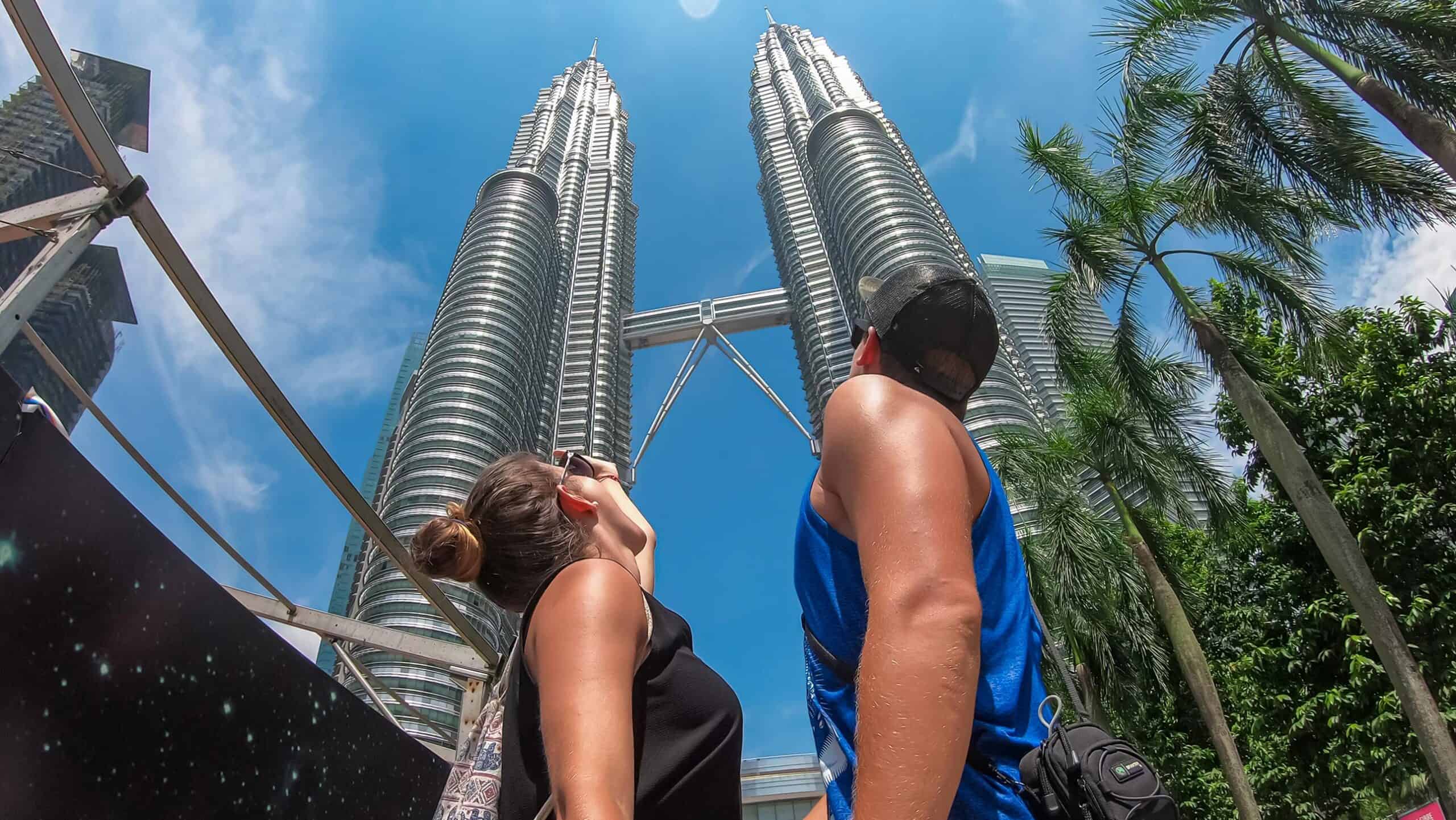
Things to do in Kuala Lumpur is one of the most searched travel phrases about Malaysia. And most of what comes up is a long list. Skyscrapers. Temples. Markets. Food streets. Day trips. Forty things. Sometimes more,
But a long list is not the same as useful advice.
Most first-time visitors do not need more options. They need fewer, better ones — experiences that are genuinely worth their time, realistic within a short trip, and chosen by someone who actually knows the city rather than someone compiling everything that has ever been written about it.
This list is shorter than most. That is intentional.
Every experience here was hand-picked against four questions: Is it genuinely among the best KL has to offer? Would a local guide recommend it to a first-timer? Does it deliver a real experience rather than just a location to photograph? And can a real tourist actually do it within a normal trip? If the answer to all four was yes, it made the list.
Kuala Lumpur is compact in some areas and surprisingly spread out in others. It blends modern skyline views with historic streets, religious landmarks, food neighbourhoods, and green pockets of space. The key is not doing everything. The key is doing the right things — and structuring your days so the city makes sense rather than just feeling busy.
Most first-time visitors to Malaysia start in Kuala Lumpur before travelling to other parts of the country. If you are still planning your wider trip, our destinations in Malaysia guide covers everything beyond the capital.
For a full overview of KL itself — neighbourhoods, transport, and how the city works — start with our Kuala Lumpur destination guide. If you want a landmark-by-landmark breakdown of specific sites, the attractions in Kuala Lumpur page covers those in detail.
Here, we focus on something different: how to think about Kuala Lumpur as a first-time visitor — and how to structure your time so the city makes sense rather than just feeling busy.
Attractions vs Things to Do — Why the Difference Matters in KL
One note before we dive in: attractions and things to do are not the same thing.
Attractions are places — the Petronas Twin Towers, Batu Caves, Merdeka Square. You visit them, photograph them, and move on. They are fixed points on a map.
Things to do are experiences — eating at a kopitiam, walking through Chinatown at dusk, sitting in KLCC Park as the towers light up, joining a batik workshop, trying durian for the first time at a street stall. They happen in places, but the place is not the point. The experience is.
This guide is about the second kind. Not where to go, but how to spend your time — and why the difference matters more than most travel articles admit.
How to Think About Kuala Lumpur as a First-Time Visitor
One note before we dive in: attractions and things to do are not the same thing.
Attractions are places — the Petronas Twin Towers, Batu Caves, Merdeka Square. You visit them, photograph them, and move on. They are fixed points on a map.
Things to do are experiences — eating at a kopitiam, walking through Chinatown at dusk, sitting in KLCC Park as the towers light up, joining a morning crowd at a hawker stall. They happen in places, but the place is not the point. The experience is.
This guide is about the second kind. Not where to go, but how to spend your time — and why the difference matters more than most travel articles admit.
1. Kuala Lumpur Is a City of Districts, Not One Compact Centre
Many first-time travellers assume the city functions like a European capital where everything is walkable from one historic core. Kuala Lumpur does not work that way.
Things to Do in Kuala Lumpur — Focus on Less, Experience More
- KLCC — modern skyline, Petronas Twin Towers, upscale malls
- Bukit Bintang — shopping, street food, nightlife
- Chinatown and the heritage zone — markets, temples, colonial buildings
- Lake Gardens / Perdana Botanical Gardens — green space and calm
- Kampung Baru — traditional Malay village tucked inside the modern city
Each district is walkable within itself. Moving between them usually requires public transport or a short ehailing ride. If you plan multiple neighbourhoods in one afternoon without accounting for travel time, the day quickly feels rushed. For a detailed explanation of how to move between areas realistically, refer to the Getting Around Kuala Lumpur guide before finalising your schedule.
2. Heat and Humidity Affect Your Daily Pace
Kuala Lumpur is tropical. Midday heat is real, especially if you are arriving from Europe or North America. This affects how you structure your time more than most travel articles acknowledge.
Outdoor cultural sites work best in the morning. Indoor attractions and air-conditioned spaces are more comfortable between noon and 3pm. Parks and skyline viewpoints feel better in late afternoon or early evening. Plan by climate rhythm, not just by category.
Traffic and travel time matter more than you expect
On a map, many locations appear close. In reality, peak-hour traffic can slow movement significantly between districts. Grouping nearby experiences is smarter than jumping across town repeatedly.
Combine skyline views with KLCC Park. Combine heritage buildings with Chinatown. Combine evening food exploration with Bukit Bintang. This kind of planning turns a busy city into a manageable one.
Kuala Lumpur is worth visiting for its contrast
Ultra-modern towers beside traditional temples. The call to prayer near rooftop bars. Street food stalls next to luxury malls. Tropical greenery woven into the urban skyline. When you see the skyline, visit a Hindu cave temple, walk through colonial-era buildings, and eat at a local hawker stall within the same two days, you begin to understand Malaysia itself.
Do not try to finish Kuala Lumpur
Think in experiences instead — and give each one the time it deserves:
- Skyline and orientation — see the city from above before you explore it at street level
- Culture and history — temples, mosques, colonial buildings, and participatory rituals
- Food and daily life — kopitiam breakfast, hawker stalls, night markets, and durian
- Green space and breathing room — parks, botanical gardens, and a slower pace
- Neighbourhood atmosphere — Chinatown at night, Kampung Baru, Bangsar on foot
- Evening Kuala Lumpur — rooftop bars, illuminated bridges, massage, and speakeasies behind unmarked doors
- A short day trip outside the city (optional) — highlands, colonial towns, or fireflies on a river
Even with just two days, covering three or four of these layers gives you a balanced and genuine experience of the city.
Things to Do in KLCC — Towers, Park, Bridge, and Dinner Without Leaving the District
For first-time visitors, the KLCC area is the best place to start — and the smartest way to spend your first evening in Kuala Lumpur. Everything in this section sits within walking distance of each other: the Petronas Twin Towers, KLCC Park, Saloma Bridge, and dinner at Suria KLCC. No transport between stops, no wasted time crossing the city. Start at the towers in the late afternoon, work your way through the park and the bridge, and end with dinner — one zone, one evening, four of the most rewarding things to do in Kuala Lumpur without leaving the same district. Suitable for all types of visitors, from stopovers to families.
If the Petronas tickets are sold out or your schedule is unpredictable, KL Tower is the walk-in alternative — open deck, 360° view, no booking required. Plan it as a separate trip.
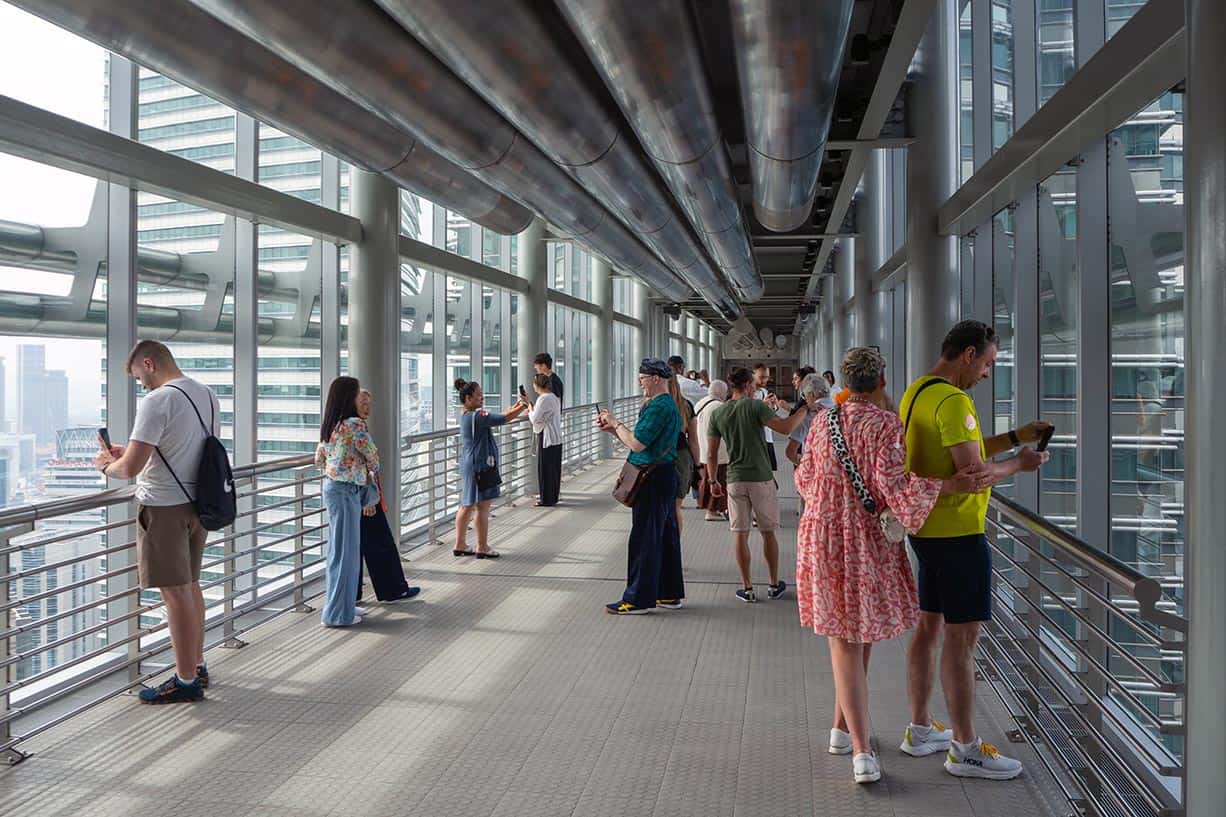
Visiting Skybridge & Level 86 — The Highest Twin Tower View on Earth
One ticket covers two levels — the Skybridge at Level 41 connecting the tallest twin buildings in the world, and the Level 86 observation deck at the top of Tower 2. From here the city’s contrast becomes readable: the modern financial district on one side, colonial rooftops, minarets, and tropical hills on the other. Late afternoon is the best time — catch the sunset and watch the towers light up as the city shifts to evening. Book at least two days ahead, same-day slots sell out by mid-morning. See our Petronas Twin Towers ticket guide for full pricing, booking steps, and the best time slots to choose.
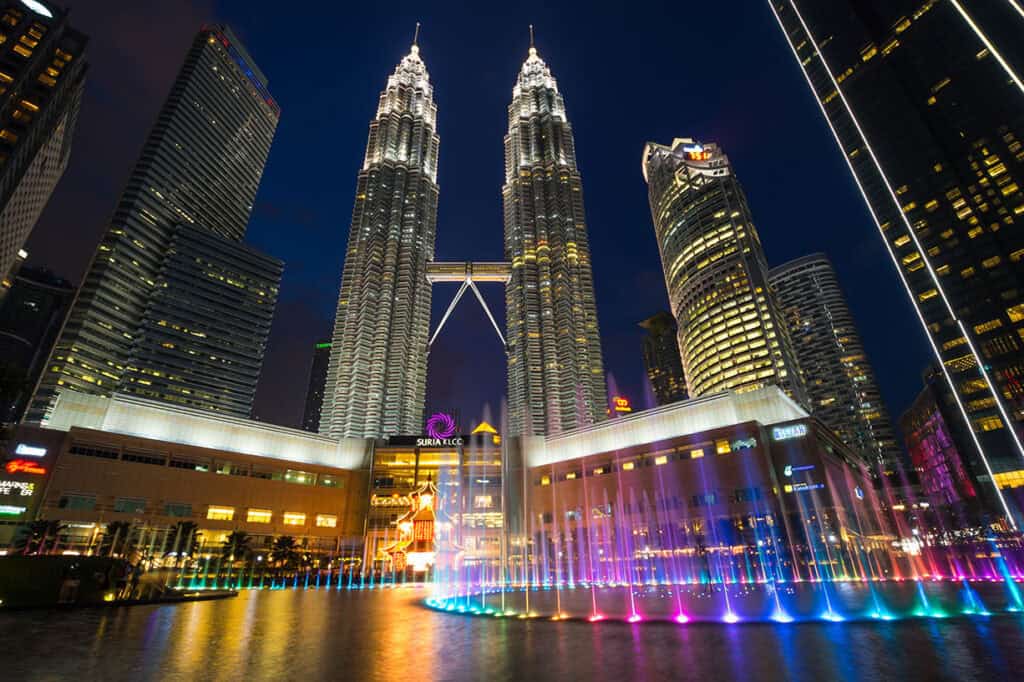
Watch the Fountain Show — Free Evening at KLCC Park
After the towers, come down to KLCC Park and stay for the evening. The Symphony Lake fountain show runs after sunset with the towers lit up as the backdrop — free to watch and worth timing your visit around. Children can use the free wading pool near the playground. One of the few genuinely free experiences in the KLCC area that locals actually use themselves.
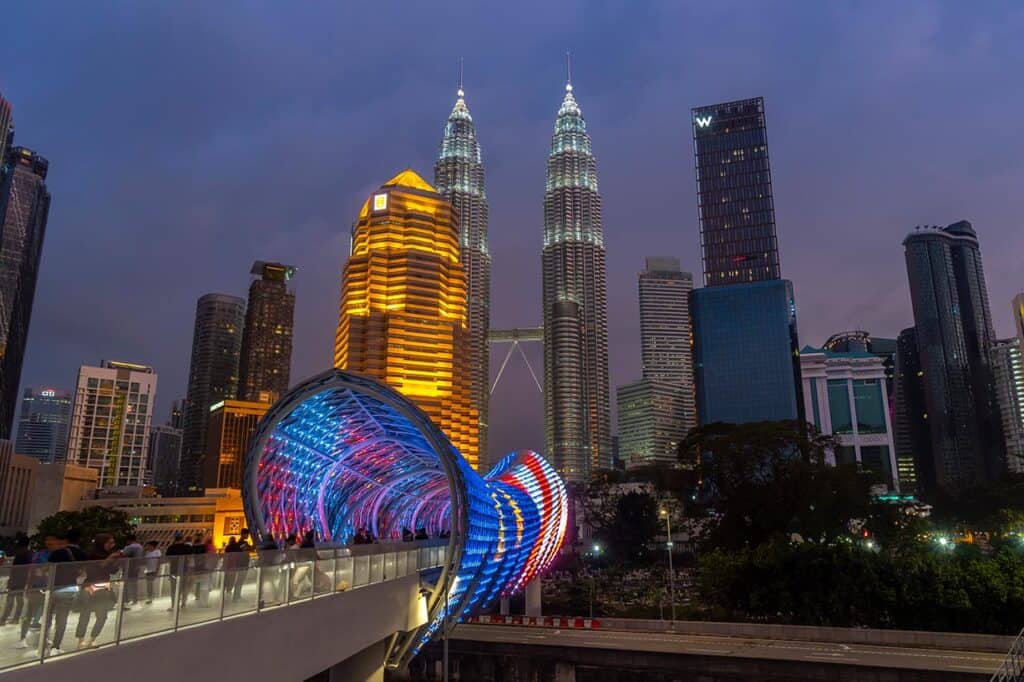
Walk Across Saloma Bridge — Free Night Walk With Tower Views
A ten-minute walk from KLCC, Saloma Bridge lights up at night with vivid LED displays along its full length. Cross it on foot and look back toward the Petronas Towers for one of the best free views in the city. It connects the KLCC area to Kampung Baru — cross over, walk briefly into the village, and return. A natural end to an evening that started at the towers.
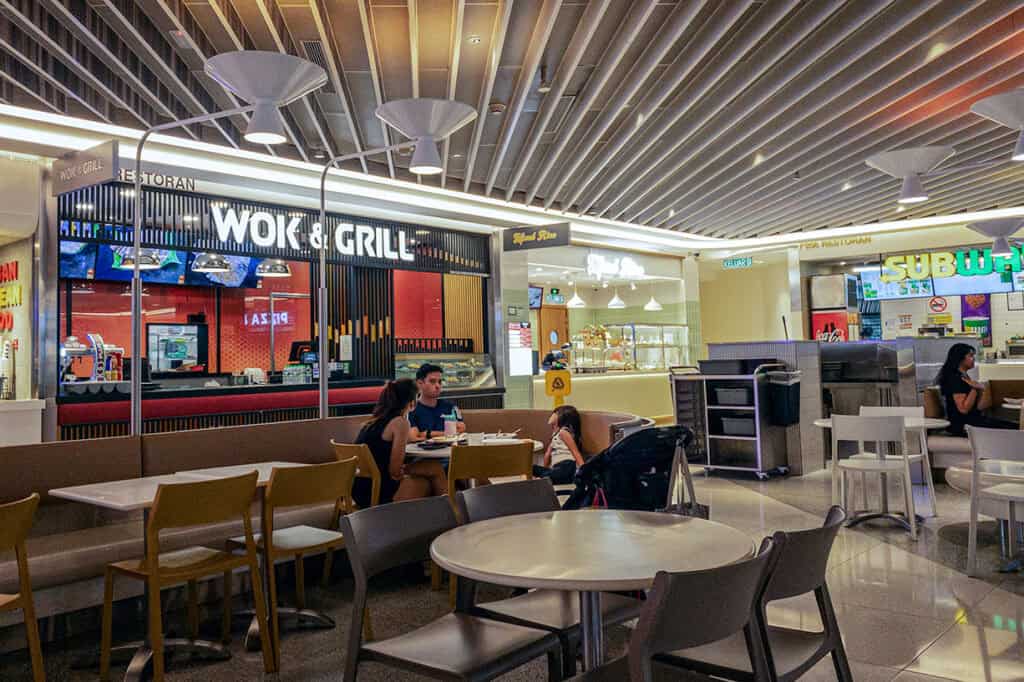
Have Dinner at Suria KLCC — Everything in One Zone
Walk directly from KLCC Park into Suria KLCC and head to the food court on Level 2. Malaysian and international options, air-conditioned, and five minutes from the park entrance. No transport, no planning — just walk in after the fountain show and eat. The most practical dinner decision if you are spending your evening in the KLCC zone.
Temples and Mosques in Kuala Lumpur — Three Faiths, One City, All Within Reach
Kuala Lumpur has four active places of worship that first-time visitors can enter freely — a Hindu cave temple, a founding mosque, and two Chinese temples each telling a completely different story. There are more temples and mosques in Kuala Lumpur than most visitors realise. We picked four — not because the others are not worth visiting, but because these four are either the oldest or the largest of their kind in Malaysia, and each one tells a different story about how this city was built. KL is one of the few places in the world where all of these sit within the same city and are reachable in the same day. These are not preserved heritage sites turned into tourist attractions. They are active places of worship that have shaped Kuala Lumpur since it was built.
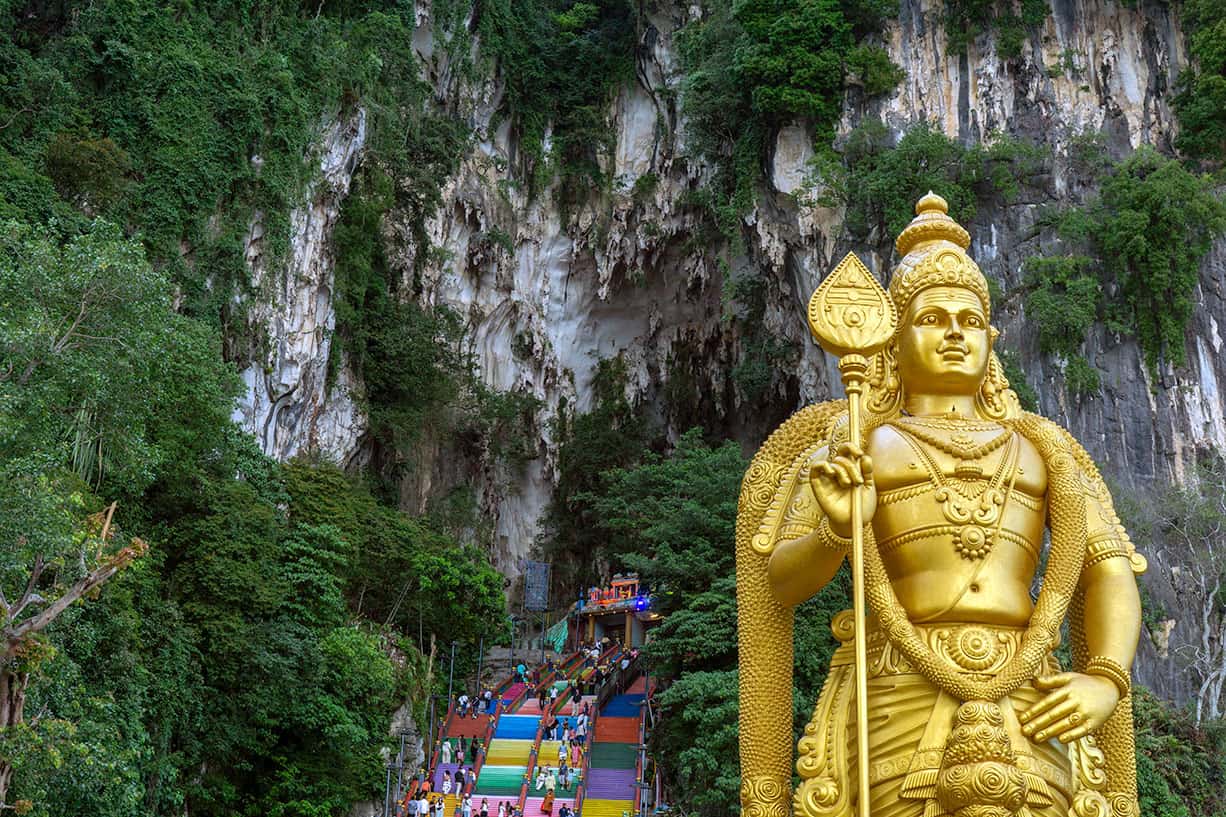
Visit Batu Caves — Hindu Temple Built Into a Limestone Hill
Batu Caves is a Hindu temple complex built into a limestone hill 13km north of the city centre. The 272-step staircase leads to the Cathedral Cave, the largest cavern in the complex. The golden statue of Lord Murugan at the base stands 42.7 metres tall and is visible from the road. This is not a preserved monument — it is an active place of worship used daily by KL’s Indian Hindu community. Visit in the morning before the heat builds on the staircase. Entry is free. Dress modestly — sarongs are available at the entrance. For everything you need to know before visiting, see our complete Batu Caves visitor guide.
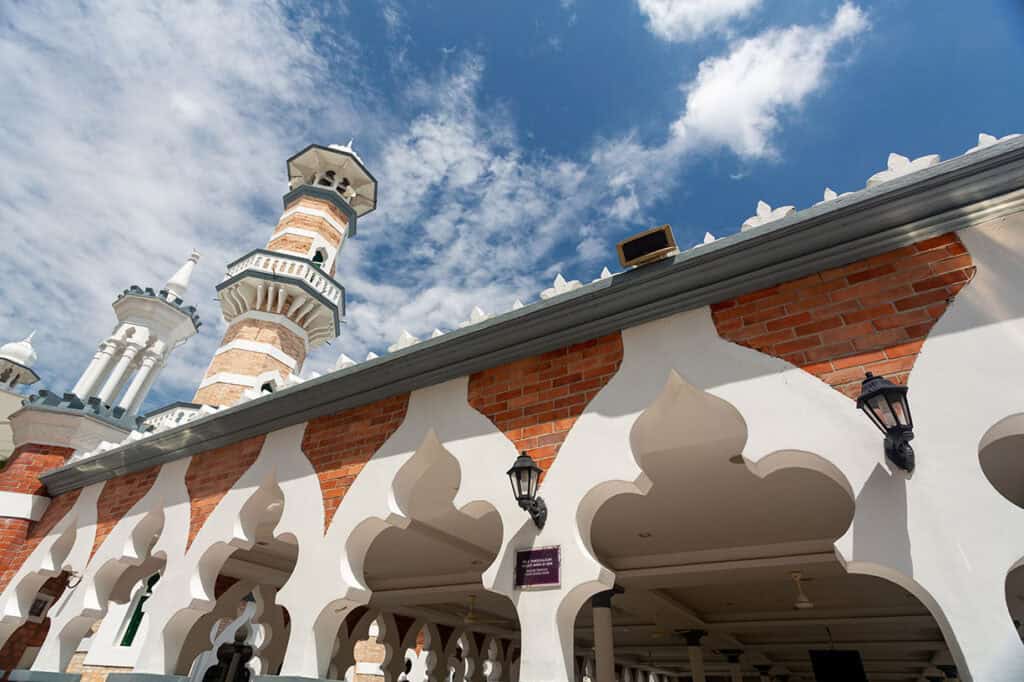
Visit Masjid Jamek — The Mosque Built Where Kuala Lumpur Began
Masjid Jamek sits at the exact confluence of the Klang and Gombak rivers — the spot where early traders settled and Kuala Lumpur was born. It is one of the oldest mosques in the city and one of the most historically significant landmarks in Malaysia. Non-Muslim visitors are welcome outside prayer times. Best visited in the morning before 12.30pm. Closed on Fridays. Cover shoulders and knees before entering — scarves and robes are available at the entrance.
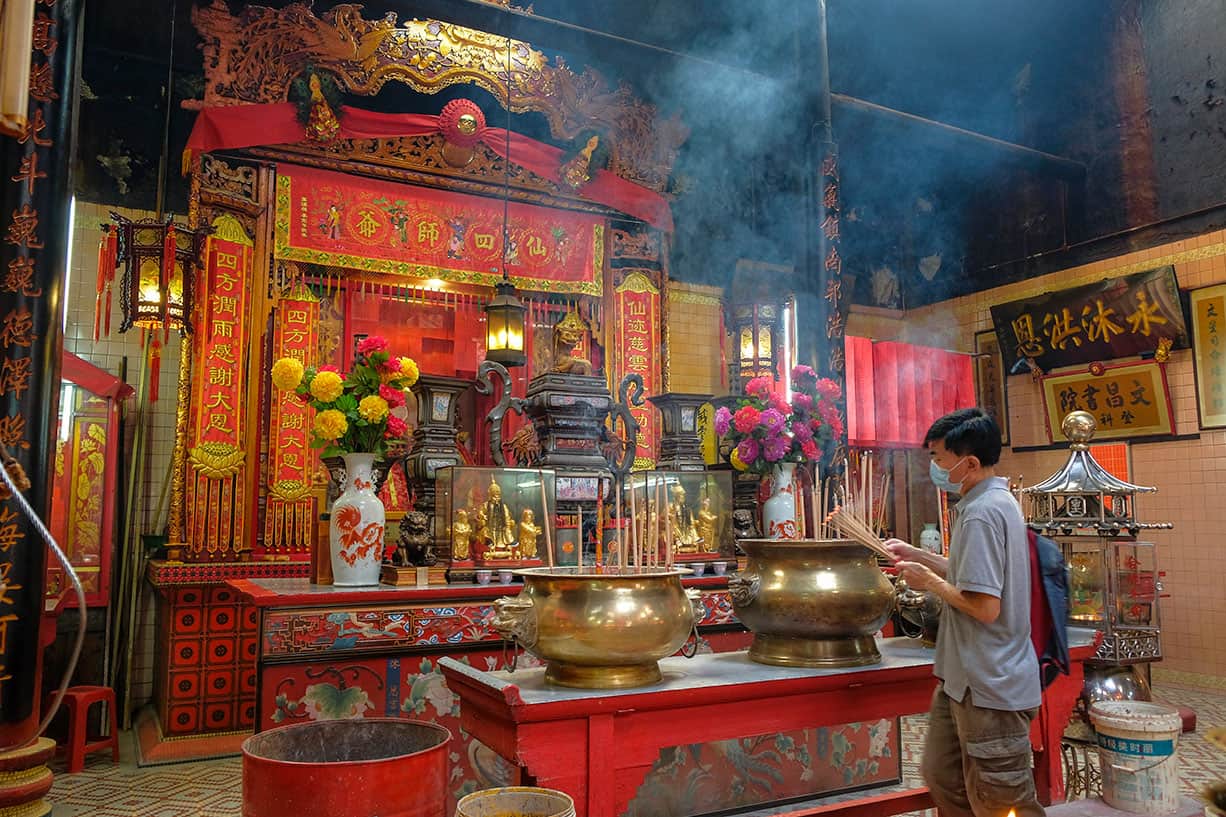
Visit Sin Sze Si Ya — Step Into 19th Century Kuala Lumpur
Built in the 1860s by Yap Ah Loy — the Chinese kapitan who rebuilt KL after the Selangor Civil War — Sin Sze Si Ya is the oldest Taoist temple in the city. Low ceilings, narrow layout, dense with incense and daily offerings. This is not a curated landmark — it feels unchanged in rhythm from the day it was built. Most tourists walk straight past the entrance on Jalan Tun H.S. Lee. Go in, take your time, and look for the prayer table where visitors crawl underneath to make a wish. Free entry.
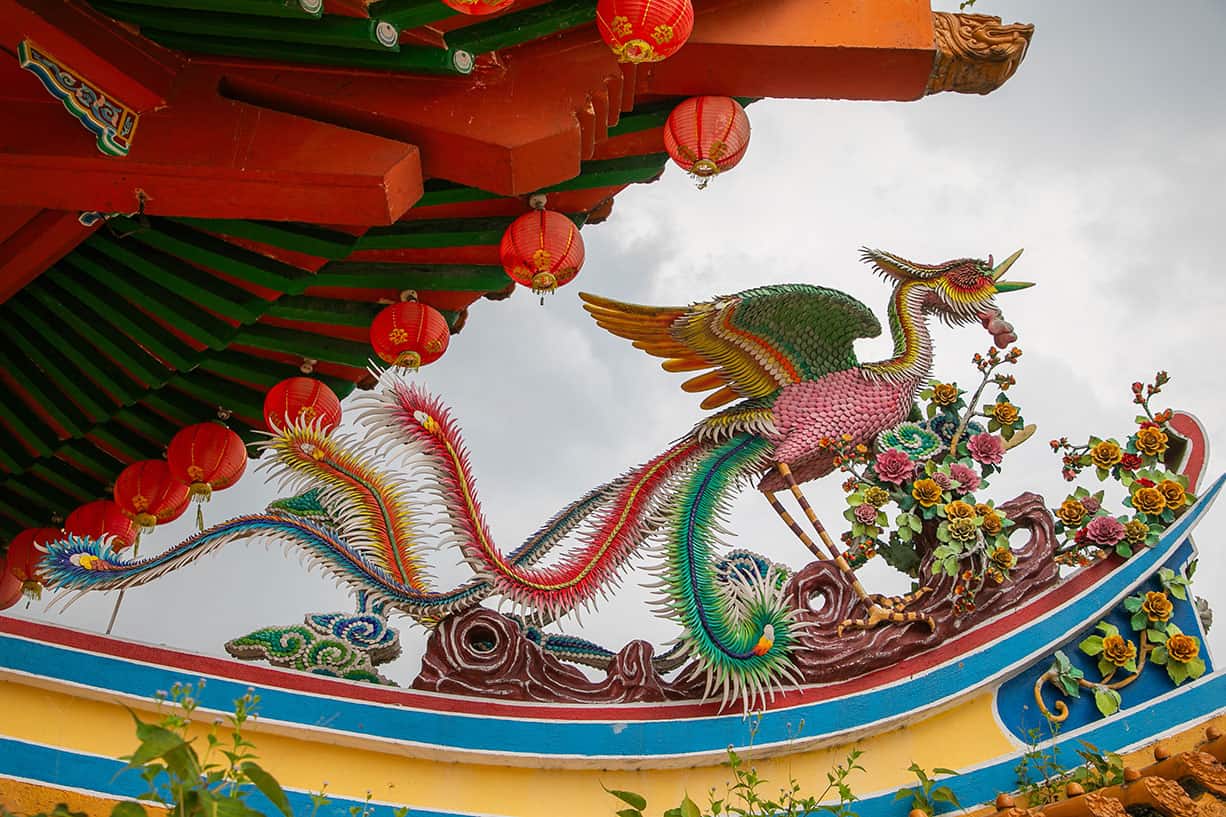
Visit Thean Hou Temple — The Grand Showcase of Chinese Community Identity
Built by the Hainanese community in the late 20th century and dedicated to Mazu, Thean Hou blends Taoist, Buddhist, and Confucian elements in one elevated space overlooking the city. Wide courtyards, ceremonial staircases, and a symmetrical layout designed to impress and host festivals. Where Sin Sze Si Ya feels like survival, Thean Hou feels like celebration — a modern Chinese community identity on full display. Allow at least 90 minutes. Most beautiful during festival periods and in the early evening when the temple lights up.
Merdeka Square — One of the Most Historically Significant Things to Do in Kuala Lumpur
On 31st August 1957, thousands of people gathered here to witness the Union flag come down and Malaysia declare independence. That history is still present when you stand at Merdeka Square — the same open ground, the same flagpole, the same Sultan Abdul Samad Building watching over the square as it did that night. For first-time visitors, this is one of the most historically significant things to do in Kuala Lumpur, and everything here is within walking distance of each other.
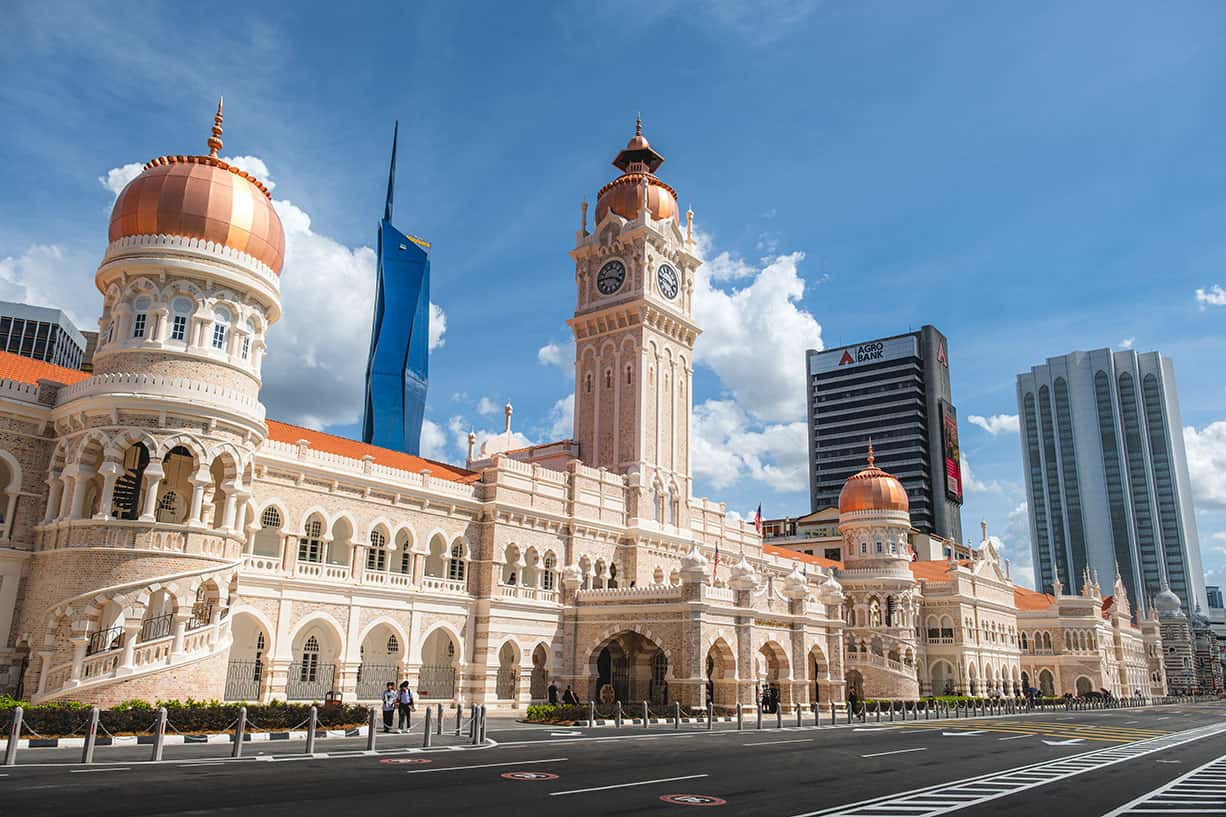
Visit Sultan Abdul Samad Building — Step Inside Kuala Lumpur’s Colonial History
The Sultan Abdul Samad Building is the most recognisable colonial landmark in Kuala Lumpur, facing directly onto Merdeka Square. Built in 1897 in Moorish architectural style, it is more than a façade — tourists can step inside to visit the Kuala Lumpur Gallery, which tells the story of how the city grew from a tin mining settlement into Malaysia’s capital. Best visited in the morning for photography, or in the evening when the building lights up against the night sky.
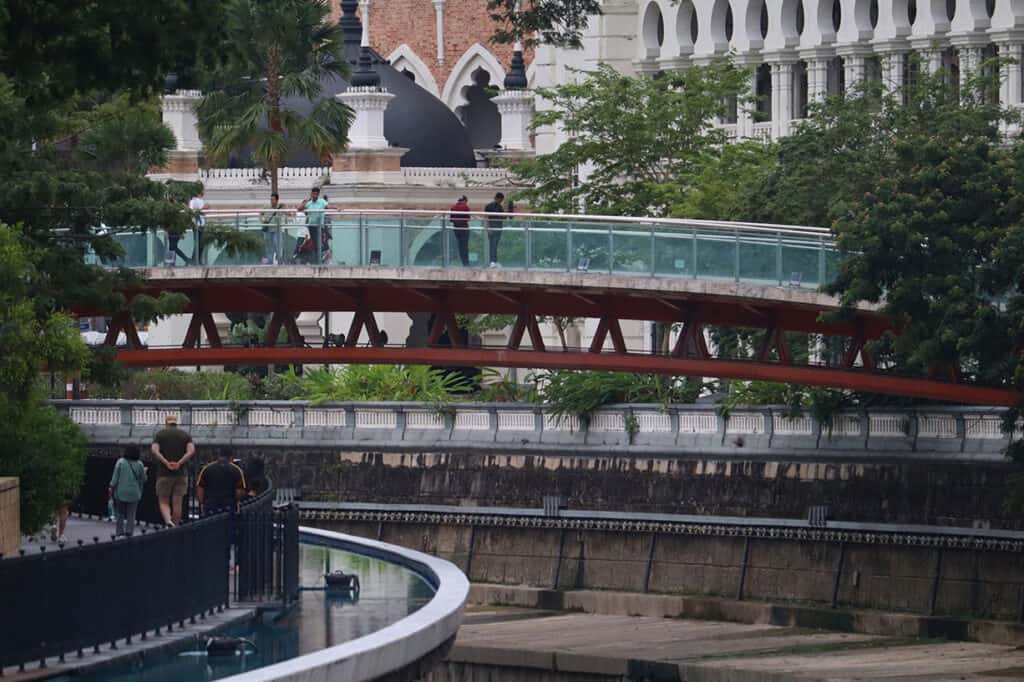
Walk the Klang River — Between Merdeka Square and Central Market
This riverside walkway connects Merdeka Square to Central Market and can be walked in either direction. The highlight is Masjid Jamek, which sits at the exact point where the Klang and Gombak rivers meet — the confluence that gave Kuala Lumpur its name. “Kuala Lumpur” means muddy confluence in Malay, and this is the spot where early traders first settled and the city began. The River of Life waterfront has transformed this stretch into a pleasant walking route. Stop at the confluence, look at both rivers meeting, and you are standing at the founding point of the city.
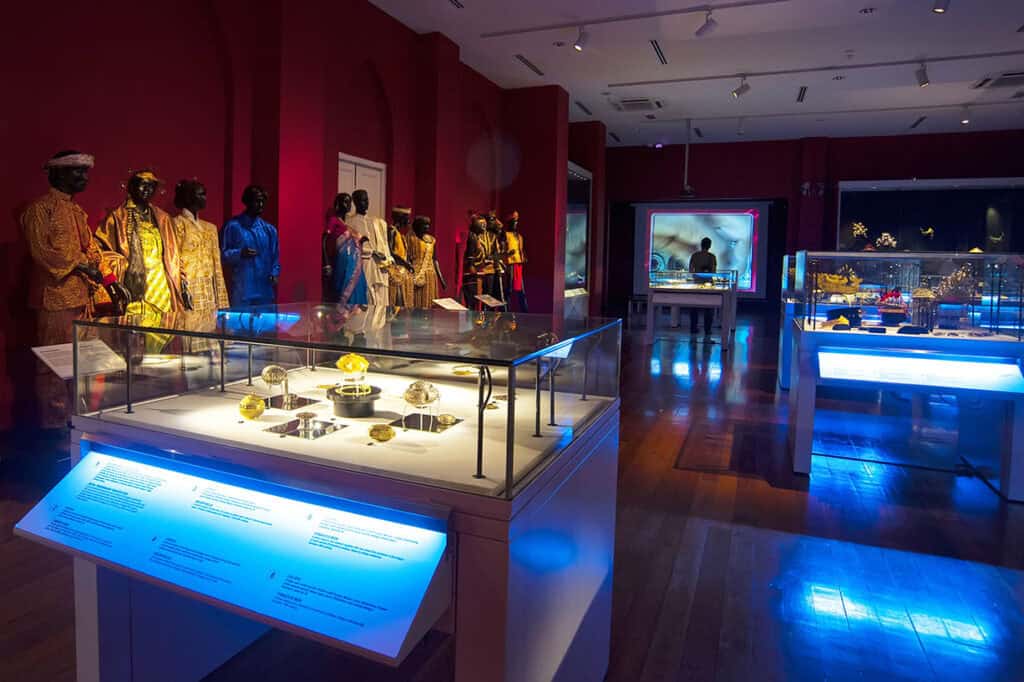
Visit the Textile Museum — Optional but Worth the Stop
Located on the edge of Merdeka Square, the Textile Museum houses one of the most accessible collections of traditional Malaysian fabric and craft in the city. If you have time after the square and the river walk, it is worth thirty minutes — particularly for visitors interested in batik, songket, and the cultural story behind Malaysian textile traditions. Entry is free. A quiet, unhurried stop that most tourists walk past without realising it is there.
Living Culture — Three Neighbourhoods That Define Things to Do in Kuala Lumpur
Kuala Lumpur has three living neighbourhoods — Chinatown, Brickfields, and Kampung Baru — each built by a different community and each still functioning exactly as it was intended. One of the most rewarding things to do in Kuala Lumpur is spending time in these neighbourhoods that built it. They are not tourist recreations — they are living communities that have existed inside this city for over a century, each with their own founding story, daily rhythm, and cultural identity. Every first-time visitor will connect differently with each one. Chinatown is something you navigate. Brickfields is something you experience. Kampung Baru is something you quietly step into.
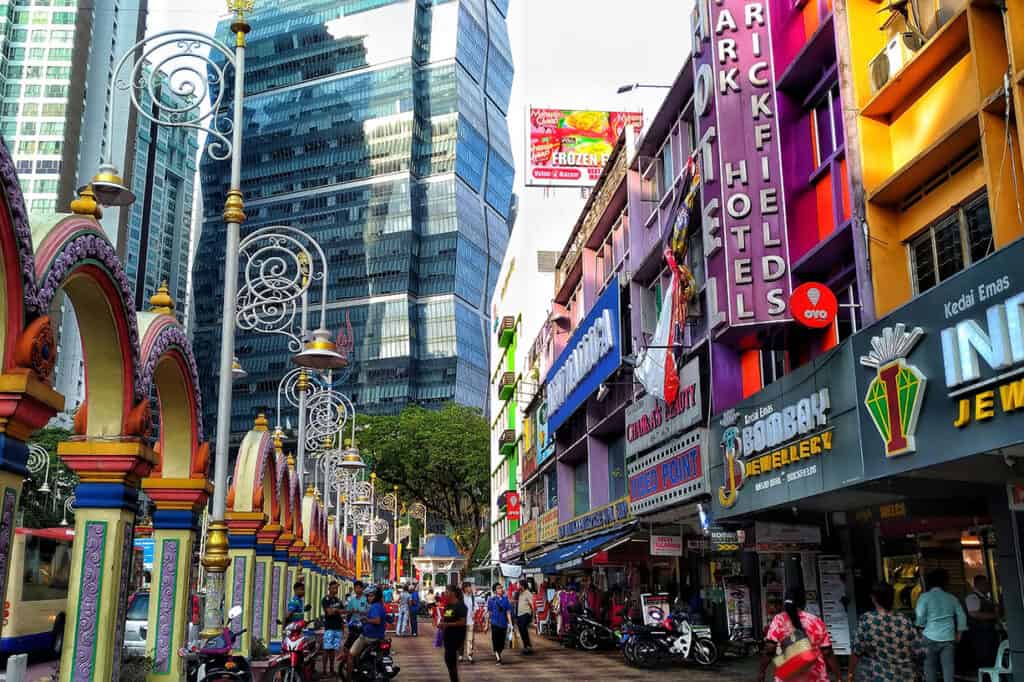
Explore Brickfields — Where Kuala Lumpur’s Indian Community Found Its Home
Brickfields began not as a cultural district but as an industrial settlement — brick-making yards that supplied materials after the Kuala Lumpur fire of 1881, built by South Indian labourers brought in for railway and construction work. That history shaped everything that came after. Today the streets are wide, colourful, and open — bright arches, painted shopfronts, fresh jasmine and marigold garlands being strung outside shops, spice stores, gold jewellery displays, and banana leaf restaurants with steady local traffic. The Sri Kandaswamy Temple anchors the neighbourhood with its tall ornate gopuram visible from the street.
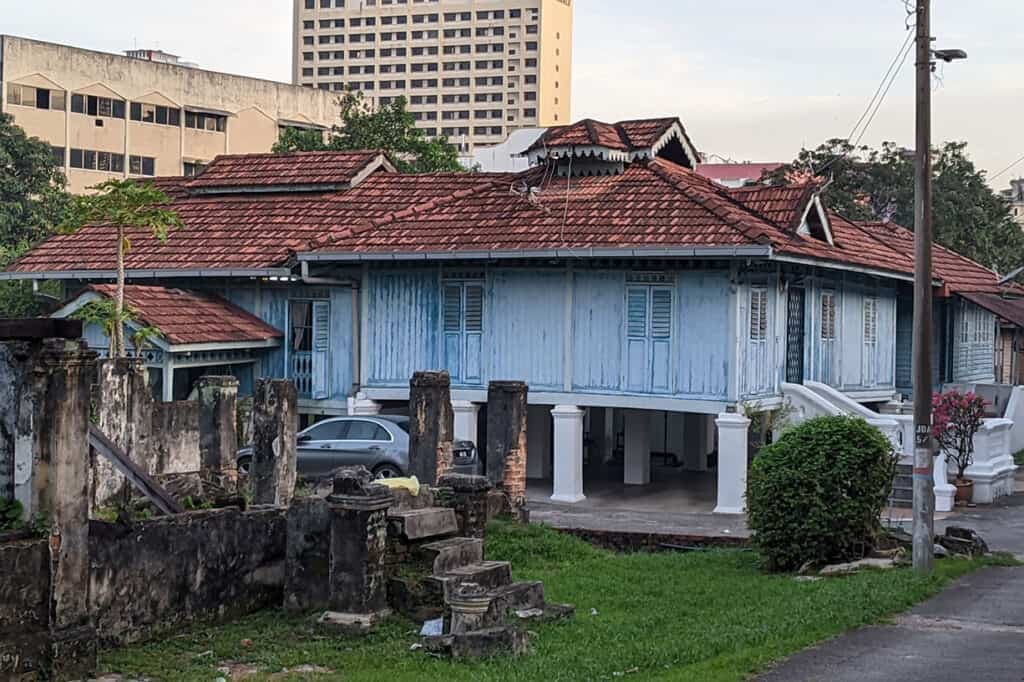
Step Into Kampung Baru — The Malay Village the City Grew Around
Established in 1899 as a protected Malay settlement under British rule, Kampung Baru was deliberately preserved while the rest of Kuala Lumpur modernised around it. That is exactly what makes it unlike anything else in the city. Narrow roads, wooden houses, small family-run food stalls, and the quiet rhythm of daily community life — with the Petronas Twin Towers visible in the background as a reminder of where you actually are. Food is the main draw — nasi lemak, satay, grilled fish, traditional kuih at simple roadside setups where residents actually eat. Less visual stimulation than Chinatown or Brickfields, but more presence. This is not preserved for show. It is still being lived in.
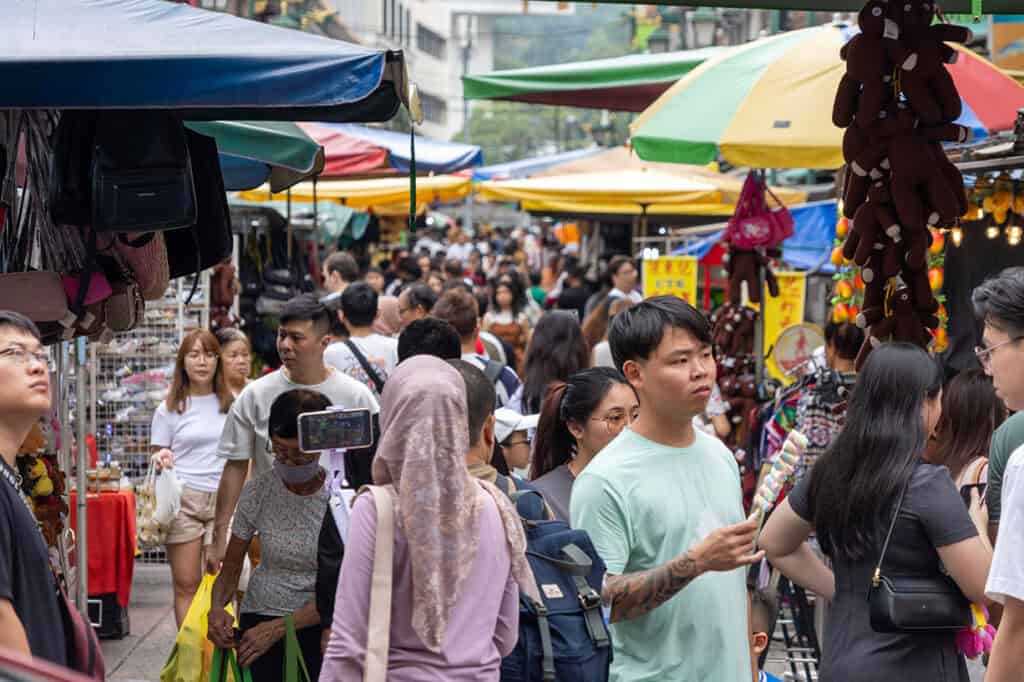
Walk Through Chinatown — Old Kuala Lumpur Still Living Inside a Modern City
Chinatown is not a KL attraction — it is a working neighbourhood that visitors happen to walk through. The street atmosphere defines it, the food pulls you in and keeps you there, and the temples give meaning to the place. Established by the Chinese kapitan who built early Kuala Lumpur, with the city’s first Chinese temple still standing here, this is where the founding story of KL lives at street level. Dense, layered, and slightly unpredictable — you do not follow a route here, you follow your curiosity. Morning feels different from evening, and both are worth experiencing if you have the time.
What to Eat in Kuala Lumpur — Three Communities, Three Dishes Worth Knowing
The three dishes every first-time visitor to Kuala Lumpur should try are Nasi Lemak, Roti Canai, and Chicken Rice — one from each of the communities that built this city. Food in Kuala Lumpur is not a separate activity — it is part of how the city works. The same three communities that built Chinatown, Brickfields, and Kampung Baru each brought their own food culture with them, and that food is still being cooked and eaten the same way today. Easy to find, safe, and worth sitting down for.
For a complete guide to eating in Kuala Lumpur — including where to find each dish, the best kopitiams, food streets, and night markets — see our Kuala Lumpur Food Guide.
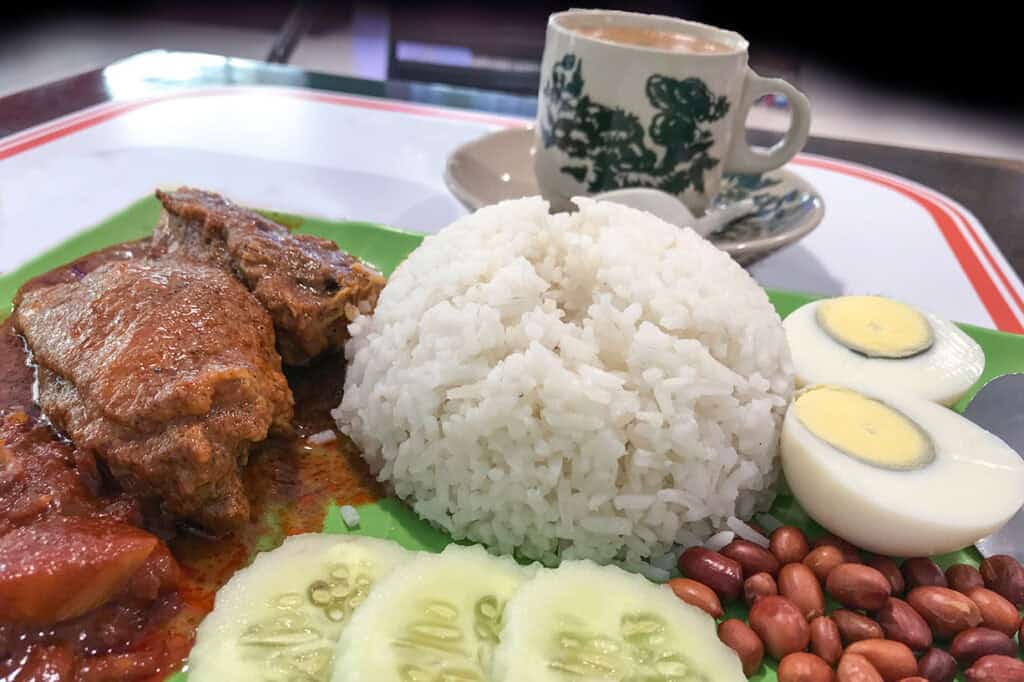
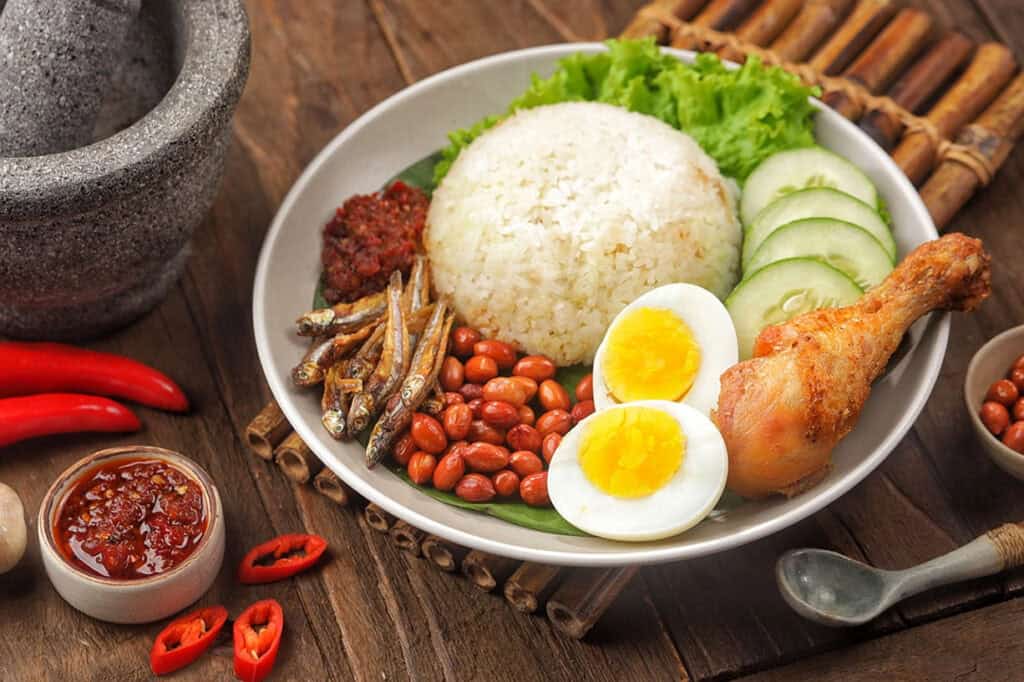
Try Nasi Lemak — The Dish That Defines Malaysian Food Culture
Nasi Lemak is Malaysia’s most recognisable dish — rice cooked in coconut milk, served with sambal, anchovies, peanuts, cucumber, and a boiled egg. Simple in appearance, complex in flavour. It is eaten at breakfast, lunch, and dinner by Malaysians across all three communities, which makes it the most honest introduction to local food culture available to a first-time visitor. Easy to find at any local food court — KLCC food court and Central Market are both reliable starting points.
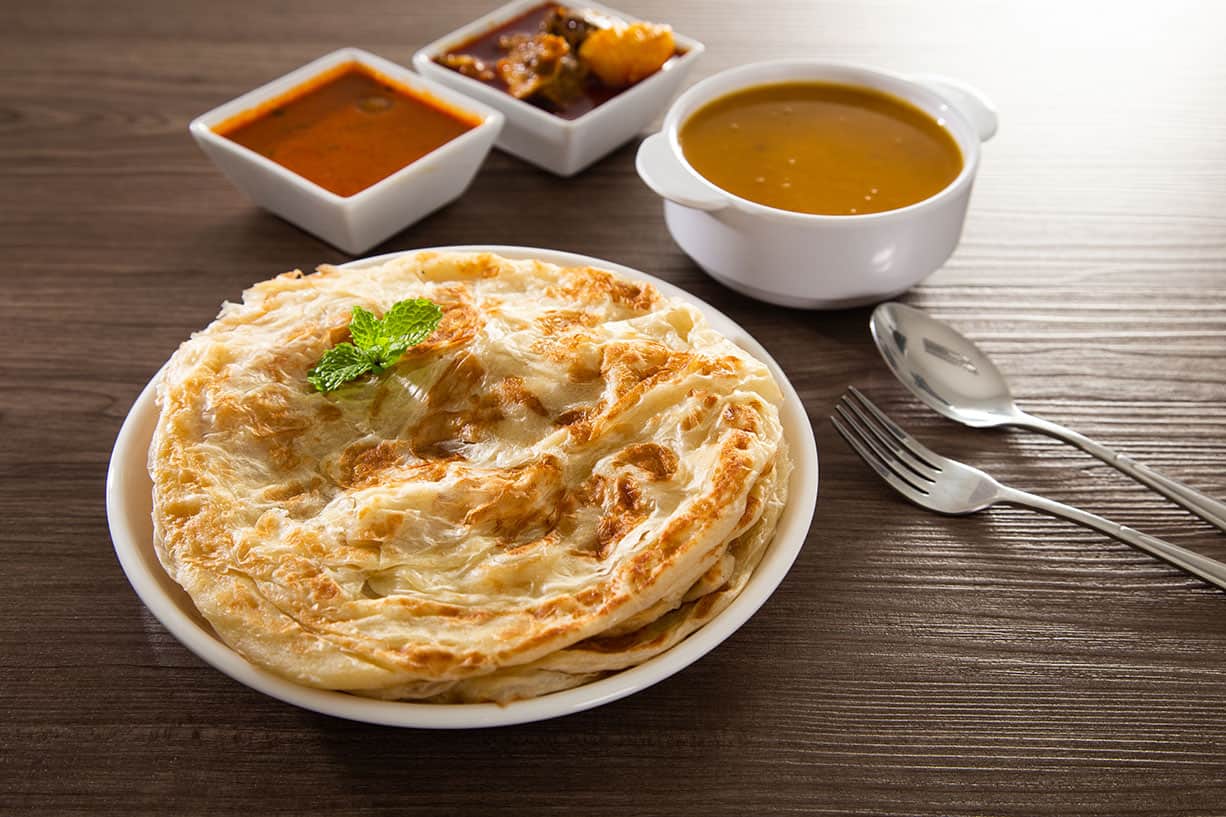
Try Roti Canai — Indian Flatbread Served Fresh From the Griddle
Roti Canai is a flaky, layered flatbread cooked fresh on a flat griddle and served with dhal curry and sambal on the side. It is one of the most widely eaten morning dishes in Kuala Lumpur — affordable, filling, and available at almost every mamak stall in the city. Served in the morning and again after 4pm. If Nasi Lemak introduces you to Malay food culture, Roti Canai introduces you to how Indian-Malaysian food has become part of everyday KL life.
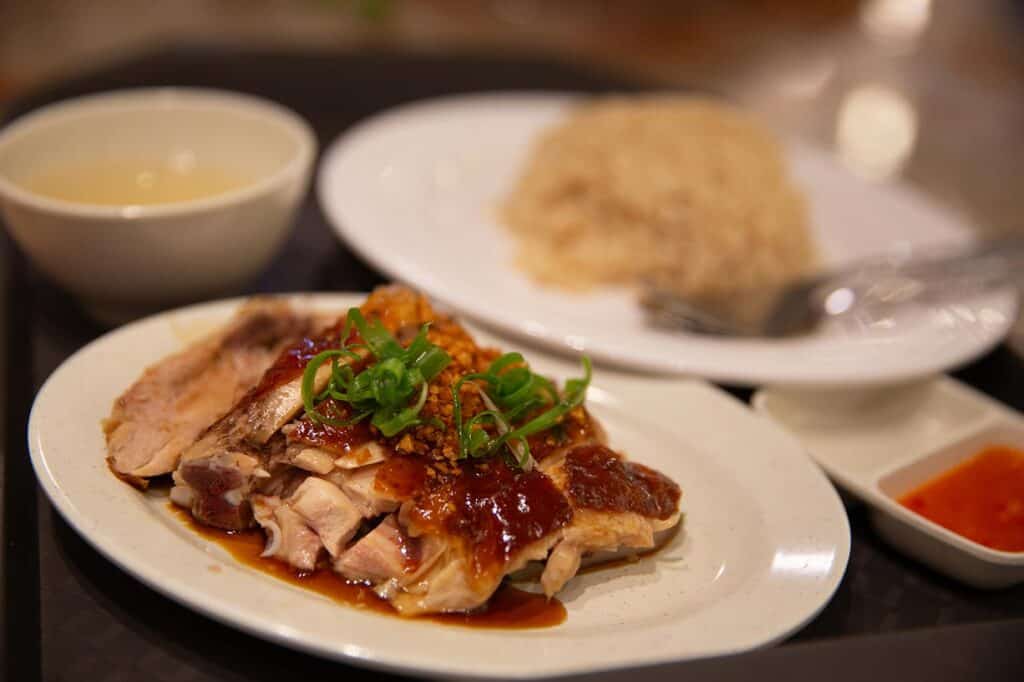
Try Chicken Rice — Roasted or Steamed, Both Worth Knowing
Chicken Rice is one of the clearest expressions of Chinese-Malaysian food culture in KL — poached or roasted chicken served over fragrant rice cooked in chicken stock, with clear soup and chilli sauce on the side. Try the roasted version if you prefer crispy skin and stronger flavour. Try the steamed version if you prefer something lighter and softer. Available at kopitiams and dedicated chicken rice shops across the city. Simple, consistent, and genuinely good — the kind of dish locals eat several times a week without thinking twice about it.
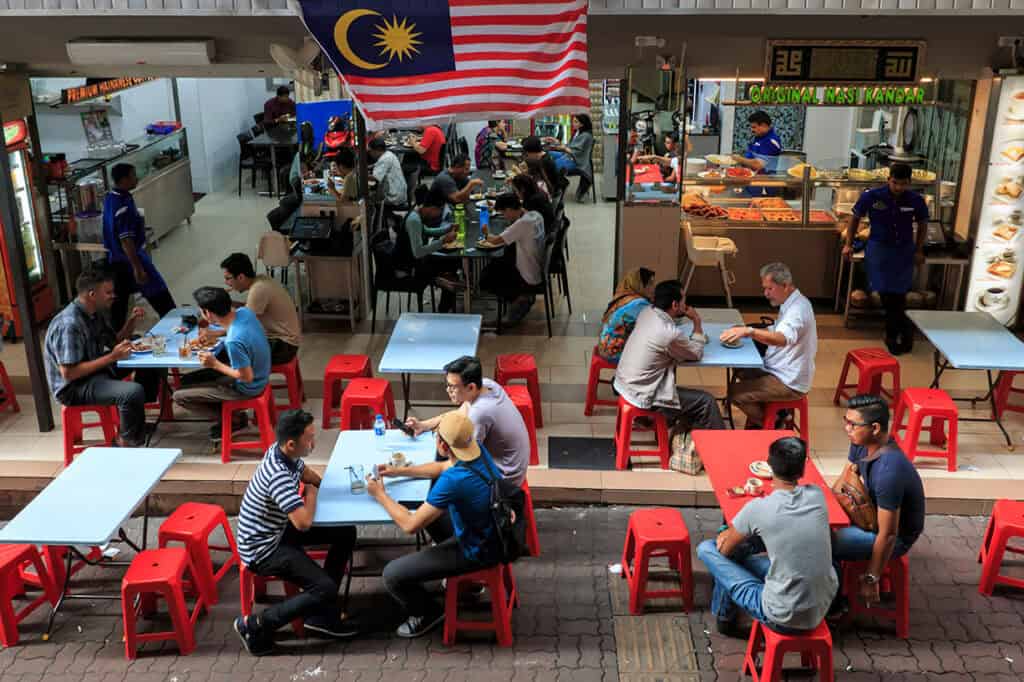
Sit at a Mamak Stall — The Social Space That Never Closes
A mamak stall is not just a place to eat. It is a place people stay. You sit down, order a teh tarik — pulled milk tea, thick and frothy — and then the evening happens around you. Food comes when you order it. Conversation fills the gaps. Nobody rushes you out. Open 24 hours, found on almost every street in KL, and used equally by Malay, Chinese, and Indian communities. First-timers usually walk in expecting a quick meal and stay longer than they planned. That is exactly the point.
Specific Interest Things to Do in Kuala Lumpur — Cooking, Batik, and Photography
For first-time visitors who want more than sightseeing, these three things to do in Kuala Lumpur offer something genuinely different — a cooking class, a batik painting session, and a photography experience that captures the city’s unique cultural contrasts. Each one is hands-on, produces something you take home, and connects directly to what makes Kuala Lumpur worth visiting. All three are among the best Kuala Lumpur activities for tourists who want to go beyond the standard visitor experience. Worth booking at least a day ahead — good sessions fill up quickly.
Malaysian Cooking Class — Cook, Eat, Take the Recipe Home
Most Malaysian cooking classes in Kuala Lumpur are small, hands-on, and focused — one main dish and one dessert, cooked by you from scratch. Some operators start with a market tour where you choose your own ingredients alongside a local guide. You eat what you cook at the end. Two to three hours, no experience needed, and you leave knowing how to recreate at least one Malaysian dish at home. Worth booking a day ahead.
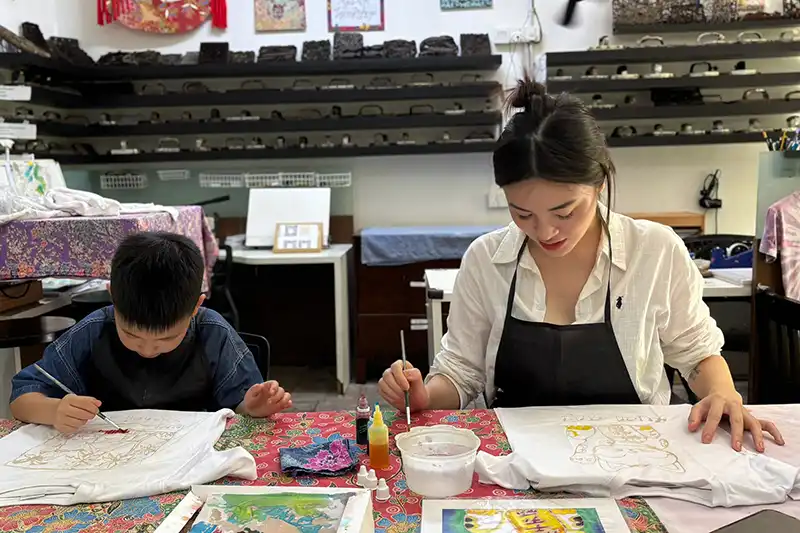
Try Batik Painting — Walk Out With Something You Actually Made
Batik painting workshops run about an hour and are available at Central Market and dedicated studios across the city. You apply hot wax to fabric using a canting tool, then dye it to reveal the pattern underneath. Some operators also offer the press method using pre-made stamps for a more structured result. You take home the fabric you painted — some studios offer batik t-shirt painting instead. No preparation needed, just show up.
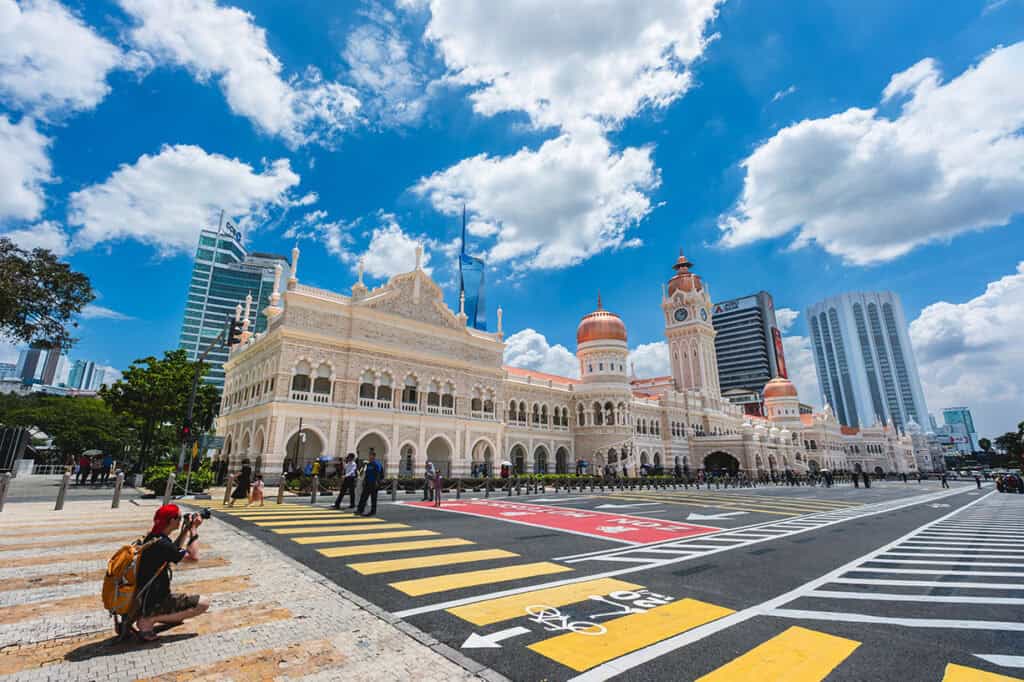
Photograph Kuala Lumpur — A City Built for Contrast
No single image captures Kuala Lumpur — it takes several, from different districts at different times of day. A golden Hindu statue against a limestone cliff. A Moorish colonial building beside a glass skyscraper. Wooden kampung houses in the shadow of the Petronas Twin Towers. Chinese shophouses beside a founding mosque. That contrast — multi-faith, multi-era, multi-community — is what makes KL genuinely worth photographing.
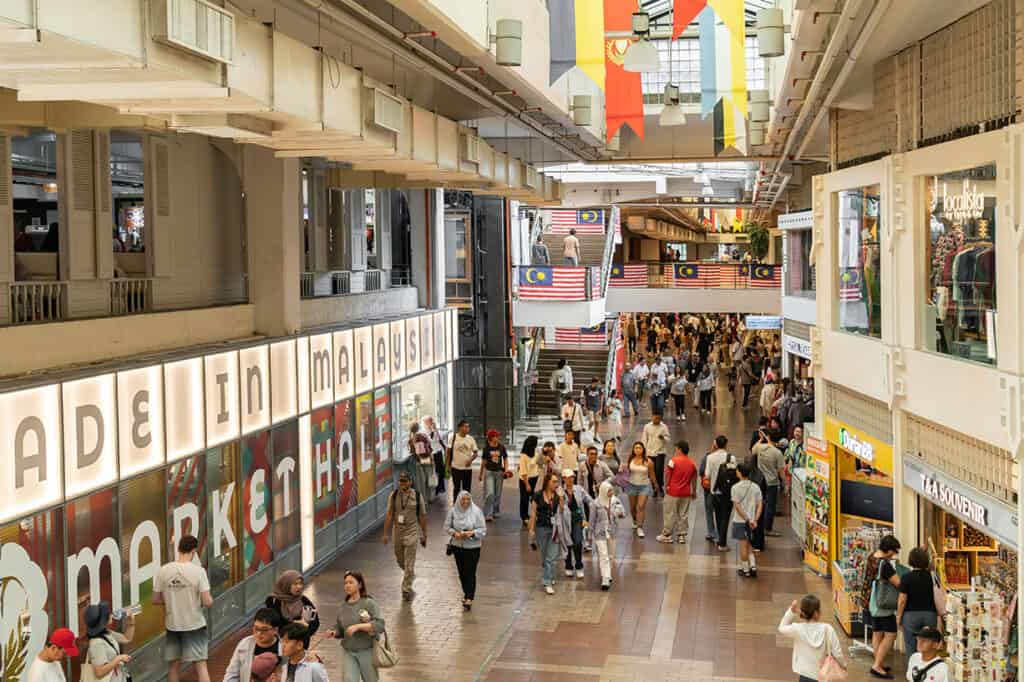
Shop at Central Market — Local Crafts, Batik and Souvenirs in One Place
Central Market is the most practical shopping stop in Kuala Lumpur for tourists who want genuine local products rather than mass-produced souvenirs. The ground floor covers everything worth finding — batik fabric and clothing, sarongs, traditional handicrafts, local snacks, and souvenirs made by Malaysian artisans. The first floor focuses on food and textiles. Unlike Petaling Street where most goods are replicas, Central Market carries original local products you can actually bring home with confidence. It also connects naturally with the batik painting workshops available in the Annexe next door — browse the finished products first, then make your own.
Green Kuala Lumpur — For Visitors Who Want to Slow Down
The best green spaces in Kuala Lumpur for tourists are Perdana Botanical Gardens, KL Forest Eco Park, and Titiwangsa Lake Gardens — each offering a completely different experience from the urban city. Most of what makes Kuala Lumpur worth visiting happens at street level — temples, food, neighbourhoods, towers. But if you are staying more than three days, or simply need a morning away from the city’s energy, these three spaces offer something genuinely different. Not tourist attractions. Just places to breathe.
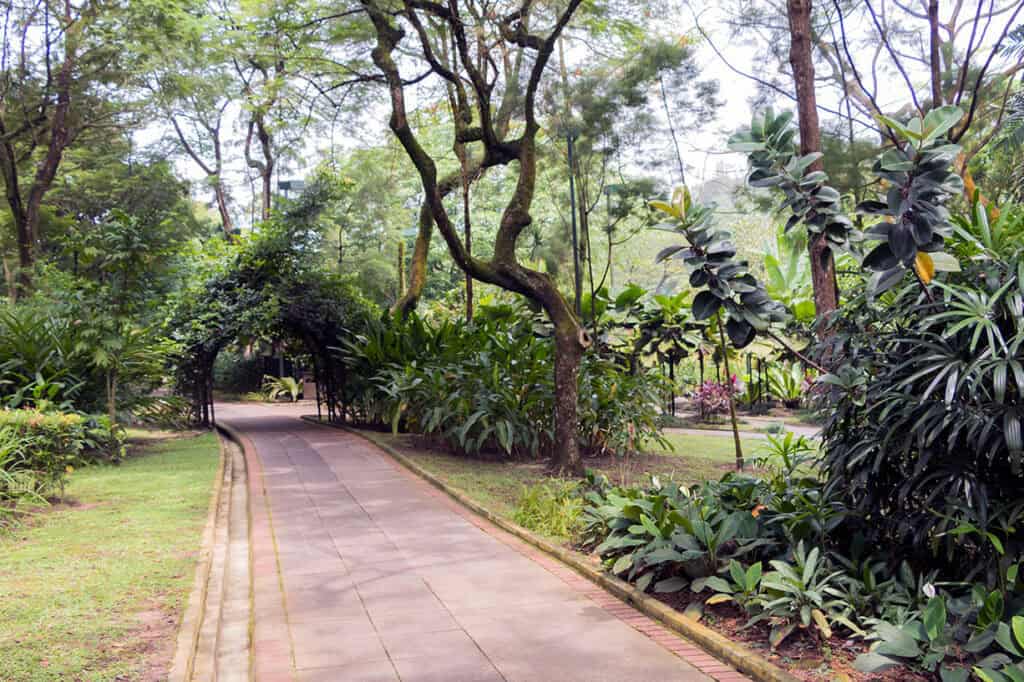
Walk Through Perdana Botanical Gardens — KL’s Largest Green Escape
Also known as the Lake Gardens, Perdana Botanical Gardens is the largest central park in Kuala Lumpur — spacious, quiet, and genuinely unhurried. Shaded walking paths wind past lakes, orchid gardens, and hibiscus displays. The pace here is completely different from the city outside. Located near the National Mosque and several national museums, it groups naturally into a slow half-day if you are already in that part of the city. Best visited in the morning before the heat builds.
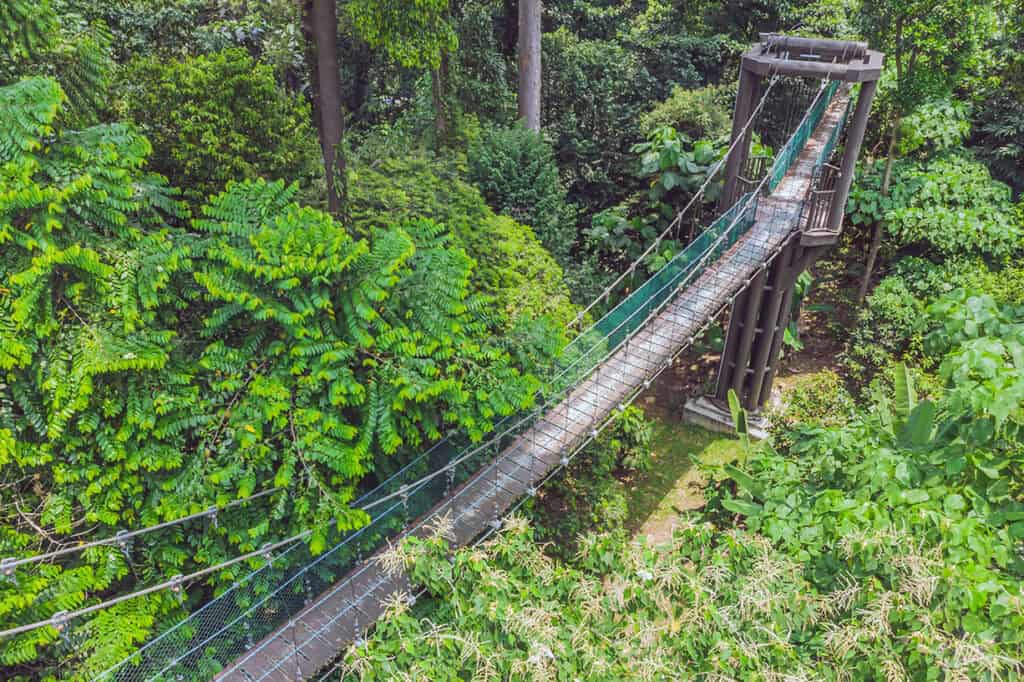
Walk the Canopy at KL Forest Eco Park — Real Jungle Inside the City
KL Forest Eco Park is not designed greenery — it is a preserved rainforest sitting inside the city centre. The trees are native, the trails follow the terrain rather than a planned layout, and the vegetation is dense enough that you forget the city exists until a gap in the canopy reveals KL Tower directly above you. The elevated suspension walkway takes you above the forest floor to treetop level — from here you see how dense the ecosystem actually is compared to everything around it. That contrast — jungle trail one moment, city skyline the next — is unlike anything else in Kuala Lumpur. Best visited in the morning before the heat and humidity peak.
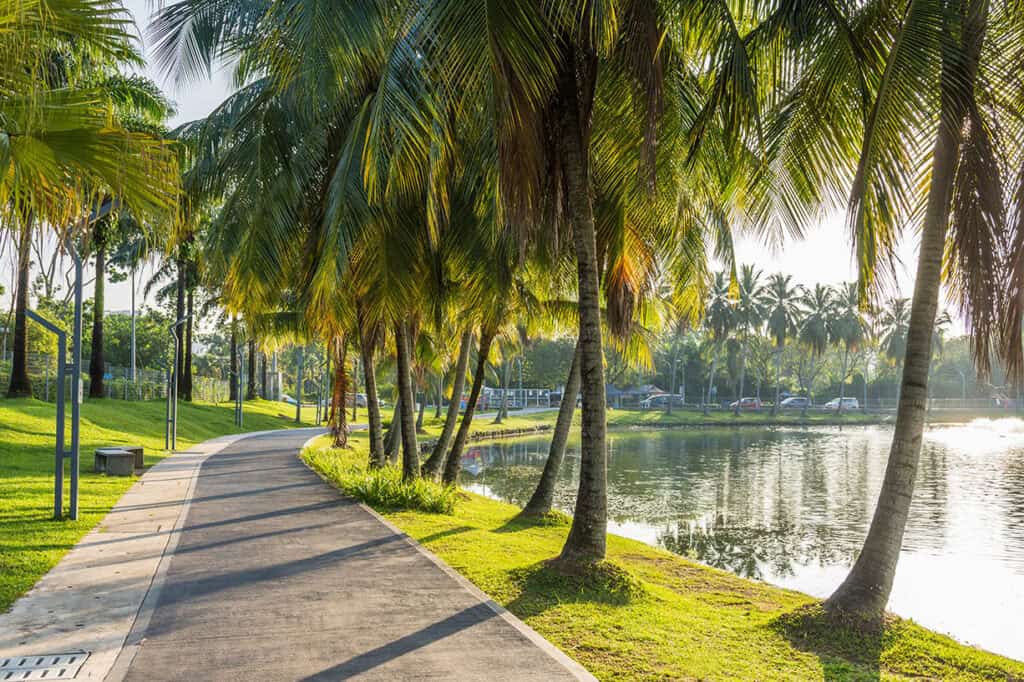
Spend a Morning at Titiwangsa Lake Gardens — Unhurried, Open, and Free
Titiwangsa is not a structured attraction — it is a place where you walk a little, stop, look at the skyline, and sit again. The easy loop around the lake keeps the Petronas Twin Towers and KL skyline in view almost the entire way. Bike rentals are available if you want something slightly more active. Paddle boats sit on the lake if you have extra time. But most visitors remember it simply for the skyline view from a bench — open, calm, and completely free. The right place to spend a morning if the city has been feeling like too much.
Evening Kuala Lumpur — Three Things Worth Doing After Dark
The three best things to do in Kuala Lumpur after dark are drinks at Heli Lounge Bar, a traditional foot massage, and street food — each one genuinely different from what you can do in most other cities. KL after dark is a different city from the one you explore during the day. The heat eases, the skyline lights up, and the city shifts into a slower, more social rhythm. These three evening experiences are unique to Kuala Lumpur — you will not find them anywhere else in the same combination.
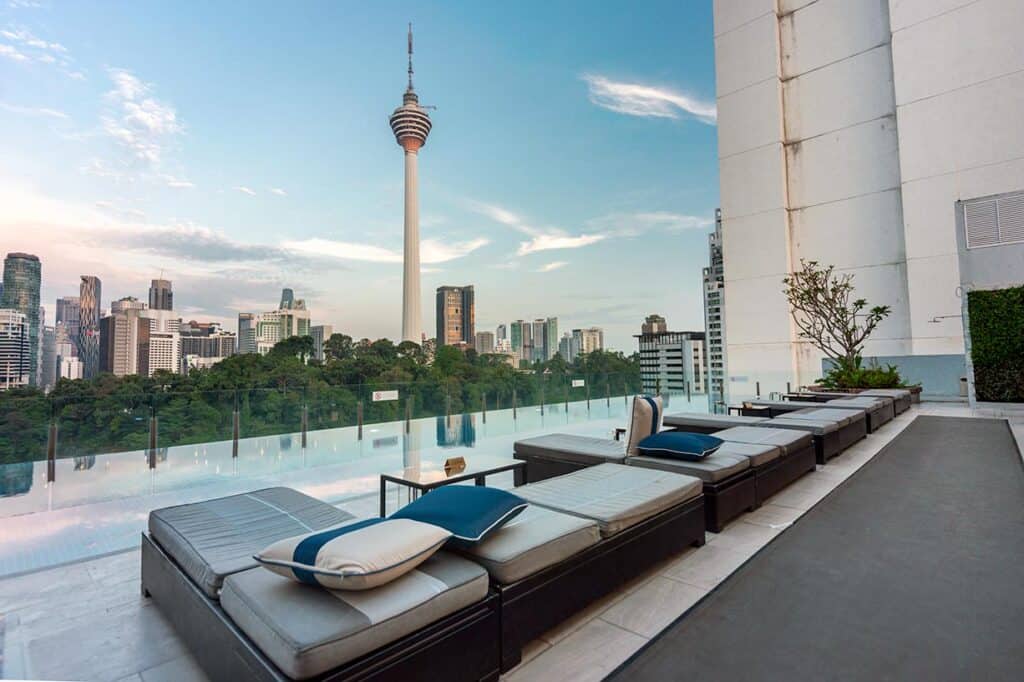
Rooftop Bar at Sunset — Drinks Above the Kuala Lumpur Skyline
KL has no shortage of rooftop bars — but the best ones share one quality: almost no separation between you and the sky. No glass panels, no high walls, just an open platform above the city with the Petronas Twin Towers sitting directly in your sightline. By day some of these spaces function as active helipads. By evening from around 5pm they transform into some of the most unusually situated bars in Southeast Asia. It is not about polished service or cocktail menus. It is about standing above a capital city at sunset and watching the towers light up as the sky shifts from orange to dark. No reservation needed on most weeknights. Arrive around sunset for the best light.

Get a Foot Massage — Something Normal for the City, New for You
A foot massage in Kuala Lumpur is not a spa experience — it is an everyday routine. People drop in after work, after shopping, after walking all day. No ceremony, no build-up, no special occasion needed. Affordable, available without booking at massage shops near most tourist areas, and more intense than most first-timers expect — therapists trained in Chinese reflexology traditions apply firm, deliberate pressure that you feel immediately. After a full day walking Batu Caves, Chinatown, and the KLCC zone, this is the most practical thing you can do with your evening. You will feel the difference the next morning.
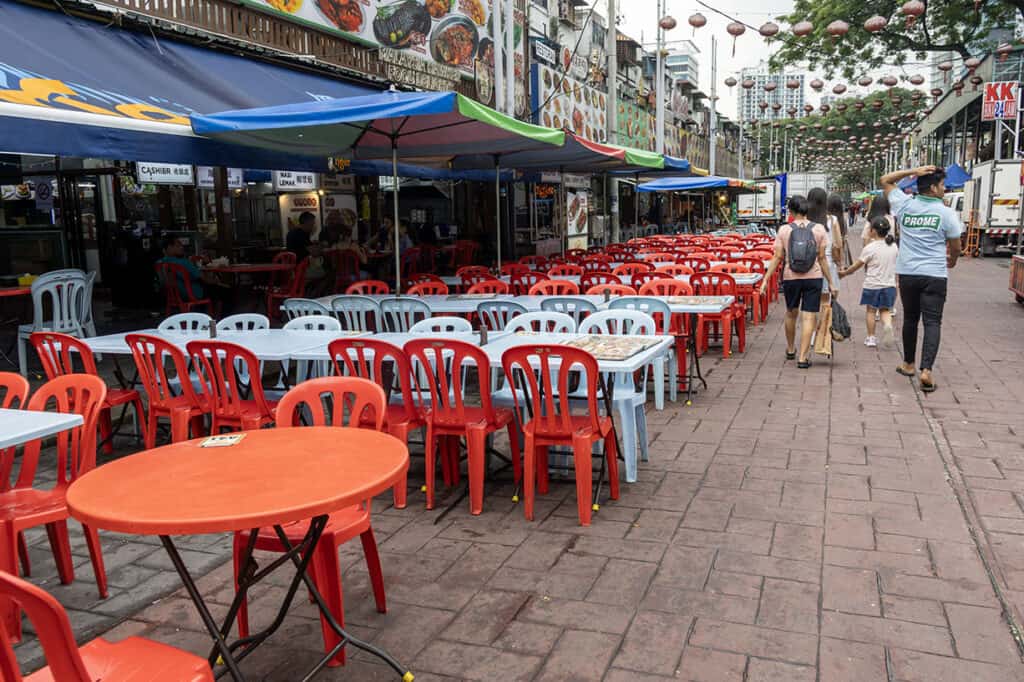
Eat at a Street Food Night — Start at Jalan Alor, Then Try Kampung Baru
Jalan Alor in Bukit Bintang is the easiest starting point for first-timers — bright, busy, and comfortable, with multiple stalls in one place serving grilled seafood, noodles, and satay. It is tourist-facing and slightly higher priced, but it works as an introduction. For a more authentic evening, Kampung Baru is where locals actually eat at night — traditional Malay food at simple roadside setups, families at plastic tables, the Petronas Twin Towers visible above a neighbourhood that feels nothing like the city around it. Start at Jalan Alor on your first night. Try Kampung Baru when you are ready for something that feels less like a destination and more like real life.
Day Trips from Kuala Lumpur — Three Experiences the City Cannot Give You
The three best day trips from Kuala Lumpur are Cameron Highlands for cool highland scenery, Malacca for colonial history, and Kuala Selangor for firefly watching along the river. Kuala Lumpur is an easy city to use as a base. Within two to three hours in any direction, the landscape, pace, and atmosphere change completely. These three day trips are not extensions of the KL experience — they are contrasts to it. Each one shows a side of Malaysia that the city itself cannot. For a dedicated guide on how to plan each trip — timing, transport, and what to expect — see our Day Trips from Kuala Lumpur guide.
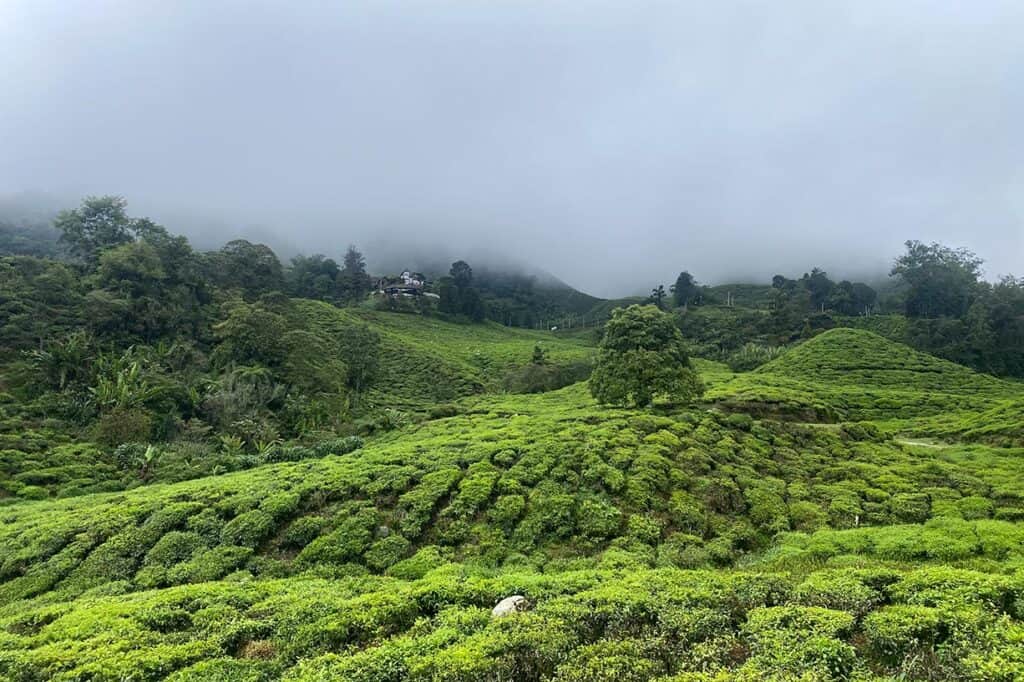
Visit Cameron Highlands — Where Malaysia Feels Completely Different
You leave hot, humid Kuala Lumpur and arrive to 15–22°C, sometimes misty, occasionally cool enough for a jacket. That temperature shift is what first-timers remember most — not as a detail, but as a physical change in how you move and think. The pace slows down naturally. The tea plantations stretch across hillsides in wide, uninterrupted views. The urgency that defines KL disappears. Cameron Highlands is not just a place you visit — it is a place where your pace changes. Best done as a full day trip with an early start, or as an overnight stay if you want to experience the highlands at their most unhurried. See our Cameron Highlands day tour from Kuala Lumpur.
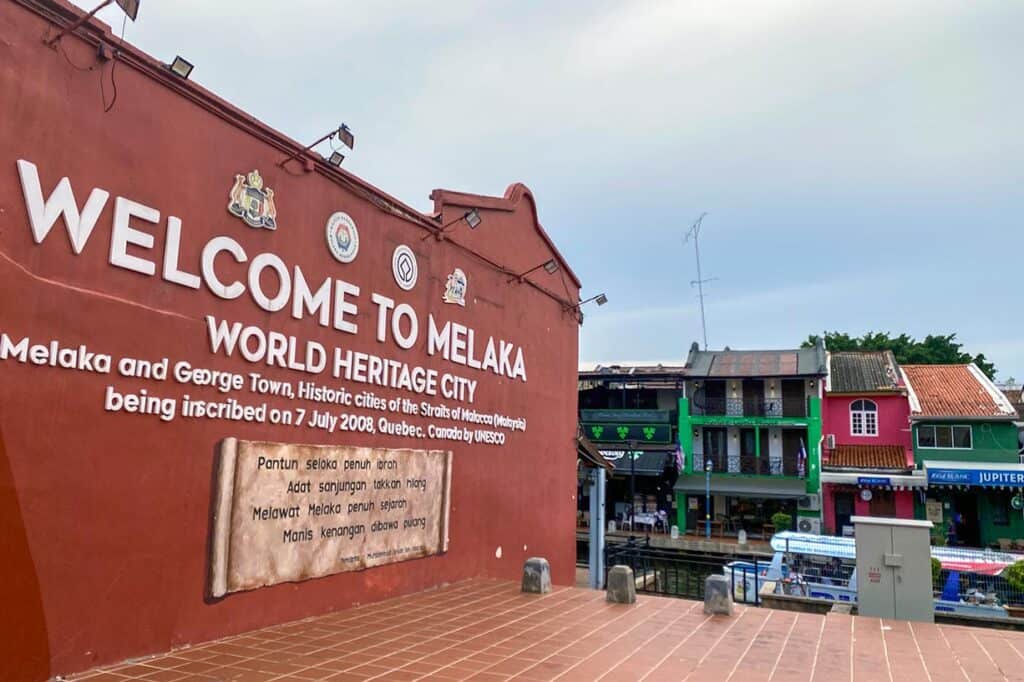
Visit Malacca — Where Malaysia’s Past Becomes Visible
KL shows how Malaysia lives today. Malacca shows how it became what it is. Shaped by Portuguese, Dutch, British, and Peranakan heritage across five centuries of trade and colonisation, Malacca moves at a slower pace and reveals a completely different layer of Malaysian identity. Walk the red colonial square, explore the Peranakan shophouses along Jonker Street, and follow the river that once made this city one of the most important trading ports in the world. After two days in KL, first-timers arrive in Malacca and realise: Malaysia’s identity did not start in the capital. Best done as a full day trip — half a day is possible but rushed. See our Malacca day trip from Kuala Lumpur.

Watch the Fireflies at Kuala Selangor — One of the Few Experiences That Makes People Go Quiet
The Selangor River after dark is almost completely silent. No artificial light, no city noise — just a slow boat moving through darkness while the mangrove trees on the riverbank light up and go dark in rhythm, thousands of fireflies blinking together like a pulse. It feels surreal rather than dramatic. First-timers go quiet without being asked to. What makes it memorable is not the spectacle — it is the combination of stillness, darkness, and concentrated natural light that you will not find anywhere near a city this size. An evening trip from KL — arrive in the afternoon, watch the fireflies after sunset, return late that night. See our Kuala Selangor fireflies tour.
Ready to Plan Your Days in Kuala Lumpur?
Every experience in this guide can be combined differently depending on how many days you have and what matters most to you. Some tourists spend three days in the city and never leave the urban zones. Others use KL as a base and spend half their trip on day trips to Cameron Highlands, Malacca, and Kuala Selangor.
If you want a day-by-day breakdown of how to structure your time — including the best sequence, travel times between zones, and what to prioritise as a first-timer — our Kuala Lumpur City Tour Guide covers exactly that.
Frequently Asked Questions
Information last verified: April 2026. Opening hours and operational details are subject to change — confirm with official sources before your visit.