Best Time to Visit Batu Caves – Weather, Crowds & Local Tips

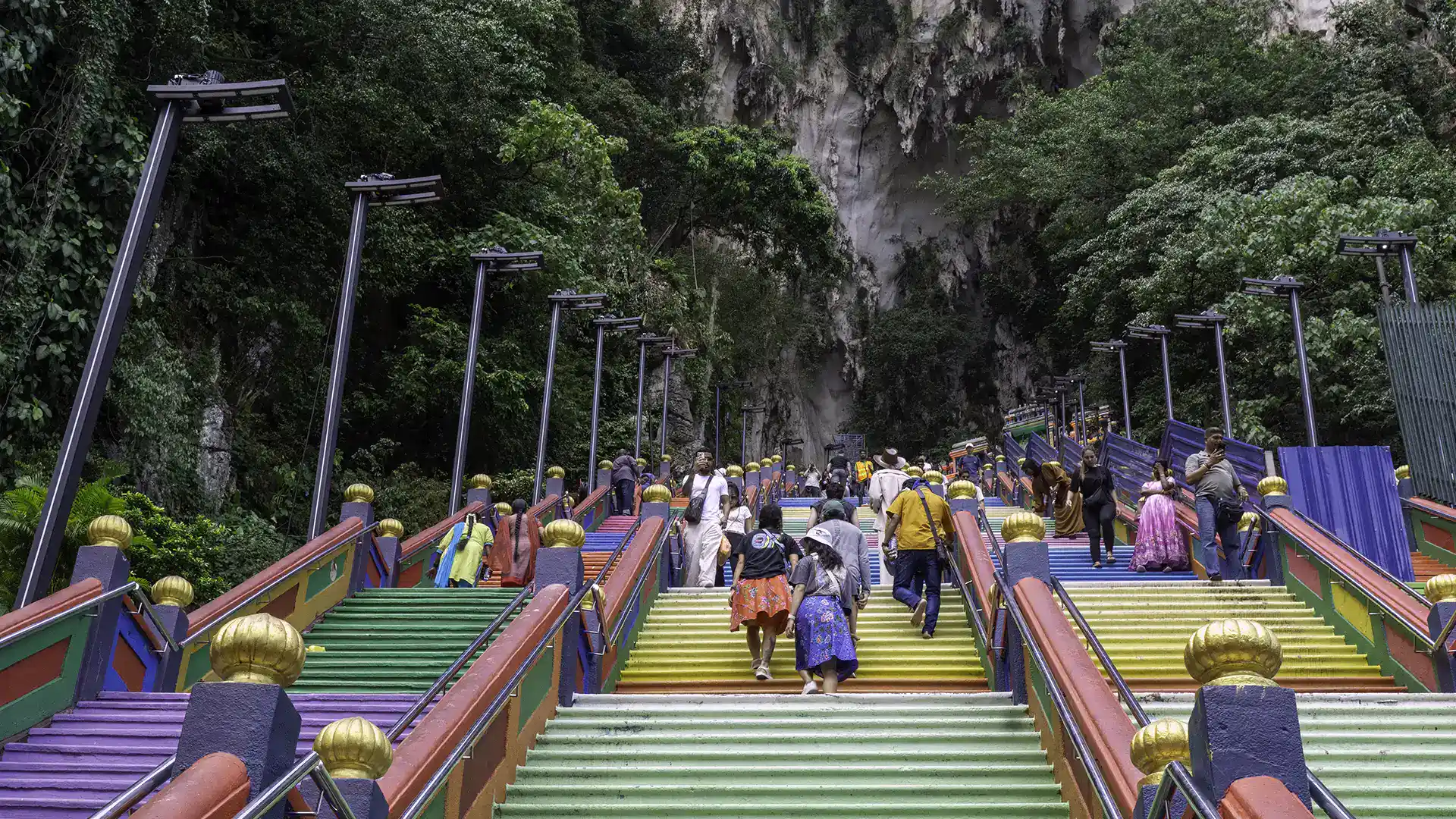
The best time of day to visit Batu Caves is between 7am and 9am — arrive early to beat the heat and the crowds on the 272-step staircase. The complex opens at 5:30am and staircase access starts at 6am. After 10am the site is significantly busier and the staircase is in full sun.
For the best time of year, March to May is the most reliable window — dry-season mornings, manageable crowds, and cooler temperatures. June to August is also good, though Malaysian school holidays push weekend visitor numbers up. September to November brings quieter weekday mornings with some afternoon rainfall to plan around.
The one period to plan carefully around is Thaipusam, which falls in January or February. Attendance exceeds one million pilgrims and visitors over the festival period. If you are not visiting specifically for Thaipusam, choose dates at least a week either side of the festival.
Batu Caves is one of the most popular day trips from Kuala Lumpur and is accessible year-round — when you arrive matters more than which month you choose.
| Complex opens | 5:30am daily |
| Staircase access | 6:00am – 8:30pm daily |
| Recommended arrival | 7am – 9am (weekdays) · By 7am (weekends & public holidays) |
| Best months | March – May · June – August |
| Busiest period | Thaipusam (Jan/Feb) — 1+ million visitors over the festival |
| Entrance fees | Temple Cave — Free · Ramayana Cave — RM15 · Cave Villa — RM10 (opens 9am) |
| Sarong | RM15 purchase at entrance — required if not dressed appropriately |
| Staircase repainting | Usually Nov – Dec — sections may be partially closed; colours brightest Jan – Feb after completion |
| Statue repainting | Approx. every 5 years · Most recent: Nov 2025 — scaffolding may be visible; access unaffected |
| Private guided tour | Book a private guided tour to Batu Caves → |
Choosing the best time to visit Batu Caves comes down to two separate decisions: what time of day to arrive, and which month to travel — the same two factors that shape the best time to visit Kuala Lumpur overall. Both matter — and the answers are not always obvious from general Malaysia travel advice. The best time of day to visit Batu Caves is early morning, well before the first coach groups arrive from the city. The best time of year is less rigid, though some months offer noticeably better conditions than others. This guide covers both decisions in full, including how Thaipusam, school holidays, and annual maintenance work affect the site at different points in the year.
When Is the Best Time to Visit Batu Caves?
Time of day matters more at Batu Caves than the month you visit. The staircase climb is physically demanding — 272 steps in direct equatorial heat — and the site gets crowded fast once coach tours arrive from central Kuala Lumpur. Arriving at the right hour makes a significant difference to the experience.
Early Morning (6am – 9am) — The Recommended Window
The first two to three hours after the staircase opens at 6am are consistently the best time to visit. Temperatures at the base hover around 26–27°C rather than the 33–35°C you can expect by mid-morning. The limestone staircase is mostly in shade during these hours, which makes the climb considerably more manageable. Crowds are a fraction of what you will encounter from 10am onwards.
Arriving at 7am gives you time to explore the base area, climb the staircase, spend time inside the Temple Cave, and descend before the first wave of day-trip groups arrives. If you are visiting on a weekend, push that target arrival to 7am or earlier — weekends and public holidays see higher domestic visitor numbers from the Klang Valley.
The Temple Cave also benefits from early-morning light. Sunlight enters through natural openings in the cave roof, creating a different atmosphere in the morning than you get at midday. Photographers specifically seek out this window. If you want a guide to handle logistics and provide context while you explore, a private guided tour to Batu Caves is typically timed for this exact departure window.
Midday (10am – 2pm) — Hot, Crowded, Still Worth It
Midday is the busiest and hottest period. The staircase is fully exposed to sun from mid-morning, and queues can form at both the base and inside the Temple Cave. Coach tour groups typically arrive between 9:30am and 11:30am, which is when the entrance area gets most congested.
If midday is your only option, it is still manageable. The Ramayana Cave (RM15) and Cave Villa (RM10, opens 9am) are air-conditioned, which gives you a break from the heat. Check the full opening hours and admission fees before you go. Take water, wear light clothing, and pace yourself on the climb.
Late Afternoon (3pm – 5:30pm) — A Quieter Second Option
Late afternoon sees a noticeable drop in visitor numbers as most day-trip groups have returned to Kuala Lumpur. Temperatures begin to ease slightly from around 3:30pm, though humidity remains high. This window works well if a morning visit is not practical — arrive between 3pm and 4pm and you will have a calmer experience than midday.
One practical note: afternoon is when Kuala Lumpur and Selangor experience their daily convective rain showers, particularly between April and October. These typically last 30–60 minutes and pass quickly. The Temple Cave itself is covered, so a brief shower is not a reason to cancel — but climbing the staircase in heavy rain is slippery and unpleasant.
Evening Access
Staircase access closes at 8:30pm. Some visitors time their visit to be at the top of the stairs around sunset, when the light behind the limestone hill creates a different visual. The base complex remains accessible until 9pm.
For a full breakdown of timings across all areas of the site, see the Batu Caves opening hours guide, which covers the Temple Cave, Ramayana Cave, Cave Villa, and weekend vs weekday differences.
Best Time of Year to Visit Batu Caves
The best time to visit Batu Caves depends more on your tolerance for crowds and heat than on the calendar — the site is open daily and accessible year-round. Unlike destinations on Malaysia’s east coast, Batu Caves sits in Selangor — sheltered from the northeast monsoon that affects Pahang and Terengganu between November and March. There is no single “avoid at all costs” season from a weather perspective. The deciding factors are crowds and comfort, not rainfall closures.
March to May — Best Overall Window
For most international visitors, March through May is the best time to visit Batu Caves in Malaysia — the most reliably comfortable window for weather and crowd management. The northeast monsoon has ended, the southwest monsoon has not yet fully established, and the skies over the Klang Valley are generally clear in the morning hours. Schools are in session for most of this period, which keeps weekend crowds at a more manageable level.
Morning temperatures in March and April typically range from 24–28°C, making the staircase climb significantly more comfortable than in the peak-heat months. Afternoon showers are possible from late April, but these rarely affect a morning visit.
For first-time visitors with flexibility over travel dates, this is the window to target. A private guided tour booked in this period offers the most comfortable conditions for a combined Batu Caves and Kuala Lumpur morning.
June to August — Dry but Busier
June and July are among KL’s drier months, with lower average rainfall and more consistent sunny mornings. Humidity remains high — Kuala Lumpur is equatorial year-round — but the absence of heavy rain makes outdoor sightseeing more predictable.
The trade-off is school holidays. Malaysia’s mid-year school break runs through June and into early July, which pushes domestic visitor numbers up at the site on weekdays and weekends alike. Arriving early (before 8am) is especially important during this period.
August is quieter as school is back in session. International visitors remain steady, but the early-morning window is less contested.
September to November — Transitional Months
September through November is the inter-monsoon transition period for the Klang Valley. Afternoon rainfall becomes more frequent and occasionally heavy, particularly in October and November. Morning visits are generally unaffected, but if you are planning a full-day itinerary, build in flexibility around afternoon weather. If you are weighing up the best time of year to visit Batu Caves, this window offers some of the quietest weekday mornings of the year — which partly compensates for the less predictable afternoons.
Crowd levels are moderate — weekday mornings are among the calmest of the year at the site.
December to February — Good Weather, Thaipusam Caution
December and January can be excellent months to visit if your dates avoid Thaipusam. The northeast monsoon that brings heavy rain to Malaysia’s east coast has little effect on Selangor, and morning conditions are comfortable. December’s school holiday period increases visitor numbers in the first two weeks of the month, but settles by late December.
The major planning consideration for this window is Thaipusam, which falls in January or February depending on the Tamil lunar calendar. The festival brings more than one million pilgrims and visitors to the complex over three days, with surrounding roads, KTM Komuter services, and site access all severely congested. If you are not visiting for Thaipusam itself, adjust your dates by at least a week either side of the festival.
Why Timing Matters at Batu Caves
Unlike many attractions that can be visited at any hour without much difference, timing at Batu Caves can significantly influence the overall experience.
Batu Caves functions both as an active Hindu temple and one of the most visited sites on the Batu Caves and Fireflies day trip, which means daily visitor patterns are shaped by several factors.
Because of this combination, the atmosphere at the temple complex changes noticeably throughout the day. Crowd levels, temperature, lighting conditions, and the flow of visitors all affect how comfortable and enjoyable the visit feels.
Understanding these patterns helps travelers choose the most suitable time to visit, whether they prefer a quieter cultural atmosphere, better lighting for photography, or a more comfortable climb up the famous 272-step Batu Caves staircase.
1. The 272-Step Climb
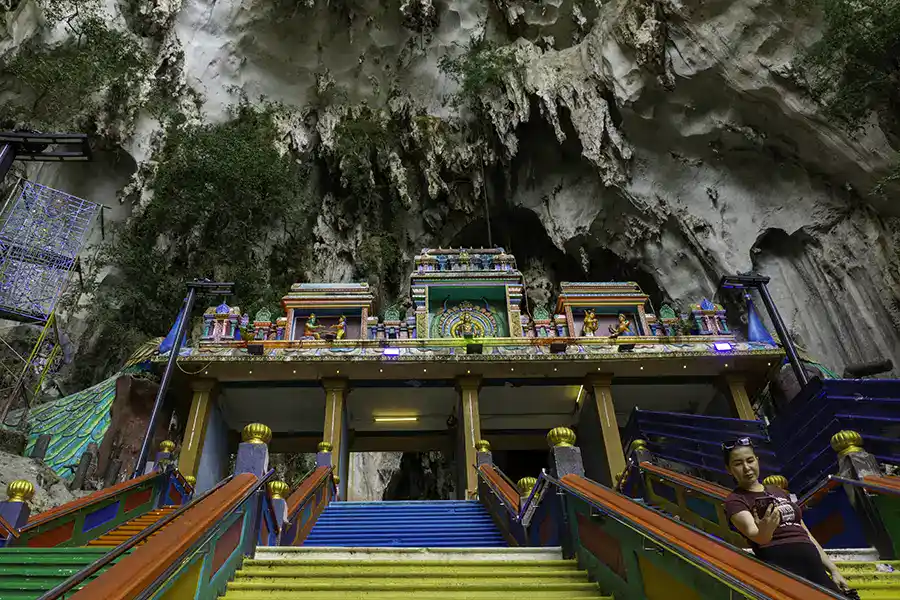
One of the defining features of Batu Caves is the climb to the cave temple, which requires ascending the 272 colorful steps of the Batu Caves staircase. This staircase leads to the sacred Sri Subramaniar Swamy Temple, located inside the limestone cave at the top of the hill.
Because the staircase is fully exposed to the tropical climate, the time of day you visit can significantly influence how comfortable the climb feels. During the cooler morning hours, the ascent is usually manageable and even enjoyable for most visitors.
By late morning, however, the staircase can become noticeably hotter under direct sunlight. Temperatures in this part of Selangor frequently rise above 30°C (86°F), and humidity remains high throughout the year.
For elderly visitors, families with children, or anyone sensitive to heat, choosing the right time of day can make the climb much more comfortable.
Reaching the top of the staircase reveals the entrance to the cave temple, where the dramatic limestone formations of Batu Caves become fully visible. Because this is an active Hindu temple, visitors are also expected to dress modestly before entering the cave. Shoulders and knees should be covered for both men and women, so it is helpful to review the Batu Caves dress code before planning your visit.
The climb may feel demanding, but the view of the cave temple and limestone formations at the top makes the effort rewarding for many visitors.
2. Tropical Weather Patterns
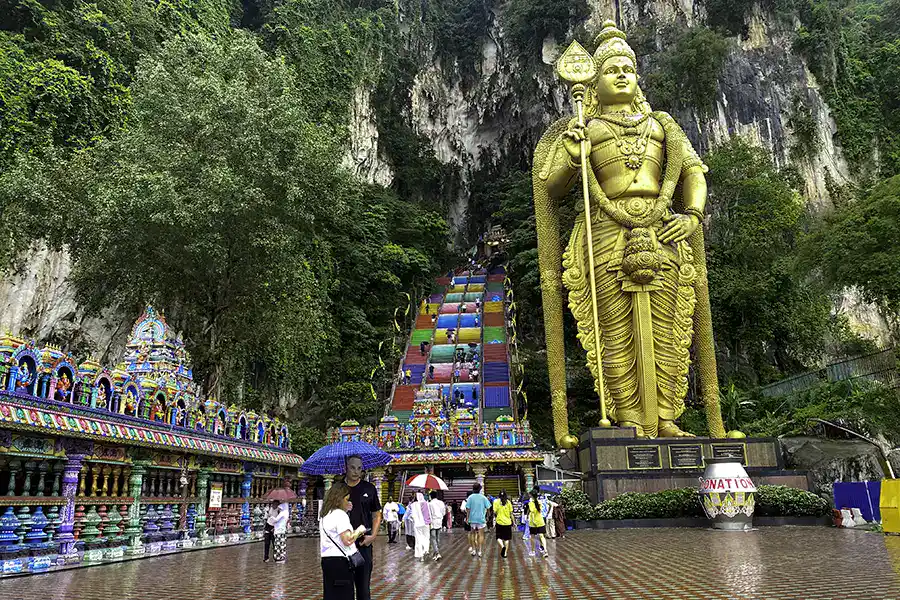
Malaysia has a tropical climate, which means visitors can expect warm temperatures and high humidity throughout the year.
Typical weather conditions include:
- High humidity year-round
- Warm daytime temperatures most days
- Sudden tropical rain showers, especially in the afternoon during monsoon months
While the cave temple itself provides natural shelter inside the limestone hill, the staircase and open courtyard areas remain fully exposed to the weather. Short afternoon rain showers are quite common in Kuala Lumpur and can temporarily change conditions around the temple complex.
After rain, the colorful staircase and entrance plaza may become wet and slightly slippery, and the lighting conditions for photography can also change quickly as clouds move in and out.
For travelers planning their visit, weather patterns are another small factor to consider when choosing the best time to visit Batu Caves.
3. Religious Atmosphere
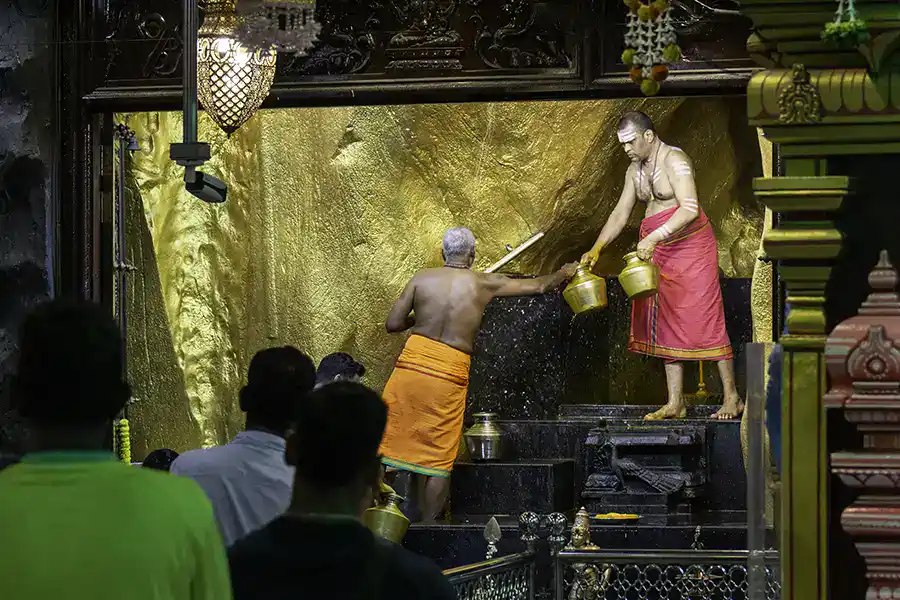
Batu Caves is not just a sightseeing stop — it is an active Hindu temple complex and one of the most important Hindu religious sites in Malaysia.
Early mornings often feel calmer and more spiritual. At this time of day, visitors may see local worshippers arriving with offerings and priests performing daily rituals inside the cave temple. The atmosphere tends to be quieter, allowing travelers to experience the religious character of the site more clearly.
Later in the day, especially when tour buses arrive from Kuala Lumpur, the environment gradually shifts toward a busier sightseeing atmosphere as more visitors gather around the staircase and temple entrance.
For travelers who appreciate cultural and religious experiences rather than just photography, choosing the right time to visit Batu Caves can make a noticeable difference to the overall experience.
Morning vs Afternoon – What’s the Best Time of Day to Visit Batu Caves?
One of the most common questions travelers ask when planning their trip is whether it’s better to visit Batu Caves in the morning or afternoon.
Both options are possible, but the experience can feel very different depending on the time you arrive. Temperature, lighting, tour group arrivals, and the pace of visitors all influence how comfortable and enjoyable the visit will be.
For most travelers coming from Kuala Lumpur, the difference between a morning and afternoon visit often comes down to weather and crowd timing.
Early Morning (7:00 AM – 9:00 AM)
Early morning is widely considered the best time to visit Batu Caves for several practical reasons.
First, the temperature is significantly cooler. Kuala Lumpur’s tropical climate means humidity is present throughout the day, but mornings are usually more comfortable before the sun becomes strong.
Climbing the 272 steps during this period feels much easier compared with late morning or midday when the staircase is exposed to direct sunlight.
Second, crowds are typically lighter. Independent travelers and local worshippers tend to arrive early, while most tour buses from the city begin arriving later in the morning. This creates a calmer atmosphere around the temple complex and staircase.
Early morning can also make the journey to Batu Caves easier. Most commuters in Kuala Lumpur travel into the city for work during the morning rush hour, while Batu Caves is located just outside the city. Visitors heading to the caves are therefore traveling against the main traffic flow, which often means a smoother journey. The same applies to the KTM Komuter train that runs from the city center to the Batu Caves station.
Because of this timing advantage, many guided itineraries in Kuala Lumpur also schedule Batu Caves as the first stop of the day. For example, the Batu Caves & Kuala Lumpur City Tour begins early in the morning so visitors can explore the temple complex before the larger tour buses arrive and before the midday heat builds.
Early morning also offers some of the best lighting conditions for photography. Soft natural light illuminates the colorful steps and the large golden statue at the entrance without the harsh shadows that appear later in the day.
For photographers and travelers who enjoy a quieter environment, this time window is often the most rewarding.
Late Morning to Afternoon (10:00 AM – 3:00 PM)
By late morning, the atmosphere at Batu Caves begins to change noticeably.
Temperatures rise quickly in Selangor, and the staircase can feel significantly warmer under the midday sun. Humidity also becomes more noticeable, which can make the climb more physically demanding for some visitors.
This period is also when organized tour groups usually arrive. Many Kuala Lumpur city tours include Batu Caves as part of their itinerary, and buses typically reach the site between mid-morning and early afternoon. As a result, the entrance area and staircase often become considerably busier.
While many travelers still visit during this period, conditions are typically less comfortable than earlier in the day. Visitors should be prepared for:
- Higher temperatures
- Larger crowds on the staircase
- Stronger sunlight for photography
Another factor to consider is the possibility of short tropical rain showers, which frequently occur later in the day. These downpours usually pass quickly, but they can temporarily make the staircase wet and slightly slippery.
For travelers with flexible schedules, visiting earlier in the morning or later in the afternoon generally provides a more comfortable experience.
Late Afternoon (After 3:00 PM)
Another good time to visit Batu Caves is later in the afternoon, after about 3:00 PM.
By this time, many tour buses that arrived earlier from Kuala Lumpur have already left. The main courtyard and staircase often become noticeably quieter compared with the late morning peak.
The sunlight also begins to soften slightly, making the environment more comfortable than the intense midday heat. While it is still warm, the temperature usually feels less harsh than during the noon period.
Late afternoon visits are particularly convenient for travelers who plan their day around other Kuala Lumpur sightseeing stops. Many visitors explore the city center in the morning and schedule Batu Caves later in the day.
This timing also works well for travelers planning to continue toward the Selangor coast in the evening. After visiting Batu Caves in the afternoon, some travelers head directly to Kuala Selangor Fireflies to watch the famous bioluminescent fireflies along the Selangor River after sunset, avoiding the need to return to the city first.
Another advantage is photography. As the sun moves lower, the lighting becomes more balanced, which can create nicer colors on the famous rainbow staircase and the golden statue near the entrance.
Visitors usually have plenty of time to explore in the late afternoon. Batu Caves stays open into the evening, so arriving after 3:00 PM still allows time to climb the staircase, visit the cave temple, and enjoy the surroundings at a relaxed pace.
Weekdays vs Weekends – Avoiding the Crowds
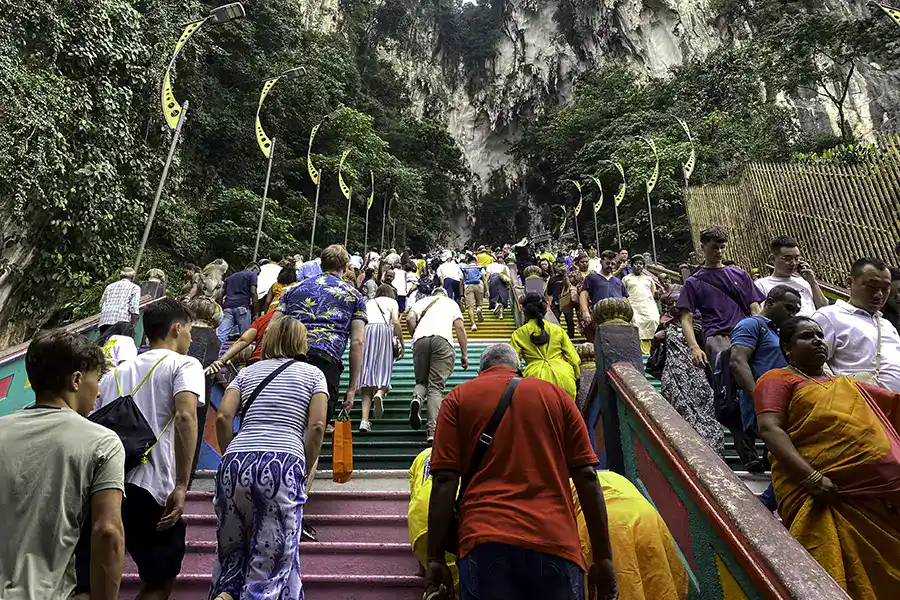
Another factor that strongly affects the experience at Batu Caves is the day of the week you choose to visit. While the caves are open daily, the number of visitors can vary significantly between weekdays and weekends.
Understanding these crowd patterns can help you plan a much more comfortable visit.
Visiting on Weekdays
For most travelers, weekdays are the best time to visit Batu Caves if you want fewer crowds.
During weekdays, the temple complex is typically quieter in the early morning hours. You’ll see a mix of independent travelers, photographers, and local worshippers visiting the cave temple.
Because many Kuala Lumpur sightseeing tours include Batu Caves as a stop, small groups may still arrive later in the morning. However, compared to weekends, the flow of visitors is usually more manageable.
This makes weekdays particularly suitable for:
- Travelers who prefer a calmer atmosphere
- Photographers looking for unobstructed shots of the staircase
- Visitors who want to explore the temple area at a slower pace
The climb up the staircase leading to Sri Subramaniar Swamy Temple also feels more relaxed when there are fewer people moving up and down the steps.
Visiting on Weekends
Weekends at Batu Caves are usually noticeably busier.
As one of the most important Hindu temples in Malaysia, Batu Caves remains an active place of worship, not just a tourist attraction. Because of this, crowds on weekends often come from both sightseeing visitors and local Hindu devotees arriving for prayers and temple visits.
Many local families from Kuala Lumpur and nearby towns in Selangor visit Batu Caves during Saturdays and Sundays. Combined with tour buses from the city, this can make the entrance plaza and the staircase significantly busier than on weekdays.
Activity at the temple complex typically builds from early morning through midday, when both worshippers and tour groups arrive. During these hours, visitors may experience:
- Longer waits to climb the staircase
- Larger groups taking photos near the entrance
- A busier atmosphere around the temple area
This does not mean weekends should be avoided completely. Batu Caves remains accessible and enjoyable, but visitors should expect a livelier atmosphere.
If a weekend visit is your only option, late afternoon after about 3:00 PM is often the most comfortable time to go. By then, many tour buses have already departed and the number of visitors usually begins to decrease, creating a more relaxed environment around the temple complex.
Public Holidays and School Holiday Periods
Crowd levels can increase significantly during Malaysian public holidays and school vacation periods.
During these times, many domestic travelers visit popular attractions around Kuala Lumpur, and Batu Caves often becomes part of family day trips. Major holidays such as Chinese New Year, Deepavali, and long holiday weekends may bring heavier visitor traffic.
If your travel dates fall within these periods, the best strategy is simply to visit earlier in the day, when the site is still relatively calm.
Best Months to Visit Batu Caves
For most travelers, the best months to visit Batu Caves are generally between May and September, when rainfall in the Kuala Lumpur area is usually lighter and mornings tend to be clearer.
Because Batu Caves is located just outside Kuala Lumpur, the weather patterns are similar to the capital city throughout the year. Malaysia has a tropical climate, which means warm temperatures and high humidity are present in every month.
However, some months offer more comfortable conditions than others, especially for climbing the staircase and exploring the cave temple area.
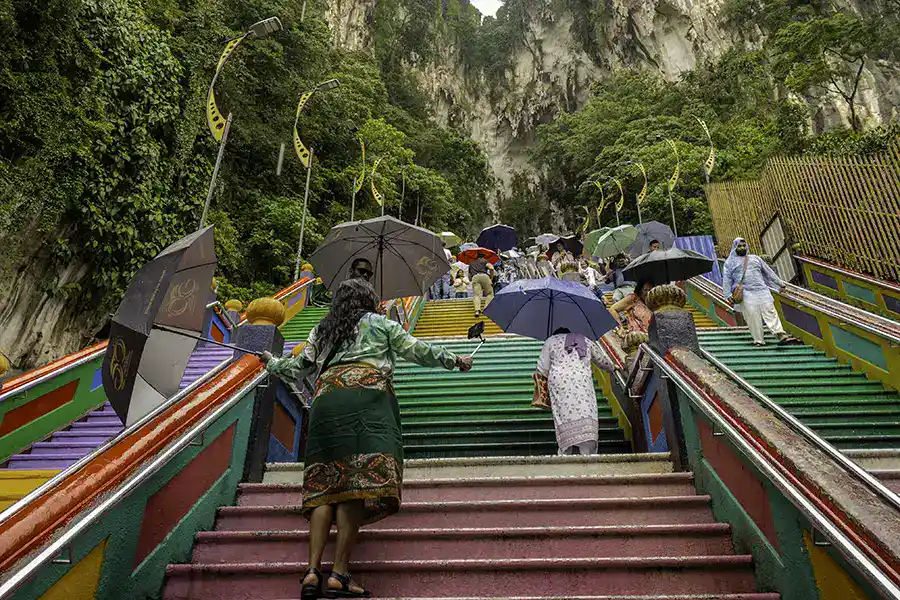
Sudden tropical rain showers are common around Kuala Lumpur, which is why many travelers prefer visiting Batu Caves earlier in the day when the weather is often clearer.
May to September – Generally the Most Comfortable Period
For many travelers, May through September is often considered the best time to visit Batu Caves.
During these months, rainfall in the Kuala Lumpur region is typically more moderate compared with the later monsoon period. While occasional showers can still occur, mornings are often clearer and more predictable.
The slightly drier conditions make the outdoor areas around the temple more comfortable, especially when climbing the 272 steps leading to Sri Subramaniar Swamy Temple.
This period also coincides with the summer travel season for many international visitors, particularly from Europe and North America. As a result, visitor numbers may increase slightly, but crowd levels are still manageable if you arrive earlier in the day.
October to April – Rainier Months
From October to April, Kuala Lumpur and the surrounding areas of Selangor tend to experience more frequent rain showers.
These are usually short tropical downpours rather than all-day rain, but they often occur in the afternoon. For visitors planning to climb the staircase and explore Batu Caves, wet steps and higher humidity can make the visit slightly less comfortable.
That said, visiting during these months is still completely possible. Many travelers simply schedule their visit earlier in the day when the weather is often clearer.
Rain showers can sometimes make transportation less predictable, especially when relying on public transport or ride-hailing services during busy hours. For this reason, some visitors prefer to plan their transport in advance. If you are comparing different ways to reach the caves, our guide on how to get to Batu Caves from Kuala Lumpur explains the main options including train, taxi, and private transport.
Peak Tourist Months
International travel patterns also influence how busy Batu Caves becomes.
The most popular travel periods for visitors to Kuala Lumpur are typically:
- June to August – European and North American summer holidays
- December – Christmas and year-end travel season
During these months, the caves may see a higher number of international tourists. However, the crowds are usually spread throughout the day, and visiting in the early morning or late afternoon still allows for a comfortable experience.
A Quick Reality About Weather in Kuala Lumpur
One important thing to understand is that there is no truly “perfect” weather season in Kuala Lumpur.
The temperature remains warm throughout the year, and sudden rain showers can occur even during the drier months. For most travelers, the time of day you visit often matters more than the specific month.
Choosing a cooler morning or a quieter late-afternoon visit generally makes a bigger difference than worrying about seasonal weather patterns.
Occasional Maintenance and Repainting
Another factor that can occasionally influence the best time to visit Batu Caves is periodic maintenance at the temple complex.
Staircase Repainting (Usually November–December)
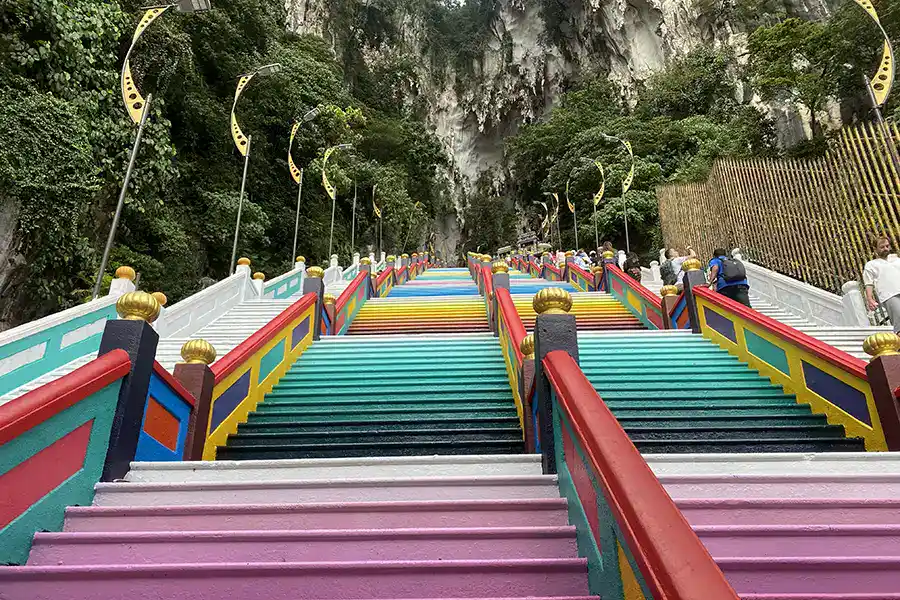
The famous rainbow staircase leading to the cave temple is typically repainted once a year, usually toward the end of the year around November or December, ahead of the Thaipusam festival in February.
During this period, sections of the staircase may be temporarily closed or partially covered while maintenance work takes place. The work is usually carried out in stages so visitors can still access the temple, although the experience may feel slightly different compared with normal conditions.
For travelers who want to see the staircase in its brightest and most vibrant colors, visiting shortly after repainting is completed can be especially rewarding.
Because repainting normally happens toward the end of the year, visitors planning their trip around this period may notice parts of the staircase under maintenance, which is another small factor to consider when choosing the best time to visit Batu Caves.
Lord Murugan Statue Repainting (Approximately Every 5 Years)
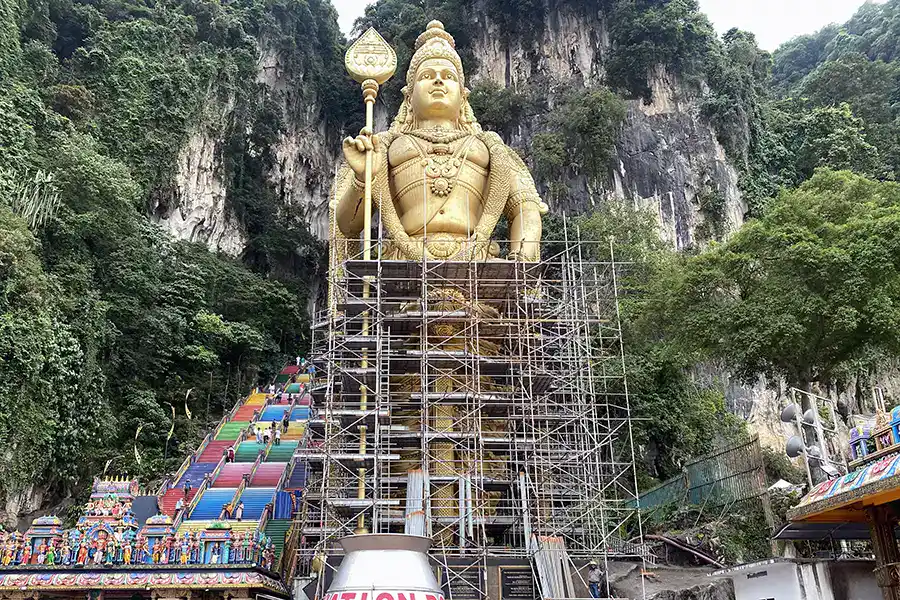
Before you plan your trip, it’s worth knowing the Lord Murugan Statue at the entrance of Batu Caves gets repainted every so often, and it can look noticeably different depending on when you visit. Standing 42.7 metres tall, it’s one of the most recognisable landmarks near Kuala Lumpur — but constant exposure to tropical heat, humidity, and rainfall means the gold finish doesn’t stay pristine forever.
Repainting happens roughly every five years, and the work itself takes around two months given the statue’s scale and the detailed preparation involved. The most recent repaint ran through November and December 2025, timed to finish ahead of the statue’s 20th anniversary in January 2026. Based on that cycle, the next repaint likely won’t happen until around 2030 — so if you’re visiting anytime between now and then, this shouldn’t affect your trip.
During any future repainting period, the temple complex and staircase both stay fully accessible. You’ll just find the statue temporarily looking different, and possibly scaffolded, while the work is underway.
Why This Matters for Visitors
These maintenance works do not happen frequently, but they can occasionally affect photography conditions or access to certain areas of the staircase.
For most travelers, this simply means checking current conditions before visiting. When maintenance has just been completed, the staircase and statue often look particularly vibrant, making it a great time for photos.
Batu Caves During Thaipusam – What Visitors Should Know
Once a year, Batu Caves becomes the center of one of Malaysia’s largest religious gatherings during the annual Thaipusam festival.
This important celebration in Hinduism usually takes place between January and February and attracts hundreds of thousands of devotees and visitors. During the festival, pilgrims travel from Kuala Lumpur and across Malaysia to Batu Caves, often carrying ceremonial offerings and climbing the 272 steps to the cave temple as part of a spiritual vow.
For travelers, visiting during Thaipusam can be a powerful cultural experience. The temple complex becomes incredibly lively, with processions, devotional music, and religious rituals taking place throughout the day and night.
However, it is important to understand that crowd levels during Thaipusam are extremely high. Roads around Batu Caves may close, public transport becomes busy, and the staircase leading to the temple can remain crowded for long periods.
For most first-time visitors who want a relaxed sightseeing experience, it is usually better to visit one wek before or one week after the festival week.
If your trip to Kuala Lumpur happens to coincide with the festival, you can learn more in our detailed guide:
Thaipusam Festival at Batu Caves – What Tourists Should Know.
Best Time for Photography at Batu Caves
For many visitors, Batu Caves is not only an important cultural landmark but also one of the most photogenic locations near Kuala Lumpur. The colorful staircase, the towering golden statue of Lord Murugan, and the dramatic limestone cave entrance create a striking visual setting that attracts photographers and travelers from around the world.
Because the temple complex sits at the base of a limestone hill, lighting conditions change noticeably throughout the day. The direction and intensity of sunlight can significantly influence how the staircase, statue, and surrounding cliffs appear in photographs. Choosing the right time of day can therefore make a major difference to the quality of your photos.
Early Morning Light (7:00 AM – 9:00 AM)
Early morning is widely considered the best time for photography at Batu Caves.
During these hours, sunlight is softer and more balanced, which helps highlight the vibrant colors of the staircase and the golden statue without creating harsh shadows. The cooler morning temperature also makes it more comfortable to explore the temple complex and spend time looking for good angles.
Another advantage is that visitor numbers are usually lower early in the morning. This makes it easier to capture wide shots of the Batu Caves staircase and the temple entrance without large crowds in the frame. The colorful staircase has become one of the most recognizable photo locations in Kuala Lumpur and is widely regarded as one of the most photographed landmarks in the city, attracting photographers, Instagram travelers, and content creators.
Midday Lighting Challenges
By late morning and early afternoon, the sun sits higher above the limestone cliffs surrounding the temple complex. This creates stronger contrasts between bright sunlight and deep shadows.
The open courtyard at the base of the staircase receives direct sunlight during this period, which can make photos appear overly bright. At the same time, the arrival of tour groups during peak sightseeing hours often means larger crowds on the staircase and around the statue.
Photography is still possible at this time, but visitors may need to adjust their camera settings or explore different angles to reduce strong backlighting and crowd interference.
Late Afternoon Lighting (After 3:00 PM)
Late afternoon can also provide excellent photography opportunities.
As the sun begins to move lower in the sky, the light becomes softer again and the atmosphere around the temple complex feels less intense than during midday. Visitor numbers may also begin to decrease after many tour buses depart from the site.
The combination of warmer light and fewer people on the staircase can create very appealing conditions for photographing the temple entrance, the golden statue, and the limestone cliffs that surround the cave.
Practical Photography Tip
If photography is an important part of your visit, try to arrive either early in the morning or later in the afternoon. These periods generally provide the best balance of lighting, temperature, and crowd conditions, making it easier to capture clear and memorable photos of Batu Caves.
Who Should Visit Batu Caves at What Time?
The best time to visit Batu Caves can vary depending on your travel style, comfort level, and what you hope to experience during your visit. Because the temple complex attracts different types of visitors throughout the day, choosing the right time can help you enjoy the site in a way that suits your schedule.
Here are some practical recommendations based on common visitor types.
First-Time Visitors to Kuala Lumpur
If this is your first time visiting Kuala Lumpur, the best option is usually early morning.
Arriving between 7:00 AM and 9:00 AM allows you to explore Batu Caves before larger tour groups begin arriving. The weather is cooler, the staircase is easier to climb, and the temple atmosphere tends to feel calmer.
Many first-time visitors combine Batu Caves with other Kuala Lumpur highlights later in the day, making a morning visit an efficient way to start sightseeing.
Photographers and Content Creators
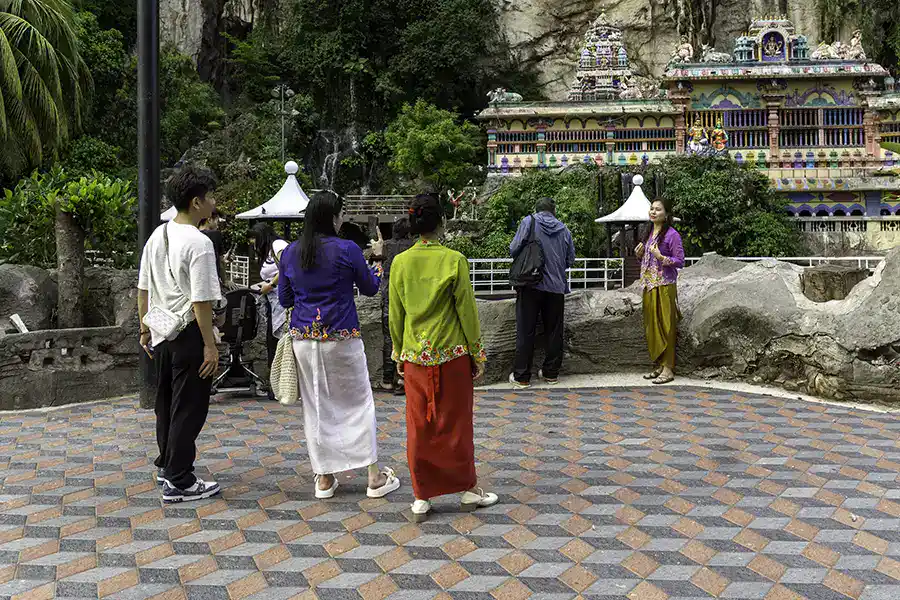
Travelers interested in photography will usually find early morning or late afternoon the most rewarding times to visit Batu Caves.
In the morning, softer light helps illuminate the colorful staircase and the golden Lord Murugan statue without the harsh shadows that often appear later in the day. Visitor numbers are also typically lower, making it easier to capture wide shots of the temple entrance and surrounding limestone cliffs.
By contrast, late morning and midday are usually the busiest periods. Large visitor numbers during this time can make it difficult for photographers and content creators to capture clear shots around the temple complex, especially near the staircase and the statue.
Late afternoon, after about 3:00 PM, can also provide good photography conditions. As the sun begins to lower, the light becomes less intense and the area often becomes quieter as some tour groups start leaving.
Both periods generally offer better lighting and a calmer atmosphere compared with the strong midday sun.
Families and Leisure Travelers

Families traveling with children or visitors who prefer a more relaxed pace may want to avoid the hottest part of the day when planning a visit to Batu Caves.
Climbing the staircase during the cooler morning hours often makes the experience more comfortable, especially for families with young children or elderly travelers. Temperatures are generally lower and the environment around the temple complex feels less intense than later in the day.
Alternatively, a late-afternoon visit can also work well for travelers who prefer to explore Kuala Lumpur city attractions earlier and visit Batu Caves later in the day.
Midday temperatures around Batu Caves can feel intense under direct sunlight, which is why many families prefer visiting earlier in the morning or later in the afternoon.
Both options help reduce exposure to the strongest midday heat and allow visitors to explore the temple complex at a more comfortable pace.
Travelers on Tight Schedules
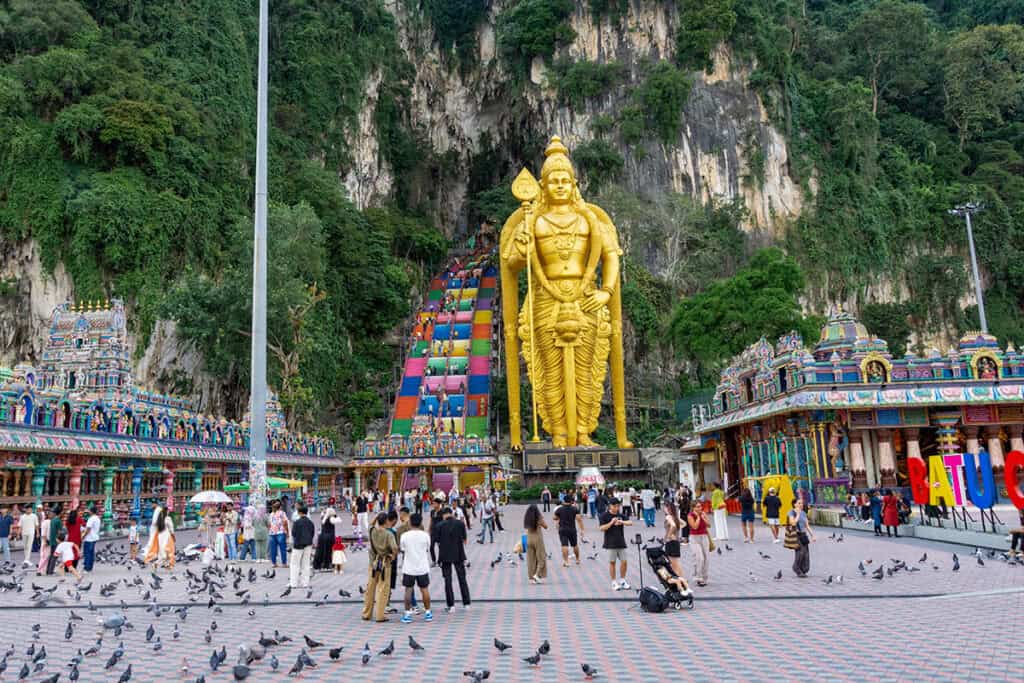
Some travelers visit Batu Caves during a short stop in Kuala Lumpur, such as cruise passengers, transit travelers, or visitors with limited time in the city.
In these situations, the best time to visit Batu Caves often depends on the rest of the day’s itinerary. Because the temple complex is located only about 20 minutes from Kuala Lumpur city center, it can easily fit into a half-day sightseeing plan.
Many travelers choose to visit early in the morning before continuing to explore the city, while others prefer a late-afternoon stop before returning to their hotel. If you’re arranging your own transport rather than a guided tour, My Little Taxi offers private airport and hotel transfers timed around early departures like this one.
Because of its convenient location, Batu Caves is frequently included as part of a broader day trip from Kuala Lumpur that combines several attractions in a single day. Travelers looking for itinerary ideas can also explore our guide to Day Trips from Kuala Lumpur.
In the next section, we summarize the local recommendation for planning your visit to Batu Caves, combining weather patterns, visitor crowds, and practical travel experience.
Local Recommendation – When I Usually Suggest Visitors Go
For most travelers visiting Batu Caves, two time windows during the day consistently provide the most comfortable experience.
The first is early morning, between about 7:00 AM and 9:00 AM. At this time the temperature is cooler, the staircase is less crowded, and the temple environment is generally calmer. Many visitors also prefer the softer morning light, which highlights the colorful steps and the golden statue at the entrance of the cave complex.
Another favorable period is later in the afternoon after 3:00 PM. By this time, many organized tour buses from Kuala Lumpur have already departed, and the area around the entrance plaza becomes noticeably quieter. The sunlight is also less intense than during midday, making the climb to the cave temple more comfortable.
For travelers with flexible schedules, a weekday morning visit usually offers the most relaxed conditions.
Once you have chosen the best time to visit, the next decision is how you would like to explore the site. Some travelers prefer visiting independently, while others choose a guided experience to better understand the cultural and religious significance of the temple complex. A detailed comparison is available in Visiting Batu Caves on Your Own vs With a Private Guide – Which Option Suits You?
Visitors who are considering a guided experience may also find it helpful to review Batu Caves Tour Guide – What to Expect, Tour Types & How to Choose, which explains the different types of tours available and what travelers can expect during a visit.
With thoughtful timing, Batu Caves remains one of the most rewarding cultural landmarks near Kuala Lumpur, combining dramatic limestone formations, vibrant temple architecture, and an active place of worship within easy reach of the city.
Final Tips for Planning Your Visit to Batu Caves
A visit to Batu Caves typically takes around one to one and a half hours, including the climb to the cave temple and time for photos around the entrance plaza. Because the visit itself is relatively short, many travelers choose to combine Batu Caves with other experiences during the same day.
One popular itinerary is to visit Batu Caves in the afternoon before continuing north toward Kuala Selangor in the evening to see the famous fireflies along the Selangor River after sunset. If you are considering this plan, our guide Batu Caves and Fireflies Tour – How to Combine Both in One Day from Kuala Lumpur explains how the schedule usually works.
Another approach is to use Batu Caves as the starting point for exploring destinations beyond the city center. Kuala Lumpur is surrounded by several rewarding places that can be reached within a few hours. For travelers who want to make the most of their stay, our guide Day Trips from Kuala Lumpur – Your Essential Guide to Exploring Malaysia in One Day introduces some of the most interesting excursions from the capital.
With the right timing, a visit to Batu Caves can easily fit into a broader Kuala Lumpur itinerary, making it not only one of the city’s most recognizable cultural landmarks but also a convenient gateway to discovering many other experiences around the region.