Best Time to Visit Kuala Lumpur (Weather, Festivals & Crowds by Month)

BEST TIME TO VISIT KUALA LUMPUR — QUICK ANSWER
Kuala Lumpur is a year-round destination — there’s no month where the city genuinely isn’t worth visiting. June through August is the most reliable stretch for drier weather, while the biggest crowd and price spikes come from school holidays (December-January and June-August) rather than rain, so plan around the school calendar as much as the forecast.
| BEST TIME TO VISIT KUALA LUMPUR — QUICK FACTS | |
|---|---|
| Driest, most reliable months | June-August |
| Wettest stretch | April-May and October-November (inter-monsoon thunderstorms), tapering into the Northeast Monsoon through March |
| Average temperature | 32-33°C daytime, 23-24°C overnight, year-round |
| Biggest crowd & price spikes | December-January and June-August school holidays, plus Chinese New Year |
| Cheapest window | Late February-March and September-October |
| Best month for day trips | Varies by destination — Cameron Highlands driest Feb-June; Batu Caves and Kuala Selangor best June-August |
Kuala Lumpur is a year-round destination — unlike Malaysia’s east coast islands, nothing here shuts down for the season. June through August gives the driest, most reliable weather, but school holidays in that same window also bring the biggest crowds and highest hotel rates.
This guide is part of our full Kuala Lumpur travel guide, and breaks down the city’s climate, monsoon pattern, festival calendar, and crowd cycles month by month — plus how that timing maps onto day trips.
Kuala Lumpur’s Climate — What to Expect Year-Round
Kuala Lumpur sits about 3 degrees north of the equator, so temperature barely moves across the calendar — expect 32-33°C by early afternoon and 23-24°C overnight in January just as much as in July. What changes month to month isn’t heat, it’s rain.
This is a tropical climate with humidity in the 70-90% range most days, and there’s no true dry season the way you’d get in Thailand or Indonesia. Rain falls every month here; the real question is how much, and when.
Afternoon thunderstorms are the default pattern — clear or partly cloudy mornings, building cloud after lunch, and a sharp downpour anywhere from 3pm to 6pm that usually clears within an hour.
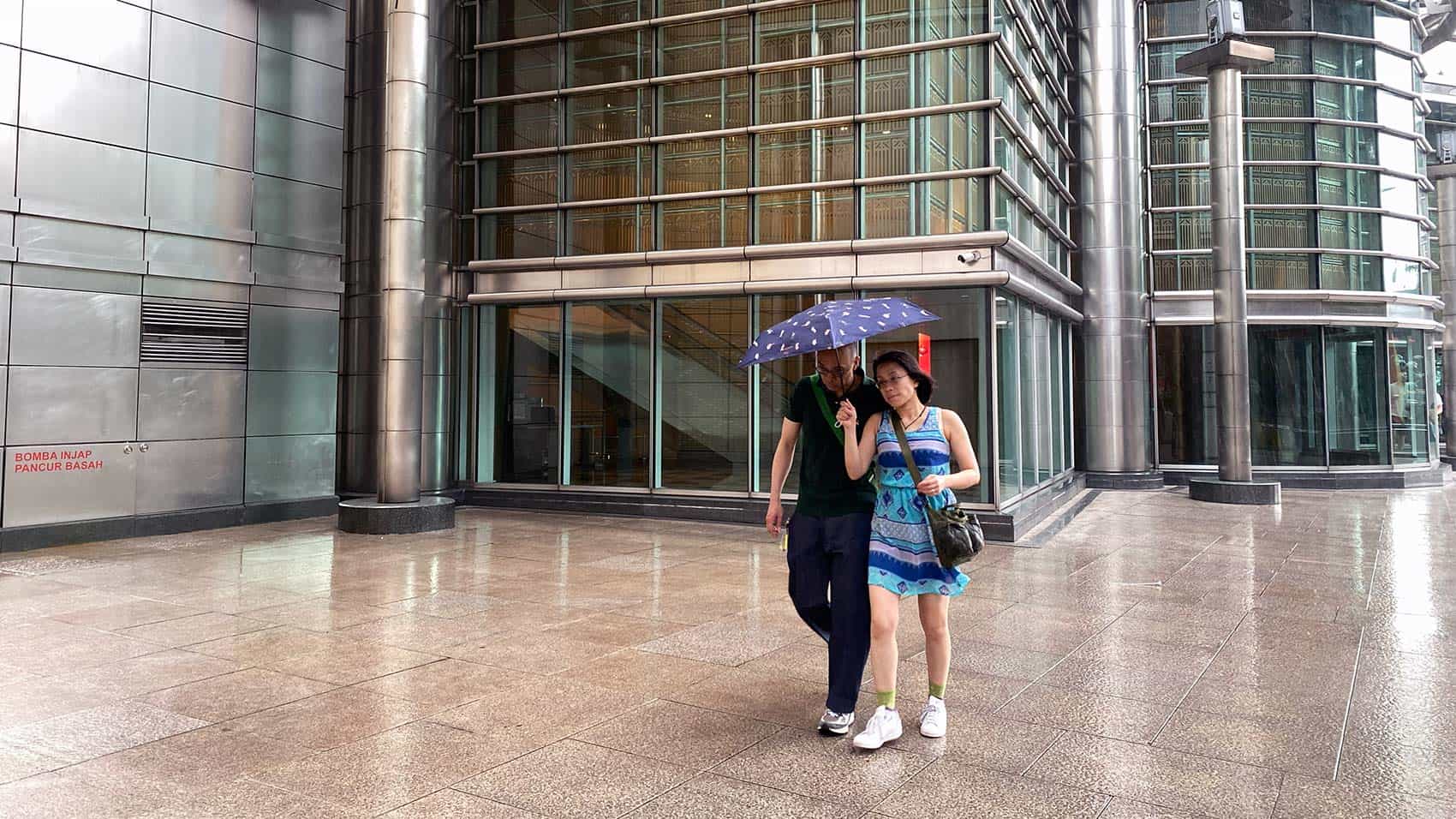
The one thing that catches first-time visitors out is how fast those afternoon storms roll in. I’ve had guests get soaked walking from Petronas Twin Towers to KLCC Park in the fifteen minutes it took a clear sky to turn into a downpour — carry a compact umbrella every day here, regardless of the forecast or the month.
The other reason to front-load your day: afternoon rain doesn’t just mean getting wet, it also means traffic. Kuala Lumpur’s roads back up fast once the rain starts — poor drainage in older parts of the city and drivers slowing down combine to turn a 20-minute Grab ride into 45 minutes or more. If you’re relying on Grab or public transport during that window, see our Getting Around Kuala Lumpur guide for how to plan around it.
Start sightseeing by 8am, aim to be between stops before 2pm, and treat the 3-6pm window as time to be indoors rather than crossing town.
Best Months for Good Weather in Kuala Lumpur
The best time to visit Kuala Lumpur for good weather is June through August, with July and August the two most consistent months for skipping the heaviest afternoon downpours. It still rains — just lighter and less often than the rest of the year, which matters most for outdoor sightseeing days.
According to MET Malaysia, the country’s national meteorological department, Peninsular Malaysia’s climate moves through four seasonal phases each year — two monsoons and two inter-monsoon transitions. Here’s how each phase plays out for Kuala Lumpur and the west coast specifically:
| Month | Monsoon Phase | KL / West Coast Pattern |
|---|---|---|
| January | Northeast Monsoon | Nationally the wettest phase, but the heavy rain concentrates on the east coast — KL gets the milder edge |
| February | Northeast Monsoon | Still within the wetter season, easing toward month-end |
| March | NE Monsoon → Transition | Late-month shift into the inter-monsoon transition begins |
| April | Inter-monsoon transition | One of two peak thunderstorm windows for the west coast — sudden afternoon/evening storms, occasional hail or waterspouts |
| May | Transition → SW Monsoon onset | Transition storms continue into early May before the drier season sets in |
| June | Southwest Monsoon | Drier and more stable — start of KL’s best weather window |
| July | Southwest Monsoon | Driest, most consistent month of the year |
| August | Southwest Monsoon | Still dry overall; early-morning squall lines (“garis badai”) possible on the west coast |
| September | SW Monsoon → Transition | Dry season tapering, edging into the next transition |
| October | Inter-monsoon transition | Second peak thunderstorm window — same storm risk profile as April |
| November | Transition → NE Monsoon | Rain increases as the Northeast Monsoon takes hold nationally |
| December | Northeast Monsoon | Wetter nationally, though the heaviest impact stays on the east coast |
Outside the June-August window, rainfall climbs noticeably. April and October are the Klang Valley’s two wettest windows — both inter-monsoon transition months with the heaviest thunderstorm activity of the year, not just occasional unpredictable showers. December through February stays damp too, as the Northeast Monsoon’s tail lingers over the west coast.
If you’re building a longer Malaysia itinerary around this window, our best time to visit Malaysia guide breaks down how KL’s timing lines up against the east coast islands, which run on the opposite monsoon schedule.
One honest caveat: even in the “good” months, don’t plan a day entirely around clear skies. KL’s malls, museums, and covered attractions mean a downpour rarely wastes more than an hour — build flexibility into any day plan rather than chasing a rain-free week that doesn’t really exist here.
Kuala Lumpur’s Monsoon Season Explained
Kuala Lumpur sits on the peninsula’s west coast, so it gets a milder version of Malaysia’s two monsoon systems, not the dramatic wet-dry swing you’d see on the east coast islands. Neither monsoon shuts the city down, which is exactly why the best time to visit Kuala Lumpur comes down to a matter of degree, not season.
The Northeast monsoon (roughly November-March) is the wetter of the two for KL, since its tail spills across the Titiwangsa mountain range and drops extra rain on the Klang Valley. The Southwest monsoon (roughly May-September) is milder here — actually the drier stretch for the west coast, which is why June-August ranks as KL’s best weather window.
The distinction that matters most for planning: even in KL’s wettest months, rain here means an intense downpour that clears within an hour or two, not the multi-day, continuous rain the east coast gets during the Northeast Monsoon. A “rainy” week in KL is still mostly usable — plan around the afternoon window and the rest of the day is normal.
Between the two sit the inter-monsoon transition months — April and October — when the city instead gets daily convective storms: short, intense, localised thunderstorms that build from heat and humidity rather than a large-scale system. These arrive with less warning than monsoon rain and occasionally bring flash flooding to low-lying parts of the city.
Practically, don’t plan a KL trip around “avoiding the monsoon” the way you would for Perhentian or Tioman. The more useful question is which weeks give the lightest, most predictable rain — and that’s June through August, not any specific “dry season” in the tropical sense.
Peak Season, Shoulder Season, and Low Season for KL Travel
Kuala Lumpur’s crowds and hotel prices are driven far more by school holidays than by weather, and the two peak windows are December-January and June-August — the months families in Malaysia, Singapore, and much of Europe are off school simultaneously.
Malaysia’s 2026 school calendar for Selangor and KL — Kumpulan B, not the same calendar as Kedah, Kelantan, and Terengganu — breaks down like this:
| Break | 2026 Dates | Duration | Notes |
|---|---|---|---|
| Chinese New Year | 16-20 Feb | ~5 school days | Combines with weekends — effectively 14-22 Feb for many families |
| Term 1 break | 21-31 March | 11 days | Overlaps Hari Raya Aidilfitri (21-22 March) |
| Mid-year break | 23 May – 7 June | 16 days | Longest break before year-end |
| Term 2 break | 29 Aug – 6 Sept | 9 days | Surrounds Merdeka Day (31 Aug) |
| Deepavali | 9 Nov (extra day) | 1 day | Group B except Sarawak; actual Deepavali is Sun 8 Nov |
| Year-end break | 5-31 Dec | 27 days | Longest break of the year — peak season |
These dates shift every year — check the current Ministry of Education calendar before booking around them.
Together, the year-end break and Chinese New Year make December through February the single busiest, most expensive stretch of the KL calendar — hotel prices in Bukit Bintang and KLCC routinely jump 30-50% above baseline.
Shoulder season falls roughly in February-March and September, once holiday crowds clear but before the next wave arrives — decent weather, easier hotel availability, shorter queues at Petronas Twin Towers and Batu Caves. Low season lands in late September-October and the first few weeks of Ramadan, when domestic leisure travel drops off noticeably.
Once you’ve settled on a travel window, the next decision is which day trips from Kuala Lumpur fit around it — peak-season weekends push traffic on the Cameron Highlands road in particular, worth knowing before you lock in a pickup date.
Festivals and Events That Affect the Best Time to Visit
Five recurring events reshape KL’s crowds and prices more than any weather pattern does: Chinese New Year, Ramadan and Hari Raya, Thaipusam, Deepavali, and Merdeka Day — and since most follow the Islamic, Chinese, or Hindu lunar calendars, their dates shift every year. Check the current year’s calendar before booking around any of them.
Chinese New Year (typically late January or February) is one of the busiest, most expensive periods of the year — flights and hotels spike sharply beforehand, and some family-run shops in areas like Chinatown close for the first day or two, even as lion dance performances and lantern displays make the same streets worth visiting for the atmosphere.
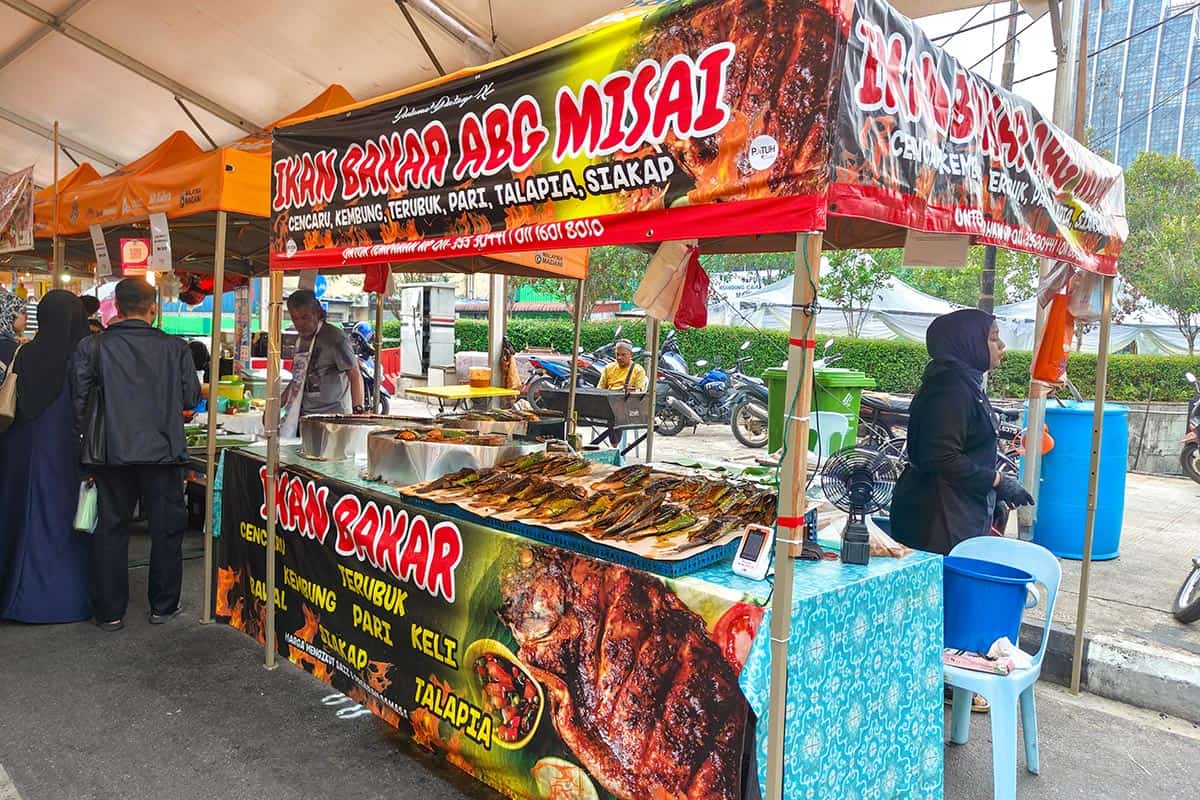
Ramadan brings a quieter city by day — some Malay-run eateries reduce their hours until late afternoon — but the night bazaars that appear from around 4pm are genuinely worth experiencing. Ramadan’s final week, leading into Hari Raya, sees a mass exodus of residents heading back to their home towns, so the city itself empties out right before the holiday hits.
Thaipusam (usually January or February) draws hundreds of thousands of devotees to Batu Caves on a single day — the one event here dramatic enough to plan a trip around deliberately. See our Best Time to Visit Batu Caves guide for how to time that around the crowds.
Deepavali (October or November) brings festive lighting around Brickfields, KL’s Indian district, and Merdeka Day (National Day, 31 August) adds a long weekend on top of the mid-year school break.
Best Time of Year for Day Trips from Kuala Lumpur
Day trip destinations sit outside the city, so they run on their own weather — not Kuala Lumpur’s — and each one has its own timing quirks worth knowing before you book.
Cameron Highlands is driest and clearest roughly February-June; the mountain road gets genuinely risky during the heaviest Northeast Monsoon rain in November-December, with landslide-related closures in past years. June-August is the most popular window, overlapping school holidays — expect a slower drive up and a busier tea plantation than on a quiet April or May weekday.
Batu Caves works on different logic than a full day out — it’s an outdoor site with 272 uncovered steps, so the deciding factor isn’t the month, it’s the hour. Go before 8am and you’ll beat the heat and the tour buses arriving mid-morning.
That timing pairs well with a city half-day: once the morning haze clears, Petronas Twin Towers, KLCC Park, and Merdeka Square are all comfortable on foot — our Things to Do in Kuala Lumpur guide covers the full lineup.
Our Batu Caves and KL City Tour runs this exact combination, and June-August is the smoothest window for it — less rain to interrupt the city walking portion of the day. The exception is Thaipusam, when Batu Caves draws crowds unlike any other day, regardless of season.
Starting early (around 7-8am) is the right call for this tour, not just a preference. Batu Caves is best before the heat and tour buses hit mid-morning, and the full 4-5 hour tour needs to wrap before the 3-6pm storm window if you want the city portion — Petronas Twin Towers, KLCC Park, Merdeka Square — to stay dry. A late start pushes those city stops straight into afternoon rain risk, so it’s really only worth it if you’re recovering from a long flight and would rather sleep in than beat the crowds.
An 8am pickup and 4-5 hour duration typically has you back at your hotel by early-to-mid afternoon, well ahead of the 3-6pm storm window — enough of the day left to add something low-key if you want. Chinatown is the easiest pairing, close by and mostly covered market alleys if the sky turns. Our Things to Do in Kuala Lumpur guide covers the rest of the city’s highlights if you’d rather keep the afternoon open-ended.
Kuala Selangor’s fireflies are a night activity, so daytime rain matters less here — what affects the experience is a moonless, calm night, since fireflies show up more clearly against a dark sky with minimal boat movement.
Heavy monsoon downpours in November-December can still disrupt river conditions and boat safety, so this is one day trip where a drier-month booking (June-August) genuinely lowers the odds of a washed-out evening.
Want Batu Caves and the city highlights in one day? Our private Batu Caves & Kuala Lumpur City Tour covers both — Lord Murugan statue and the temple caves, then Petronas Twin Towers, KLCC Park, and Merdeka Square, all in one 4-hour or 8-hour private trip with hotel pickup included.
What to Pack for Kuala Lumpur’s Climate
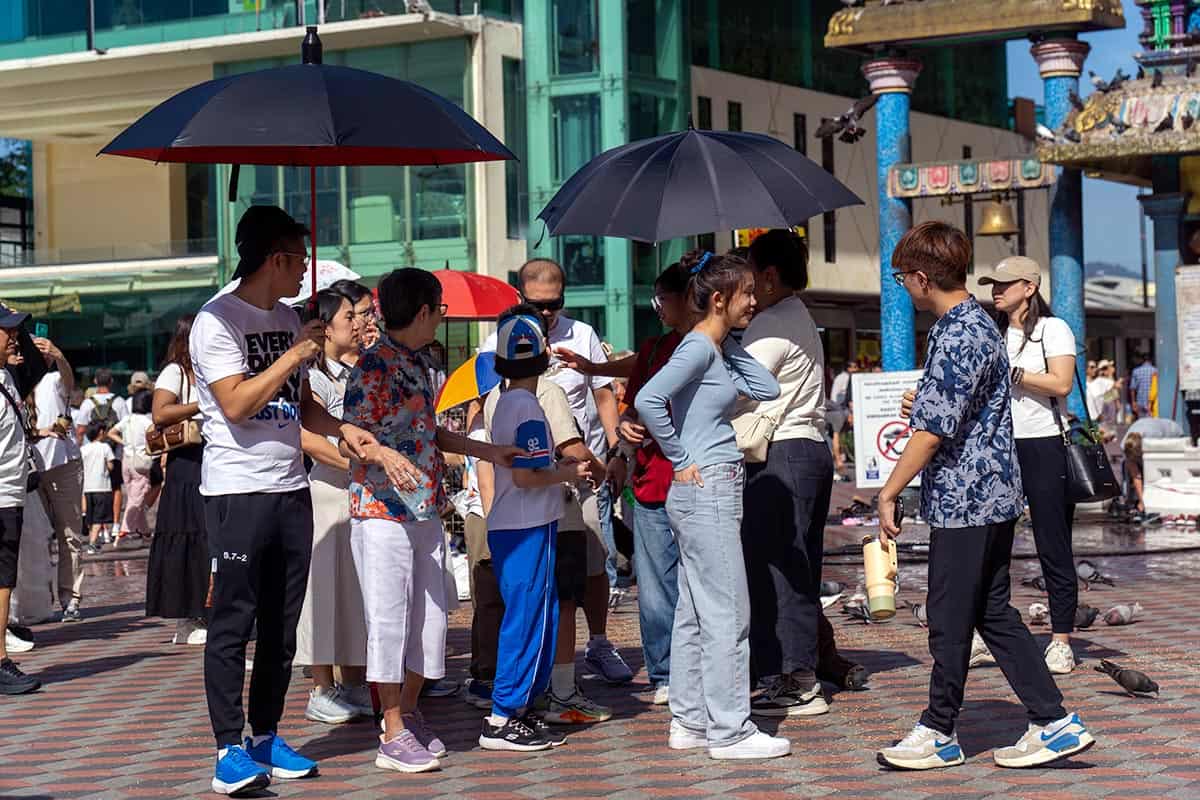
Pack for heat and sudden rain, not for cold — even in December, a light layer covers you for over-air-conditioned malls and restaurants. Breathable, light-coloured clothing handles the humidity far better than anything heavier, and dries faster if you’re caught in an afternoon downpour.
A compact umbrella or light rain jacket belongs in your day bag every day, regardless of season — a clear sky can turn into a downpour inside fifteen minutes here. Sun protection matters just as much: KL sits close enough to the equator that UV exposure is intense even on cloudy days, so sunscreen, a hat, and sunglasses earn their space in your bag.
If Batu Caves or the National Mosque are on your itinerary, pack one outfit covering shoulders and knees — both sites lend sarongs if you turn up underdressed, but bringing your own saves time in the queue. Comfortable, closed walking shoes are worth it for the 272 steps at Batu Caves and the uneven pavements around Chinatown.
Frequently Asked Questions
Last verified: July 2026. Monsoon phase and seasonal timing data sourced from MET Malaysia (Malaysia’s national meteorological department, met.gov.my). School holiday dates sourced from Kementerian Pendidikan Malaysia, Kalendar Akademik 2026 (SS-KPM Bil. 3/2025). Weather patterns above are historical averages, not forecasts, and festival, school, and public holiday dates shift with the calendar year — check current dates before booking around a specific event.