Tioman Island Travel Guide

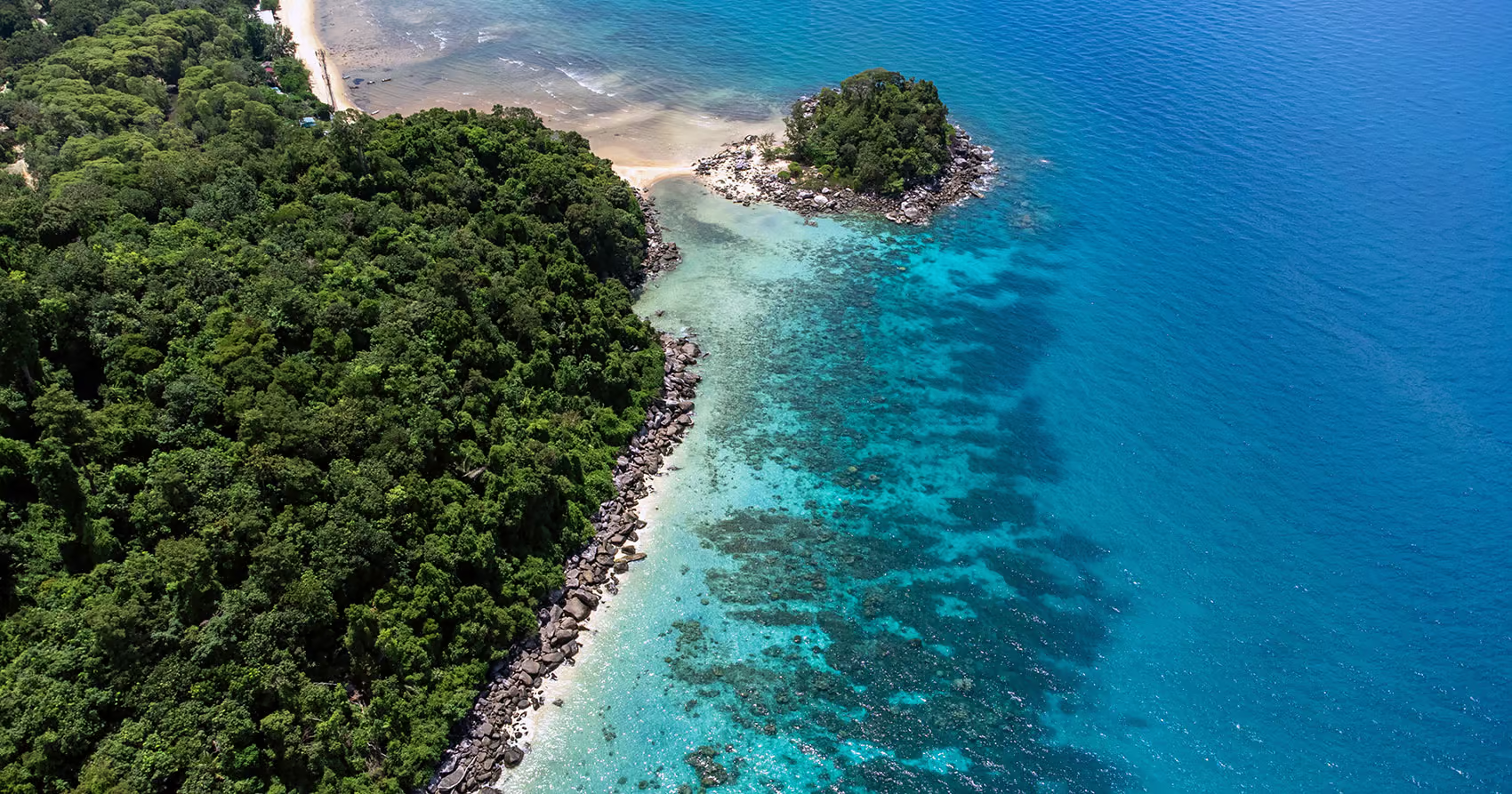
Tioman Island sits in the South China Sea off the east coast of Peninsular Malaysia — a volcanic island covered in rainforest, ringed by coral reef, and largely free of the overdevelopment that has changed many of Southeast Asia’s island destinations. It is part of the broader range of destinations in Malaysia that draw international tourists out of Kuala Lumpur and into the country’s natural landscape.
From KL, Tioman takes planning. There is no direct flight. You reach it by road to a departure jetty, then by ferry across open water. The journey is part of the experience — but it means Tioman rewards those who stay at least two nights, not those squeezing it into a single day.
This guide covers everything you need to plan your trip: when to go, how to get there, which village to stay in, what permits you need, and what to do once you arrive.
When to Visit Tioman Island
Tioman Island has a hard seasonal window. The northeast monsoon arrives in mid-November and the island effectively shuts down — most resorts and guesthouses close, ferry services are suspended, and conditions at sea make the crossing unsafe. The island reopens in mid-February, though early March is a more reliable target if you want settled weather and running services.
The safe travel window runs from March to October. Within that window, April to June tends to offer calm seas, good visibility for snorkelling and diving, and fewer crowds than the July–August school holiday peak.
If you are planning your trip around wildlife, June to August is sea turtle nesting season on Tioman. Turtles come ashore on several beaches across the island during this period — Juara on the east coast is the most consistent nesting location.
September and October remain open but can bring unpredictable weather as the monsoon approaches. Conditions are generally manageable, and accommodation rates are lower, but build some flexibility into your plans.
How to Get to Tioman Island from Kuala Lumpur
There is no flight connection between KL and Tioman Island. Berjaya Air operated a service until 2014, but it has not resumed. All access is by ferry, and to reach the ferry, you first need to get to one of two departure jetties on the mainland.
Mersing Jetty in Johor is the main departure point and the one most tourists use. It is approximately 4 to 4.5 hours from KL by road. Terminal Tanjung Gading (also called Tanjung Gemok) in Pahang is the alternative — slightly closer to KL for travellers coming from the north, but with fewer daily ferry departures.
Both jetties are served by two operators: Bluewater Express and CataFerry. The ferry crossing from Mersing to Tioman takes between 1.5 and 2 hours depending on your destination jetty on the island. Total journey time from KL to your village on Tioman is typically 6 to 7 hours door to door.
The most reliable way to reach Mersing from KL without managing bus connections or timings around ferry schedules is a private transfer to Mersing Jetty — a door-to-door service from your KL hotel timed to your ferry departure.
Mersing or Tanjung Gemok — Which Jetty Should You Use?
The answer depends on where you are coming from and how you are travelling.
Mersing Jetty in Johor is the better choice for most travellers departing from Kuala Lumpur. The drive from KL takes approximately 4 to 4.5 hours via the PLUS highway, and Mersing has more frequent daily ferry departures across both operators. If you are coming from KL, Singapore, or anywhere along the west coast, Mersing is the standard route.
Terminal Tanjung Gading (Tanjung Gemok) in Pahang makes more sense if you are already on the east coast — travelling from Kuantan, Cherating, or completing a coastal route through Pahang. The drive from KL to Tanjung Gemok is slightly shorter in distance but the road conditions and journey time are comparable. Ferry frequency from this terminal is lower, so check the schedule before committing to this departure point.
For a full breakdown of journey times, bus options, and what to expect at each jetty, see the complete guide on how to get to Tioman Island from KL.
Permits Required for Tioman Island
Two permits are required before you board the ferry to Tioman — both are obtained at Mersing Harbour Centre, the terminal building at Mersing Jetty, before you board.
The Marine Park permit covers the protected waters around Tioman Island and is mandatory for all visitors. The Johor National Park permit is required separately because Tioman falls within Johor National Park jurisdiction. Both fees are paid at the counter inside Mersing Harbour Centre — allow 20 to 30 minutes for this before your departure time, particularly during peak season when queues form.
If you are departing from Tanjung Gemok, permits are handled at the terminal there. Do not arrive at either jetty expecting to sort permits at the last minute. Build the processing time into your schedule when you book your ferry.
Which Village Should You Stay In?
The ferry from Mersing does not go to one jetty — it stops at multiple village jetties along Tioman’s west coast, moving south to north, before turning back. Knowing which village suits you determines which stop you get off at.
Genting is the southernmost village and the first stop from Mersing. It is a working kampung with a genuine local character, limited tourist infrastructure, and good reef nearby. Best for travellers who want quiet and don’t need amenities.
Paya is a small resort beach — a single bay with a few accommodation options and reasonable snorkelling directly off the beach. Calm and low-key.
Berjaya sits in front of the Berjaya Tioman Resort, the island’s main upmarket property. If you are staying at the resort, this is your stop.
Tekek is the island’s main village and the administrative centre — it has the airport strip (no longer in use), the largest concentration of shops, and is the arrival point for most inter-island boat services. Renggis Island, one of the best snorkelling spots around Tioman, is a short boat ride from Tekek. First-time visitors who want convenience use Tekek as a base.
Air Batang (ABC) is the most popular village for independent travellers. A long beach with a range of guesthouses, dive operators, and restaurants — it hits the balance between accessibility and atmosphere better than Tekek. Most people planning their first trip to Tioman end up here.
Salang is the northernmost village on the west coast and has a strong dive community. The reef at Salang is good, the atmosphere is relaxed, and it tends to attract travellers staying longer than two nights.
Juara on the east coast is the most distinct village on the island. It faces away from the main ferry route — you either reach it by boat or by the cross-island Tekek–Juara jungle trail, a 2-hour trek through primary rainforest. Juara has the best turtle nesting beach on the island, a quieter surf, and far fewer visitors. It suits travellers looking for something different from the standard west coast experience.
What to Do on Tioman Island
Snorkelling is the most accessible activity on Tioman and the reason most first-time visitors come. Renggis Island, a short boat ride from Tekek, has some of the clearest water and most consistent coral around the island. House reef snorkelling is also available directly off the beach at Paya, ABC, and Salang.
Diving is well-established across the island. Several dive centres operate out of ABC and Salang, offering PADI open water courses through to advanced dives. Tioman’s deeper sites — including wreck dives — attract experienced divers specifically.
The Tekek–Juara jungle trail is a 2-hour cross-island trek through primary rainforest connecting Tekek on the west coast with Juara on the east. It is well-marked and manageable for reasonably fit travellers. The trail gives access to Juara without taking the longer boat route around the island’s southern tip.
Sea turtle watching is possible June through August at Juara beach, where green turtles come ashore to nest. The Juara Turtle Project runs a monitoring programme — arrivals are not guaranteed, but the months of June and July have the highest frequency.
Island hopping by chartered boat connects the main villages and gives access to snorkelling spots not reachable from shore. Most guesthouses can arrange this directly.
Tioman’s evenings are quiet by design. The island has no nightlife infrastructure — most travellers eat kampung seafood at waterfront restaurants and finish the night early. That is part of what makes it worth visiting.
How Many Days Do You Need on Tioman Island?
The journey from KL to Tioman takes 6 to 7 hours each way. A day trip is not practical — by the time you arrive, you would need to turn around.
Two nights is the minimum worth the travel. It gives you one full day on the island — enough for snorkelling, a beach day, and a village meal — without feeling rushed.
Three to four nights suits divers, trekkers doing the Tekek–Juara trail, or anyone wanting to visit more than one village. Divers completing a PADI open water course will need at least four nights to allow for pool sessions, confined water dives, and open water dives across consecutive days.
If you are combining Tioman with other stops on a longer Malaysia itinerary, build the travel days into your planning. The ferry schedule does not always align neatly with bus or transfer arrivals — an extra half-day buffer at Mersing before your outbound crossing is often worth having.
Frequently Asked Questions
Information last verified April 2026. Ferry schedules and permit fees are subject to change — confirm current details with your ferry operator or at Mersing Harbour Centre before travel.