Batu Caves Staircase – Guide to the Iconic 272 Rainbow Steps

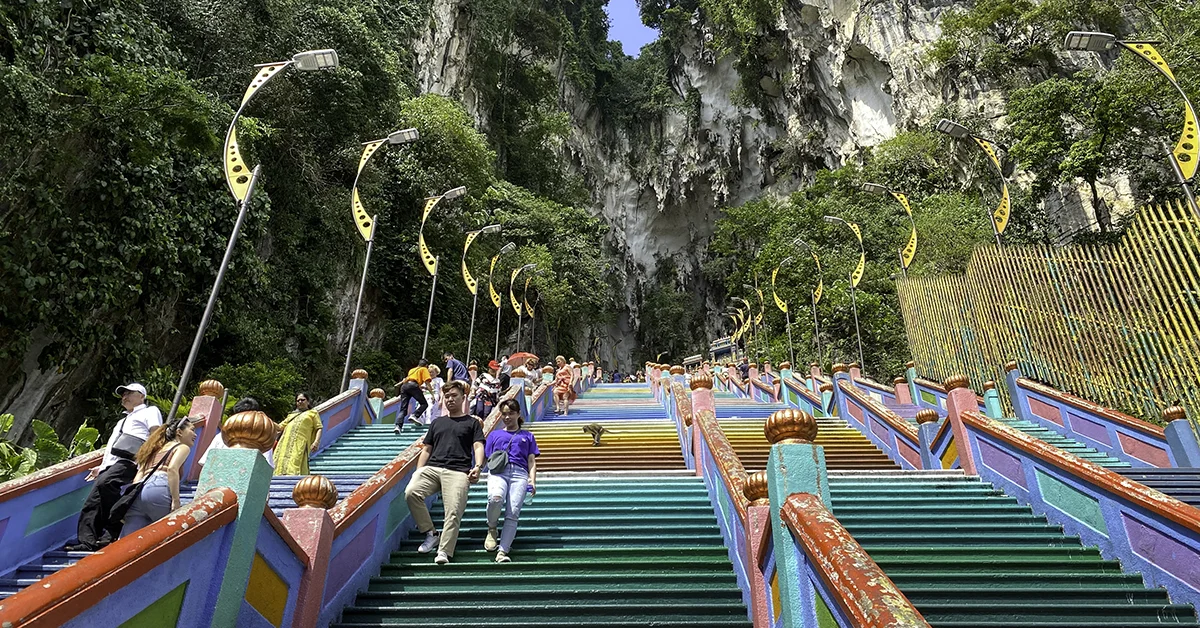
The Batu Caves staircase is one of the most recognizable landmarks in Malaysia and widely considered one of the main things to do in Kuala Lumpur for travelers interested in culture, religion, and dramatic natural scenery. Rising beside the towering golden statue of Lord Murugan, the colorful staircase leads visitors up a limestone hill to the Temple Cave, the main religious chamber of Batu Caves.
The climb consists of 272 steps, making it both a physical and cultural highlight for travelers visiting the temple complex just outside Kuala Lumpur. Batu Caves is also widely featured among the top destinations in Malaysia, attracting travelers interested in culture, religion, and dramatic limestone landscapes.
For many visitors, climbing the Batu Caves 272 steps is the moment that defines their experience. The staircase offers dramatic views, encounters with playful monkeys, and a gradual approach to one of the most important Hindu pilgrimage sites outside India. If you are visiting for the first time, our detailed Batu Caves Visitor Guide explains the temple complex, its history, and what to expect during your visit.
This guide focuses specifically on the Batu Caves staircase — its history, difficulty level, cultural meaning, photography viewpoints, and practical tips to help you enjoy the climb.
How Many Steps Are There at Batu Caves?
The Batu Caves staircase consists of exactly 272 steps leading up to the Temple Cave, the main shrine located inside the limestone hill. These steep steps connect the temple grounds at the base of Batu Caves to the cave entrance, which sits about 100 meters above ground level.
Although 272 steps may not sound like a long climb, the ascent can feel demanding due to Kuala Lumpur’s tropical heat and humidity. Most visitors take 10 to 15 minutes to reach the top, often stopping midway to rest, enjoy the views, or take photographs of the colorful staircase.
The steps themselves are relatively narrow, measuring about 31 centimeters in depth, reflecting their original design for devotees climbing barefoot during religious ceremonies.
After climbing the famous 272 steps of the Batu Caves staircase, visitors who explore deeper into the Temple Cave will also encounter another smaller staircase with 101 additional steps leading to an inner chamber higher inside the cave.
While the climb is shorter than many temple staircases across Asia, the steep incline means visitors should take their time and ascend at a comfortable pace.
Why Are There Exactly 272 Steps at Batu Caves?
The 272 steps of the Batu Caves staircase do not appear to carry a specific symbolic meaning in Hindu tradition. The number mainly reflects the practical design of the staircase, which had to follow the natural slope of the limestone hill leading to the Temple Cave.
When the concrete staircase was built in 1939, engineers and temple leaders designed the steps to safely connect the temple grounds at the base with the cave entrance roughly 100 meters above ground level. The final number of steps simply reflects the distance and steepness required to reach the cave.
Although the number itself is not considered spiritually significant, climbing the staircase is still viewed as a meaningful devotional act by many Hindu worshippers, particularly during the annual Thaipusam festival, when thousands of pilgrims ascend the steps barefoot as part of their religious offering.
What Is It Like to Climb the Batu Caves Staircase?
Climbing the Batu Caves staircase is both a physical activity and a memorable travel experience. As you begin the ascent, the colorful stairs rise dramatically against the limestone cliff, with the massive golden statue of Lord Murugan watching over the entrance.
Along the way, visitors will often pause on small landing areas to rest, take photos, or enjoy views of the temple grounds below before continuing toward the Temple Cave.
How difficult is the climb?
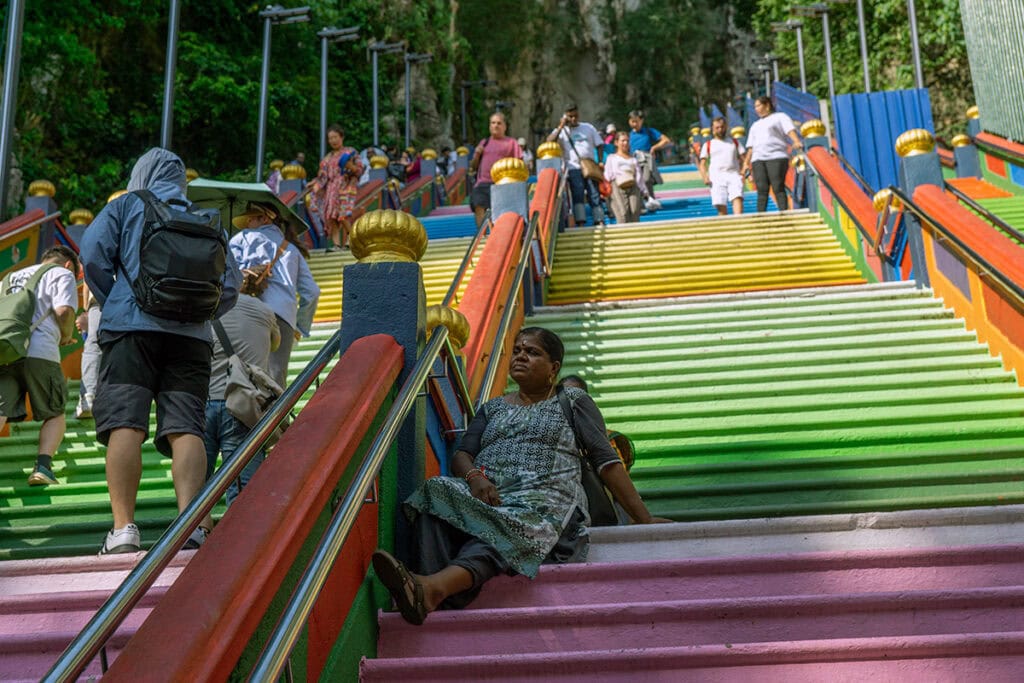
For most travelers, the Batu Caves steps difficulty is considered moderate. Many first-time visitors often ask, “Is Batu Caves hard to climb?” In reality, the climb is relatively short but steep, and the tropical heat around Kuala Lumpur can make it feel more challenging than expected, especially during the middle of the day. Visitors who are reasonably fit can usually reach the top in about 10 minutes, while others may prefer a slower pace with several short breaks along the way. Many visitors pause along the staircase to rest in shaded areas before continuing the climb, particularly when temperatures are higher.
Is the Batu Caves staircase safe?
The Batu Caves staircase is generally safe for visitors, and there are no significant safety concerns related to crime in the temple area. Most safety considerations relate instead to the physical climb and the presence of monkeys along the staircase.
Travelers should take extra care when climbing or descending the steps. The tropical heat can cause fatigue if visitors climb too quickly, and the staircase may become slippery during wet weather.
To stay safe, climb at a steady pace, use the handrails when available, and avoid rushing on the stairs. Visitors should also remain cautious around the monkeys that live along the staircase, as they may approach tourists carrying food or drinks. It is best to carry plain drinking water instead of juice or soft drinks, which can attract monkeys that may try to grab bottles or bags.
Because the staircase is exposed to tropical weather, the steps can become particularly slippery after rain, so visitors should walk carefully when descending.
Are the steps steep?
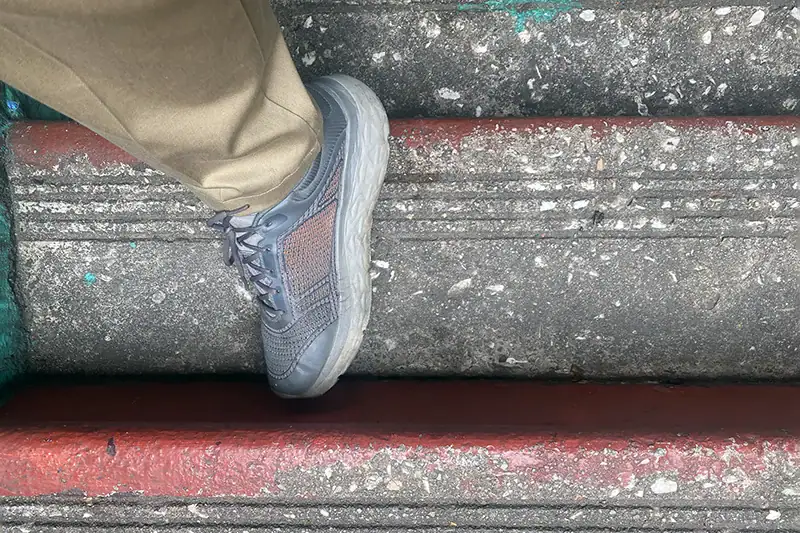
Yes, the steps are noticeably steep. Each step is approximately 31 centimeters in depth, and the staircase was originally designed for barefoot climbing by Hindu devotees, especially during religious festivals.
Because of this design, the steps can feel slightly narrow for visitors wearing shoes. Travelers with larger foot sizes may find the staircase a bit tight, particularly when descending, which is why it is important to walk carefully and take your time.
Many visitors also find that descending the Batu Caves staircase can feel slightly harder than climbing up, especially if the steps are wet after rain.
For a more comfortable experience, many travelers prefer to climb earlier in the morning when temperatures are cooler. Our guide on Best Time to Visit Batu Caves explains the best hours to avoid heat and crowds.
History of the Batu Caves Staircase
The staircase you see today is the result of decades of development and community effort.
Early Access to the Temple Cave
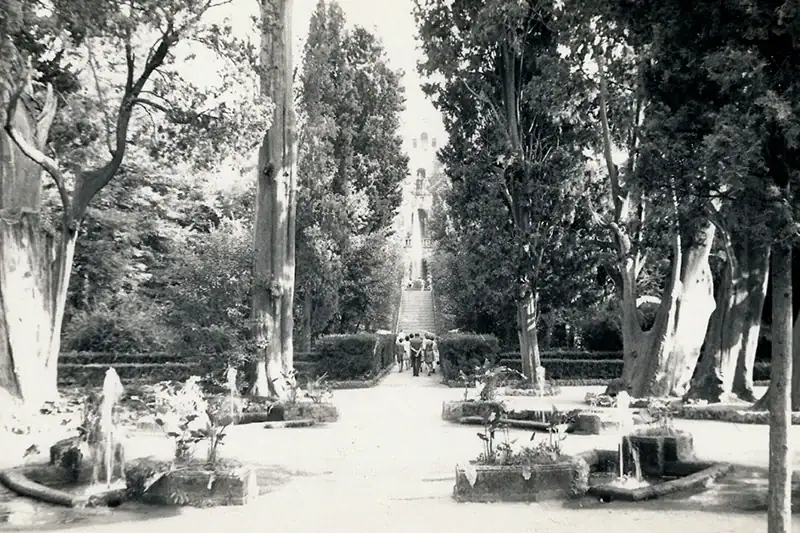
Before the staircase existed, reaching the Temple Cave required climbing the steep limestone hill by holding onto tree roots and rocks. Devotees who visited the cave temple often undertook the difficult climb as part of their spiritual journey.
Construction of the 272 Concrete Steps
In the early 20th century, temple leaders recognized the need for safer access to the cave. A wooden staircase was first constructed in 1920, allowing worshippers to reach the cave more easily, especially during the annual Thaipusam festival.
However, the wooden structure deteriorated over time due to heavy use and tropical weather. In 1939, temple chairman Ramachandra Naidu proposed replacing the wooden staircase with a permanent concrete structure. The new staircase, consisting of 272 steps, was completed just in time for the 1940 Thaipusam festival.
Community Contributions
The project was funded through donations from the local Hindu community. Workers and devotees contributed financially, sometimes donating a day’s wage to support temple renovation efforts known in Tamil as Thiruppani, which refers to sacred construction or improvement work performed for a temple.
These collective efforts transformed the difficult climb into the iconic Batu Caves staircase we see today.
Why Are the Batu Caves Stairs Painted in Rainbow Colours?
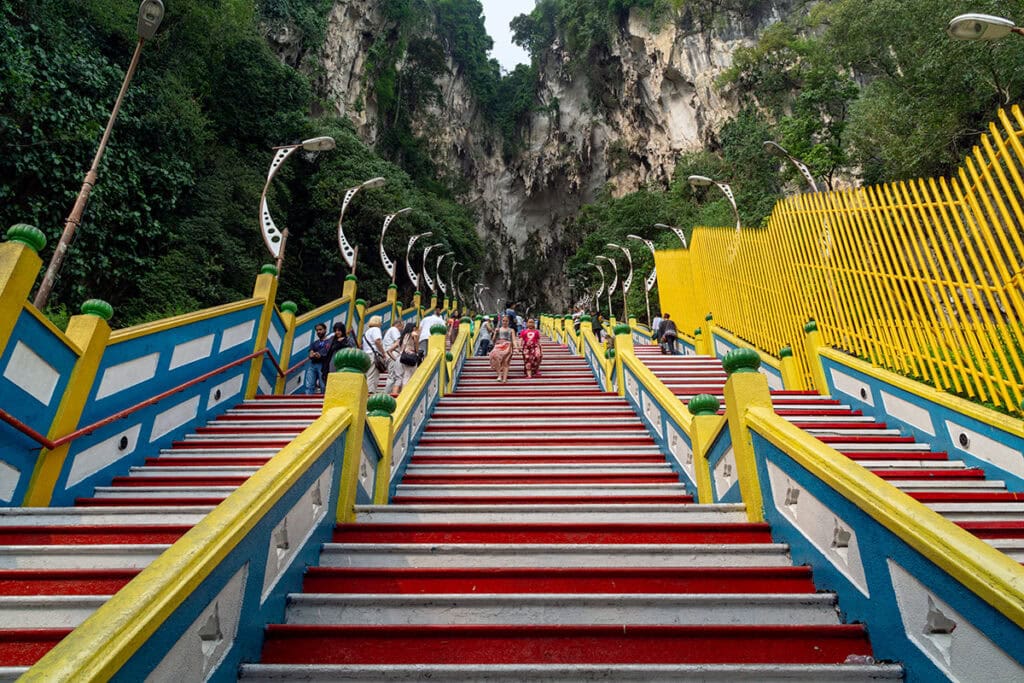
For many years, the Batu Caves staircase was painted in simpler color schemes, including red and white, as seen in older photographs of the temple complex. These earlier designs highlighted the steep structure of the steps but were far less visually striking than the staircase visitors see today.
In 2018, the temple management carried out a major renovation project involving several temples within the Batu Caves complex. As part of this renovation, the main staircase was also expanded from three lanes to four lanes to improve visitor flow and reduce congestion, especially during the annual Thaipusam festival, when thousands of devotees climb the steps.
During the renovation, the temple committee also decided to repaint the 272 steps in vibrant rainbow colors. The new design was inspired by the bright colors used in the surrounding Hindu temples, giving the entrance to Batu Caves a fresher and more welcoming appearance. This transformation created what is now widely known as the Batu Caves rainbow stairs.
The colorful staircase quickly attracted international attention. Photographs of the rainbow steps began spreading widely across social media, helping turn Batu Caves into one of the most visited destinations in Kuala Lumpur and Malaysia.
Heritage debate
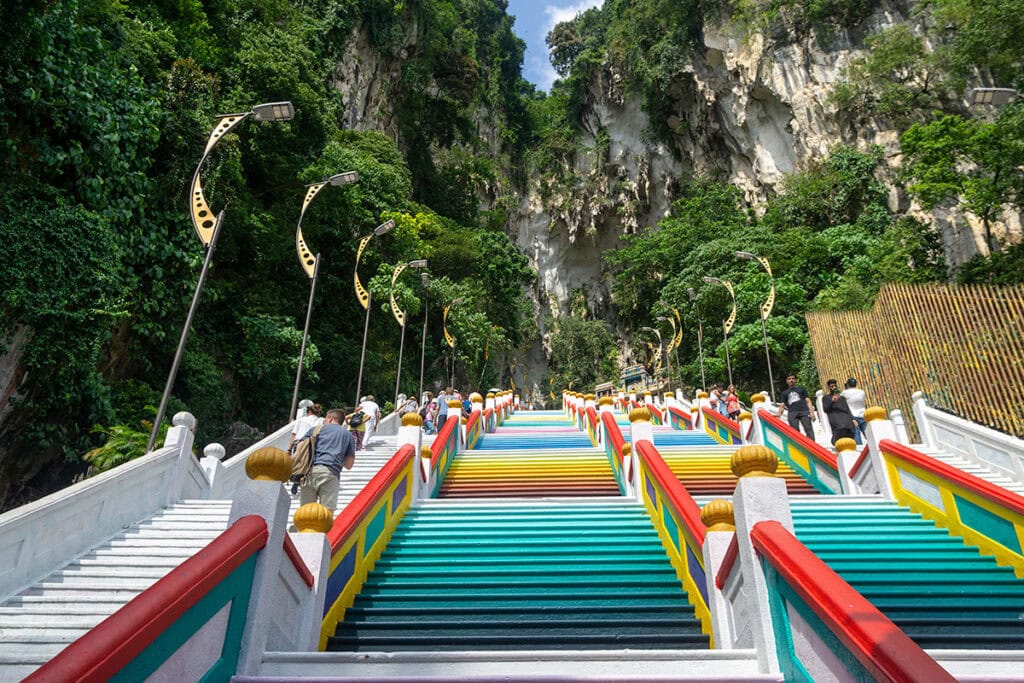
The renovation also sparked debate among heritage authorities. Malaysia’s National Heritage Department raised concerns about whether the repainting had been approved according to conservation regulations.
Despite the controversy, the colorful staircase remains one of the most distinctive features of Batu Caves today.
Visitors should also be aware that the Batu Caves staircase requires periodic maintenance and repainting due to heavy daily use. With millions of visitors climbing the steps each year, sections of the staircase are occasionally refreshed to maintain the vibrant colors of the Batu Caves rainbow stairs.
This maintenance usually takes place toward the end of the year, typically around November or December, when parts of the staircase may be temporarily closed or partially covered during the repainting process. Travelers visiting Batu Caves during this period may notice ongoing work or limited access to certain sections of the steps while the temple committee restores the staircase’s colorful appearance.
Spiritual Meaning of Climbing the Batu Caves Steps
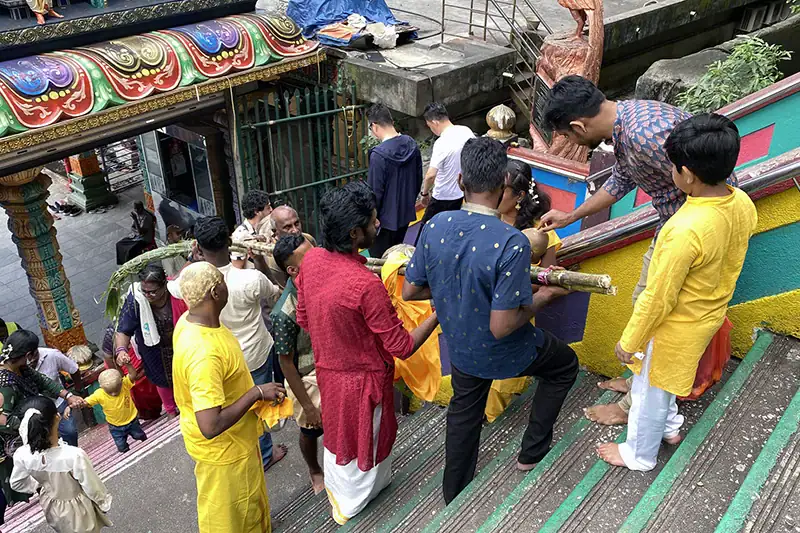
For Hindu devotees, climbing the Batu Caves staircase is far more than a physical activity. It represents a symbolic journey toward spiritual purification and devotion.
During the annual Thaipusam festival, thousands of pilgrims climb the 272 steps barefoot while carrying ceremonial structures known as kavadi. These acts of devotion are offered to Lord Murugan, the Hindu deity whose statue stands at the base of the staircase.
Even outside festival days, many worshippers climb the stairs as part of personal prayer rituals.
Visitors are welcome to observe these practices but should always behave respectfully, especially when taking photographs near devotees.
Monkeys on the Batu Caves Staircase
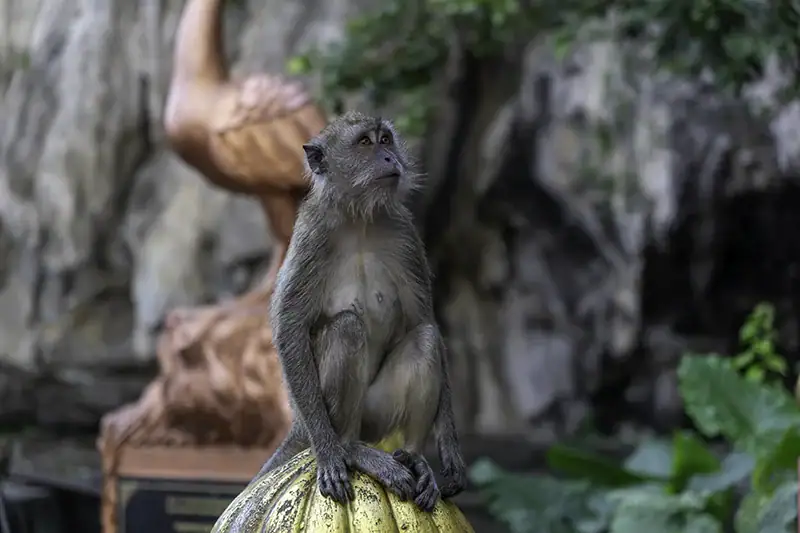
The Batu Caves staircase is home to a large population of long-tailed macaques. These monkeys have adapted to living around the temple complex and are a familiar sight for visitors.
Although they often appear playful, macaques can be opportunistic and may grab food, drinks, or shiny objects from unsuspecting tourists.
To avoid problems:
- Do not feed the monkeys
- Avoid carrying visible food
- Keep phones, bags, and water bottles secure
- Maintain a safe distance from animals
Most visitors enjoy seeing the monkeys, but it is important to treat them as wild animals rather than pets.
Best Photo Spots on the Batu Caves Staircase
The Batu Caves staircase is one of the most photogenic locations near Kuala Lumpur, attracting photographers and travelers who want to capture the dramatic contrast between the colorful steps, towering limestone cliffs, and the golden statue of Lord Murugan.
Base of the staircase
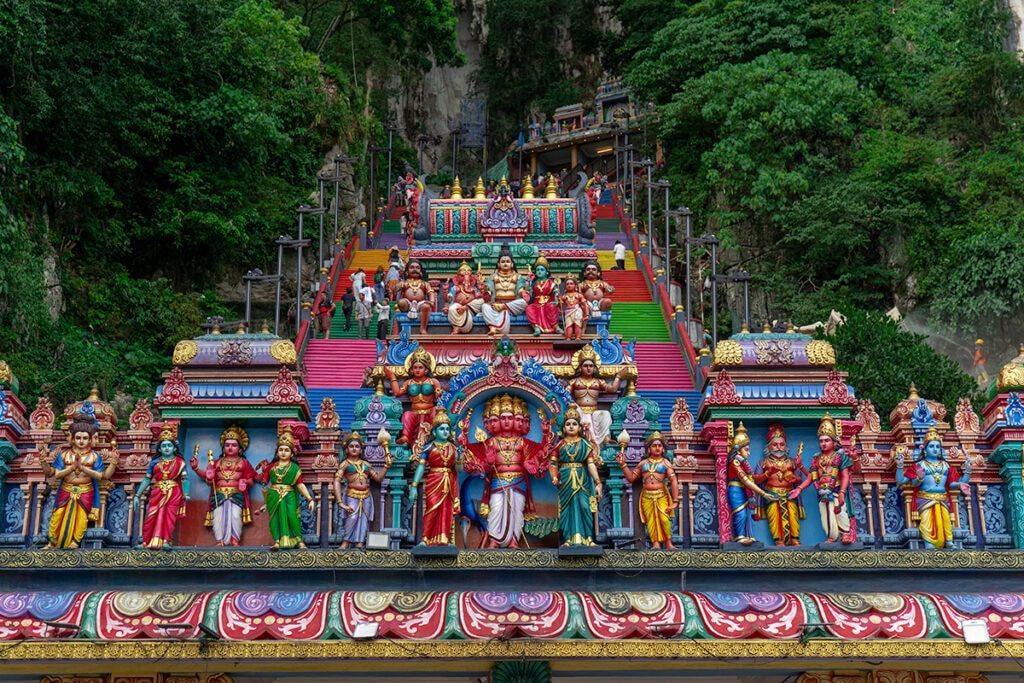
The most popular viewpoint is at the base, where photographers capture the entire staircase rising behind the towering statue of Lord Murugan. From this angle, the vibrant colors of the steps create a striking backdrop against the grey limestone cliffs.
Midway viewpoint
About halfway up the stairs, visitors can turn around for impressive views of the temple grounds below and the colorful steps stretching upward. This viewpoint also offers a wider perspective of the surrounding area and the crowds moving along the staircase.
Temple Cave entrance
Near the top of the staircase, the limestone cliffs frame the entrance to the Temple Cave, creating dramatic photographs with natural light filtering through the cave opening.
For the best lighting and fewer crowds, arrive early in the morning. The bright rainbow colors of the staircase also create strong geometric patterns, which photographers often capture using wide-angle lenses from the base of the stairs.
Practical Tips Before Climbing the Batu Caves Stairs
What to wear
Because Batu Caves is a sacred Hindu site, visitors must dress modestly. The Batu Caves dress code is enforced from the base of the staircase, so tourists must ensure their clothing covers the shoulders and knees before starting the climb.
Visitors who arrive wearing shorts, sleeveless tops, or other revealing clothing will not be allowed to climb the staircase until they comply with the dress requirements.
If needed, sarongs are available for purchase at the entrance, allowing visitors to cover up before entering the temple area.
Our Batu Caves Dress Code Guide explains the clothing requirements in detail.
Best Time of Day to Climb
Climbing early in the morning is usually the most comfortable option. Temperatures rise quickly during the day, making the climb more tiring under Kuala Lumpur’s tropical heat.
Because Batu Caves is one of the most popular attractions near Kuala Lumpur, the staircase can also become very crowded, especially when large tour groups arrive later in the morning. Visiting earlier in the day usually means cooler temperatures, fewer crowds on the stairs, and a more relaxed climbing experience.
Choosing the right time can significantly improve your Batu Caves visit, allowing you to enjoy the views, take photos, and explore the Temple Cave more comfortably.
What to bring
- Drinking water
- Comfortable walking shoes
- Sun protection
- Small backpack
- Cash for toilet entrance and personal expenses
Facilities at the base
Toilets, food stalls, and small souvenir shops are located at the base of the staircase. Visitors are advised to use the facilities before starting the climb, as there are no toilets at the Temple Cave level.
The area around the entrance can become busy with tourists, vendors, and worshippers throughout the day. For convenience, a luggage storage facility is available near the base of the staircase, allowing visitors to store larger bags or items before beginning the climb.
However, it is still best to travel light when climbing the Batu Caves staircase. Carrying heavy bags can make the ascent more difficult, especially in Kuala Lumpur’s tropical heat.
Travelers joining Batu caves tours from Kuala Lumpur are often advised to leave unnecessary belongings inside their tour vehicle before starting the climb, bringing only essential items such as water, a phone, and a small bag.
What Awaits at the Top of the Batu Caves Staircase
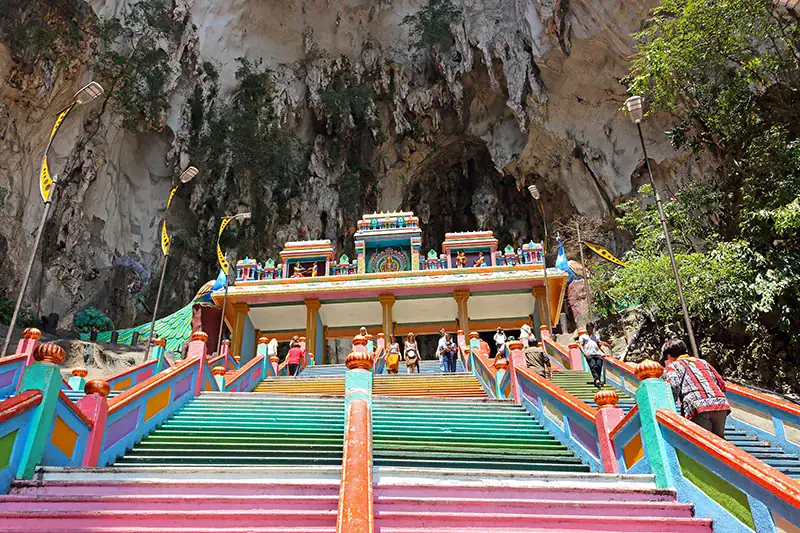
After climbing the 272 steps of the Batu Caves staircase, visitors arrive at the impressive Temple Cave, the largest and most important cave within the Batu Caves complex. This vast limestone chamber houses several Hindu shrines dedicated primarily to Lord Murugan, making it a significant place of worship for devotees.
Inside the cave, natural light pours through a large opening in the limestone ceiling, illuminating the shrines and statues below. The towering rock walls and open skylight create a dramatic atmosphere that feels both spiritual and awe-inspiring.
Visitors who continue exploring deeper into the Temple Cave will also notice another smaller staircase located inside the cavern. This inner stairway consists of 101 additional steps that lead to a higher chamber within the cave. Although much shorter than the main Batu Caves staircase outside, these steps offer a closer look at the limestone formations and smaller temple shrines located further inside the cave.
Many visitors spend a few minutes exploring the cave interior, observing the shrines and statues, and enjoying the unique atmosphere created by the towering limestone walls and natural skylight above.
Why the Batu Caves Staircase Design Is Unique
Unlike many temple staircases built on flat mountainsides, the Batu Caves staircase was designed to follow the natural slope of a limestone cliff. This explains why the steps appear unusually steep and narrow compared to modern staircases.
The structure had to be engineered carefully to anchor into the limestone rock while supporting thousands of visitors each day.
This design challenge is one reason the staircase became such an iconic architectural feature of Batu Caves.
How the Staircase Transforms During Thaipusam
During the annual Thaipusam festival, the Batu Caves staircase transforms completely.
Thousands of devotees climb the steps carrying kavadi structures, often after walking long pilgrimage routes from Kuala Lumpur. The staircase becomes filled with chanting, music, and devotional ceremonies that continue throughout the day and night.
For travelers interested in religious culture, witnessing the staircase during Thaipusam is one of the most powerful cultural experiences in Malaysia.
Why Batu Caves Became One of the Most Photographed Staircases in the World
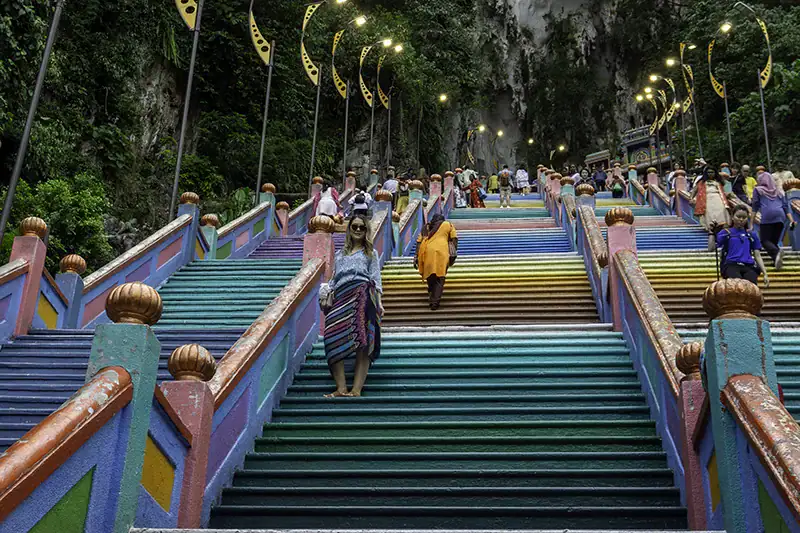
After the rainbow repainting in 2018, the Batu Caves staircase quickly became one of the most recognizable staircases in the world. The colorful gradient design contrasts dramatically with the grey limestone cliffs and the golden statue of Lord Murugan.
Travel photographers often describe Batu Caves as one of Southeast Asia’s most visually striking temple entrances.
This global recognition helped transform Batu Caves from a primarily religious destination into one of Malaysia’s most visited tourist attractions.
Batu Caves Staircase Opening Hours
The Batu Caves staircase opening hours generally follow the schedule of the temple complex. Batu Caves opening hours are typically from 5:30 AM to 9:00 PM daily.
However, access to the staircase itself is usually restricted from 6:00 AM to 8:30 PM for safety reasons.
Early morning visits are recommended for cooler temperatures and fewer crowds. If you want to plan the best visiting time, including quieter hours and temple schedules, you can check our detailed Batu Caves Opening Hours Guide. If you are traveling from Kuala Lumpur, our How to Get to Batu Caves Guide explains the easiest transportation options to reach the temple complex.
Future Development: Escalator Project at Batu Caves
Due to the large number of visitors climbing the staircase each day, temple authorities have begun developing an escalator system beside the Batu Caves staircase to improve accessibility for elderly visitors and those with mobility challenges.
The escalator is being constructed alongside the existing staircase, allowing visitors to continue using the traditional 272 steps while providing an alternative way to reach the Temple Cave.
According to current plans, the project is expected to be completed and operational before the 2027 Thaipusam celebration. Once finished, the escalator will make the temple complex more accessible while preserving the historical staircase that remains central to the Batu Caves pilgrimage experience.
Until the escalator is completed, visitors must still climb the 272 steps to reach the Temple Cave.
FAQs
Conclusion
Climbing the Batu Caves staircase is an unforgettable part of visiting this famous temple complex. The 272 colorful steps lead not only to the Temple Cave but also to one of Malaysia’s most fascinating cultural landmarks.
Understanding the history, spiritual meaning, and practical tips for climbing the staircase will help you enjoy the experience more comfortably.
If you are planning your visit, you can also learn whether it is better to visit Batu Caves on your own or with a private guide, or explore different Batu Caves tour options if you prefer a guided experience from Kuala Lumpur.