Batu Caves Tour Guide – What to Expect, Tour Types & How to Choose

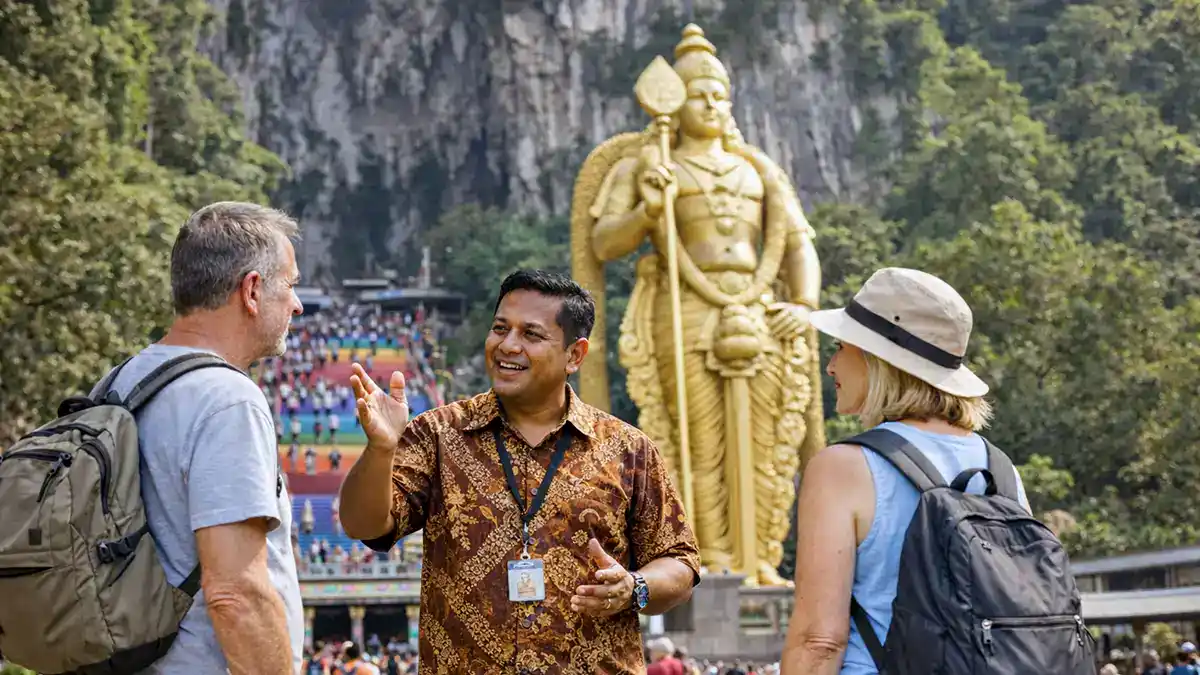
This Batu Caves tour guide covers everything you need to decide before booking — what guided tours include, which format suits your travel style, and how to get the most from your visit.
If you’ve already read through our Batu Caves Visitor Guide and you’re now thinking about joining a guided tour, this page walks you through what that experience actually looks like, how different tour formats compare, and which option makes sense depending on your travel style and schedule.
This isn’t a repeat of the visitor guide. It’s the next step — helping you move from “I want to visit Batu Caves” to understanding exactly what a tour involves so you can decide with confidence. Since many tours are scheduled around crowd levels and weather conditions, it can also help to understand the best time to visit Batu Caves when choosing the tour that fits your itinerary.
What Does a Batu Caves Tour Actually Include?
A guided Batu Caves tour from Kuala Lumpur typically covers more than just the caves themselves. Here’s what most half-day tours include — and what any good Batu Caves tour guide should help you understand before you go.
Hotel pickup and return. Your driver collects you from your accommodation in central Kuala Lumpur, usually around 9:00 AM for a morning departure or 2:00–3:00 PM for an afternoon session. You’re returned to the same location once the tour wraps up.
The drive to Batu Caves. The journey from most Kuala Lumpur hotels takes roughly 30 minutes. On a private tour, your guide often uses this time to explain what you’re about to see — the religious significance of the site, how the caves formed, and what to look out for during the climb.
Time at the caves. You’ll typically spend 45 minutes to 1.5 hours at Batu Caves. That’s enough to take in the Lord Murugan statue at the base, climb the 272 rainbow-coloured steps to the Temple Cave, and explore the shrine area inside. Some tours also include a visit to the Ramayana Cave at ground level, which has a small entrance fee.
Additional stops. Most Batu Caves tours don’t end at the caves. Depending on the itinerary, your tour might continue to KL city landmarks, a fireflies river cruise in Kuala Selangor, or other cultural and nature attractions. This is where tour formats start to differ — and where choosing the right one matters.
One important thing to know: entry to the main Batu Caves temple is free. There’s no admission ticket. When you book a tour, you’re paying for transport, guidance, and the convenience of a planned itinerary — not for cave entry.
Tour Types: Which Format Suits You?
Not all Batu Caves tours are structured the same way. The main differences come down to group size, what else is included, and how your time is used. Here’s a practical breakdown.
Private Tours
A private tour means it’s just you and your group — no strangers, no fixed schedule dictated by other passengers. Your driver-guide picks you up when it suits your morning, adjusts the pace based on your interest level, and can reroute if you want more time at a particular stop.
This format works well for families with young children, couples who want a relaxed pace, and travellers who don’t want to feel rushed on the 272-step climb. It’s also the better option if you’re combining Batu Caves with other destinations on the same day, since the itinerary bends around you rather than a fixed group.
Typical duration: 4–6 hours depending on how many stops you add.
Shared Group Tours
These are the most affordable option. You’ll share a minivan or bus with other travellers and follow a set itinerary with fixed timing at each stop. The upside is cost; the downside is less flexibility. You’ll usually get about 40–60 minutes at the caves before the group moves on.
Shared tours tend to include a few standard stops — often a batik factory or pewter workshop — which can feel like filler if cultural crafts aren’t your thing. They work fine for solo travellers or budget-conscious visitors who just want to tick off the caves without planning logistics.
Combo Day Tours
This is where things get more interesting for visitors who want a full day of experiences rather than just a cave visit. Combo tours pair Batu Caves with a second major destination, turning a half-day trip into a richer experience.
The most popular combinations from Kuala Lumpur include:
Batu Caves + KL City Highlights.
A half-day tour that pairs the caves with landmarks like Merdeka Square, the National Mosque, Thean Hou Temple, and the Petronas Twin Towers area. This is the most popular option for first-time visitors to Kuala Lumpur who want a complete introduction to the city in a single outing. If this sounds like what you’re after, our Batu Caves & Kuala Lumpur City Highlights Tour covers exactly this itinerary with a private driver-guide and no shopping stops.
Batu Caves + Kuala Selangor Fireflies

An afternoon-to-evening tour that starts at the caves and continues north to Kuala Selangor for silverleaf monkeys, a riverside dinner, and a boat ride to watch fireflies after dark. It’s a completely different rhythm — sacred temple to quiet nature — and uses the day efficiently. We cover how the logistics of this combo work in our guide to combining Batu Caves and fireflies in one day, and you can see the full itinerary on our Batu Caves & Fireflies Tour page.
Batu Caves + Elephant Sanctuary
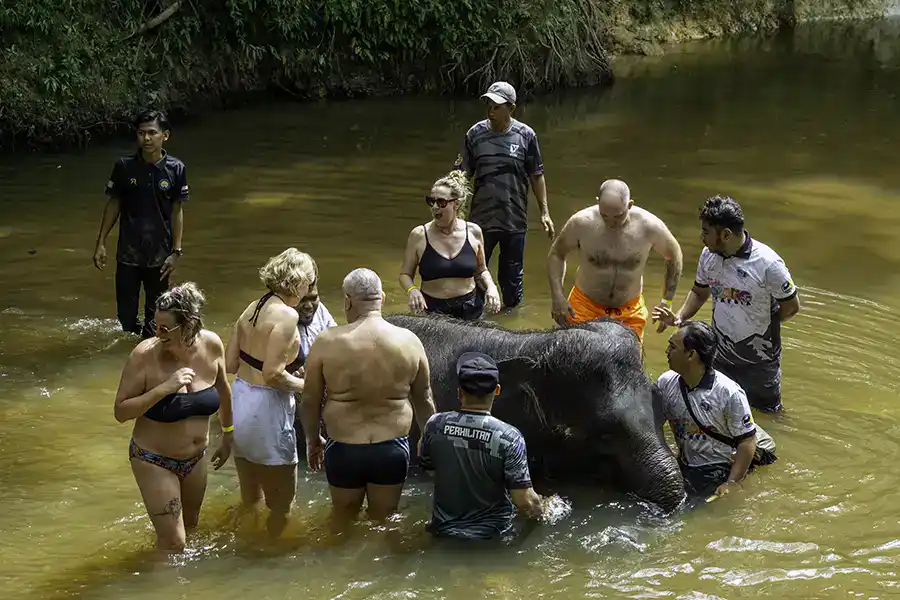
A full-day private tour that starts with a stop at Batu Caves, then continues east to the Kuala Gandah Elephant Conservation Centre. This one’s particularly good for families and wildlife-focused travellers. The drive to the sanctuary passes through Malaysia’s rural interior, giving you a side of the country most Kuala Lumpur tours don’t reach. Details are on our Elephant Sanctuary Tour page.
What You’ll See During a Guided Visit
Whether you join a private or shared tour, the experience at Batu Caves follows a similar flow. No Batu Caves tour guide would be complete without walking you through what you’ll actually see on the ground.
The Base Area
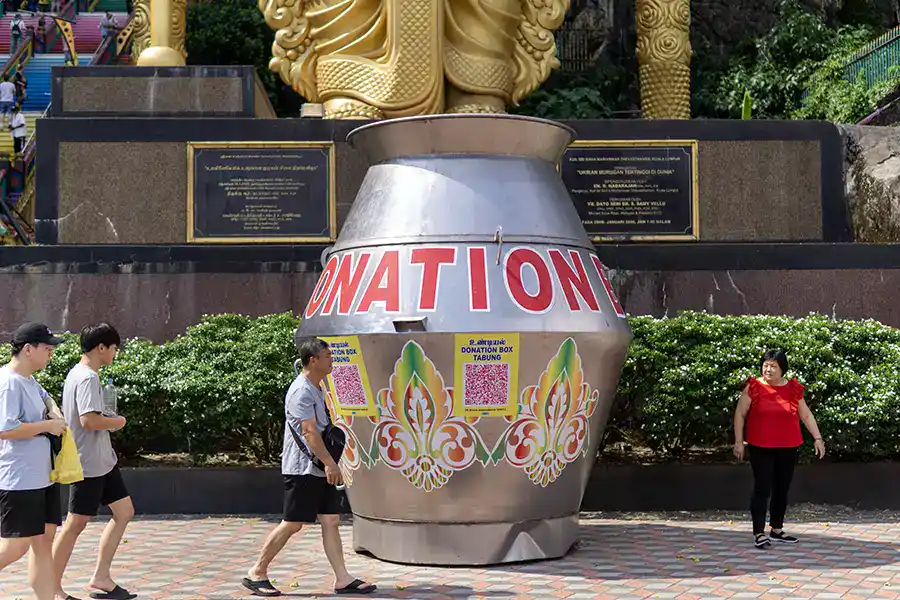
You’ll start at the open plaza in front of the caves, where the golden Lord Murugan statue stands 42.7 metres tall. Your guide will usually explain the statue’s significance and the basics of Hindu worship at the site before you begin the climb. You’ll also notice a giant stainless steel donation box near the statue’s base — believed to be one of the largest in the world. Donations are voluntary and support the temple’s upkeep; it even accepts QR code payments now. This is where the best wide-angle photos happen — the statue framed against the limestone cliff with the colourful staircase stretching upward.
The Climb
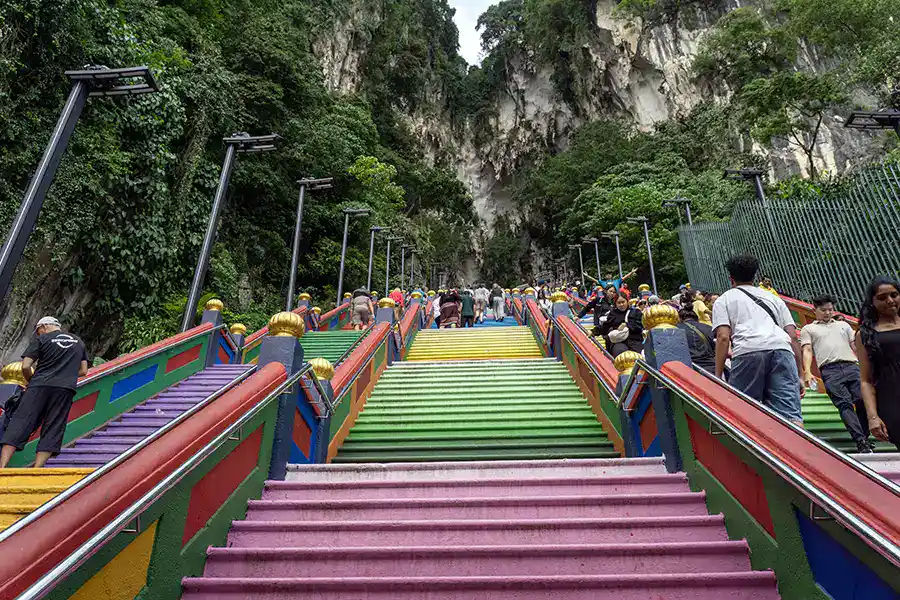
The 272 steps to the Temple Cave are steep but manageable if you pace yourself. Most visitors take 15–20 minutes going up. On a guided tour, your guide will either walk with you and point out details along the way, or brief you at the base and let you explore independently. Both approaches are common. For more on what the staircase experience is like, see our piece on the Batu Caves staircase and its history.
Inside the Temple Cave
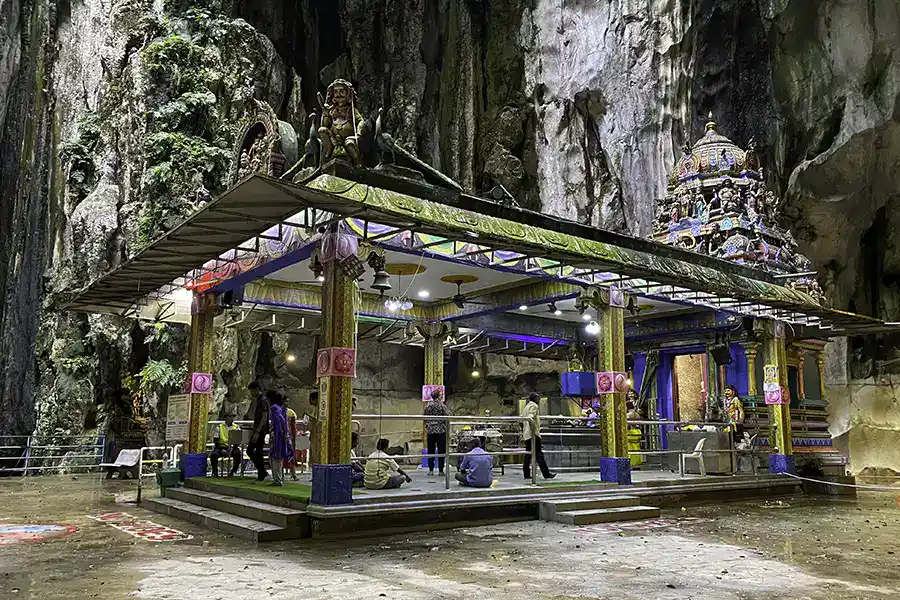
The main chamber is enormous — a natural limestone cathedral with a ceiling that opens to the sky. Hindu shrines line the interior, and natural light filters through gaps in the rock. The atmosphere shifts noticeably once you step inside: cooler air, less crowd noise, and a sense of scale that photos don’t capture well.
Ramayana Cave (optional)
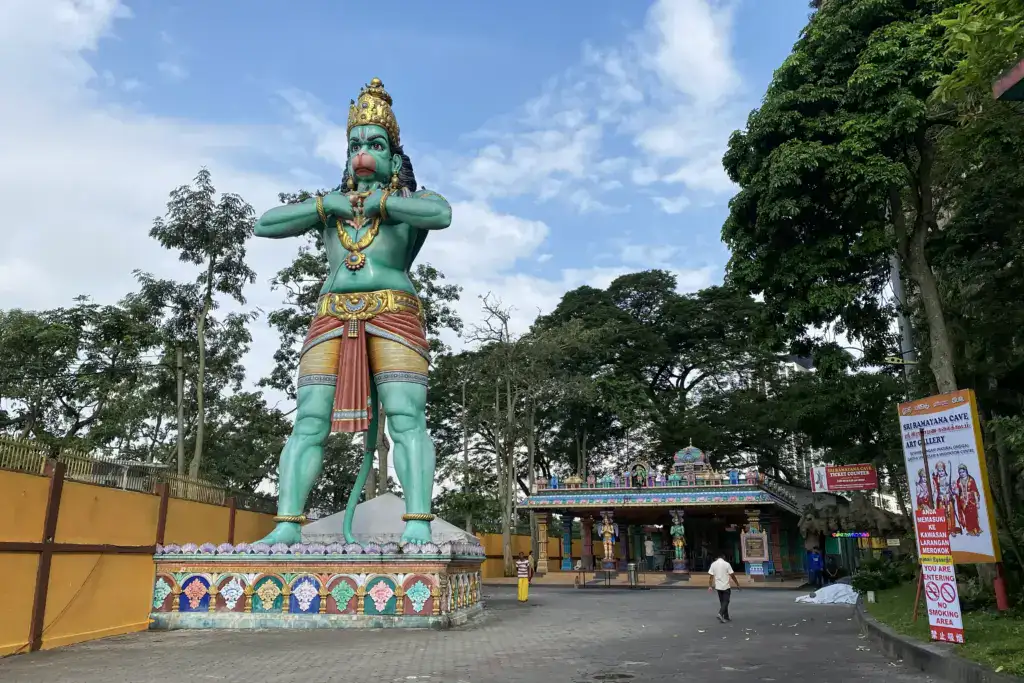
Back at ground level, some tours include a quick visit to this smaller cave decorated with statues and murals depicting scenes from the Hindu epic. There’s a small entrance fee (RM20 as of 2026). It adds about 15–20 minutes and is worth it if you have the time.
Monkeys

Macaques live around the staircase and base area. They’re not aggressive in most cases, but they will grab food or shiny objects if given the chance. A guide who’s been here before will point this out early so you can keep your things secured.
When to Take a Batu Caves Tour
Timing matters more than most visitors expect. The caves are open daily, but the experience changes significantly depending on when you arrive.
Morning tours (starting 8:00–9:00 AM) get you to the caves before the midday heat and before the large tour buses arrive. This is the best window for comfortable climbing, better photos with fewer people on the steps, and a more peaceful atmosphere inside the Temple Cave.
Afternoon tours (starting 2:30–3:00 PM) work well if you’re combining Batu Caves with an evening activity like the Kuala Selangor fireflies. The caves are busier mid-afternoon, but crowds thin out toward closing time.
Weekdays vs weekends. Weekdays are noticeably quieter. Weekend mornings can be busy with both tourists and local worshippers, especially during Hindu prayer times.
For detailed opening hours and timing advice, see our Batu Caves opening hours guide.
During major religious events — particularly Thaipusam in January or February — Batu Caves transforms entirely. Over a million devotees gather for the pilgrimage, and normal visiting patterns don’t apply. If your trip falls during this period, a guided tour is especially useful for navigating the crowds and understanding the rituals you’ll witness.
How to Decide: Tour or Self-Visit?
This article focuses on the tour experience, but it’s fair to acknowledge that some visitors don’t need a guide at all. Batu Caves is accessible by train, entry is free, and the layout is straightforward enough to navigate independently.
We’ve written a separate, detailed comparison of visiting Batu Caves on your own vs with a private guide if you’re still weighing both sides. The short version: a tour adds the most value when you want cultural context explained on the spot, when you’re combining Batu Caves with other stops, or when you prefer not to deal with transport logistics in an unfamiliar city.
If you’ve already decided a tour is the way to go, the next question is which one. Here’s a simple way to think about it:
- You have half a day and it’s your first time in KL → A private Batu Caves and city tour covers both the caves and Kuala Lumpur’s key landmarks in one go. No wasted time, no overlap with what you’ll do on other days.
- You want nature and culture in the same day → The Batu Caves and fireflies combo fills an afternoon and evening with two completely different experiences.
- You’re travelling with kids or interested in wildlife → The elephant sanctuary day trip includes a Batu Caves stop and adds a conservation experience that’s hard to reach without private transport.
- You’re on a tight budget and comfortable navigating KTM trains → A self-visit might be enough for you, especially if you’ve done some reading beforehand. Our guide on getting to Batu Caves covers all the transport options.
Practical Tips for Tour Day
A few things that make the experience smoother, whether you’re on a private or shared tour:
- Dress code. Batu Caves is an active Hindu temple. Shoulders and knees must be covered. Sarongs are sometimes available to borrow at the base, but it’s better to come prepared. Our Batu Caves dress code guide has specific recommendations for what to wear.
- Footwear. Closed, comfortable shoes with grip. The steps are concrete but can be slippery when wet, and you’ll be on your feet for a couple of hours.
- Water and sun protection. There’s no shade on the staircase and very little around the base area. Bring water in a plain plastic bottle — avoid colourful stainless steel bottles or brightly coloured containers. The macaques are drawn to anything eye-catching, and a shiny or colourful bottle is enough to get their attention even if it only contains water. Wear a hat and apply sunscreen before you start climbing.
- Belongings. Keep bags zipped and phones secure. The macaques are quick and curious. Avoid carrying visible food.
- Camera timing. The best light for the staircase and statue is in the morning before 10:00 AM. By midday, the sun is directly overhead and harsh.
Choosing the Right Tour for Your Trip
To see all available Batu Caves tour options in one place — including itineraries, pricing, and what’s included — visit our Batu Caves tour packages page. Every tour listed there includes hotel pickup from Kuala Lumpur and is privately organised, meaning no surprise shopping stops and no sharing the vehicle with strangers.
If you’re still building your wider Malaysia itinerary and Batu Caves is just one piece of the puzzle, our day trips from Kuala Lumpur guide maps out the other top destinations you can reach on a day tour from the city.
A Note on Booking
If you find a Batu Caves tour you like through a large booking platform, it’s worth checking whether the same operator offers direct booking. Many local tour providers — including us — list on platforms like Klook, GetYourGuide, and Viator, but the prices there include a platform commission that can add 20–30% to the cost.
Booking directly with a local operator typically means a lower price for the same experience, easier communication if you need to adjust your plans, and simpler cancellation without waiting on a third-party refund process. You’re dealing with the person who actually runs the tour, not a support ticket queue.
This isn’t unique to Batu Caves tours — it applies to most guided experiences in Malaysia. When you can go direct, it’s usually the smarter option.
Final Thoughts
Batu Caves is one of the easiest day trips from Kuala Lumpur to organise, and a guided tour is the most practical way to experience it — especially if you’re combining it with other destinations on the same day. The caves themselves are free to enter, so what you’re really paying for is a well-planned itinerary, comfortable transport, and someone who can explain what you’re looking at beyond what a signboard tells you.
Whether you go with a private half-day tour or a full-day combo that continues to the fireflies or the elephant sanctuary, the key is matching the format to how you travel. We wrote this Batu Caves tour guide to help you do exactly that — pick the option that fits your pace, your interests, and how much of your day you want to fill, so you walk away with more than just photos of the rainbow steps.
Ready to explore your options? Browse our Batu Caves tour packages to compare itineraries, or head back to the Batu Caves Visitor Guide if you still have questions about the site itself.